
Trees
Planting fruit trees in Texas isn't just about grabbing a sapling and sticking it in the ground—timing matters more than you might think, especially when chill-hour needs vary wildly from the Panhandle to the Rio Grande Valley.
If you get the timing wrong, you could end up with stunted growth, frost damage, or even worse—no fruit at all. I’ve seen firsthand how a single late frost can wipe out a whole season’s work, and that’s something no Texas gardener wants to risk.
The good news? With the right approach, you can set your fruit trees up for success, whether you're in North Texas with its crisp winters or South Texas where the heat never really lets up.
What I’m about to share will help you avoid those costly mistakes.
We’ll break down the best months to plant based on your region, how to prep your soil for Texas’s alkaline conditions, and which varieties thrive in your specific microclimate—because not all fruit trees are created equal in the Lone Star State.
Ready to dig in? Let’s get your fruit trees off to the right start so you can enjoy that homegrown harvest in just a few years.
Texas fruit tree planting calendar by region: chill-hours and optimal months
Texas gardeners face unique challenges when planting fruit trees, with chill-hour requirements determining success across regions. North Texas (Zones 7-8) can support traditional varieties like Elberta peaches, while South Texas (Zones 9-10) demands low-chill citrus and tropical options.
Timing your planting around last frost dates and soil temperatures ensures strong root establishment before summer heat arrives.
The High Plains and Central Texas regions require careful balance—planting too early risks frost damage, while waiting too long limits root growth before extreme summer heat. Most fruit trees thrive when planted in late winter or early spring (February-March for North Texas, January-February for Central/South).
Always check your local USDA hardiness zone for precise timing.
Here’s how to match fruit tree varieties with Texas regions based on chill-hour needs and optimal planting windows:
For North Texas, aim to plant bare-root trees in February once soil temperatures rise above 50°F. This gives roots time to establish before summer’s intense heat. Peach trees need 500+ chill hours, while apples thrive with 800+ hours—check variety tags carefully.
Always plant on a cloudy day or in late afternoon to reduce transplant shock.
In Central Texas, where chill hours drop below 600, opt for low-chill varieties like Sanguine peaches (300 hours) or Santa Rosa plums (200 hours).
Plant in January to avoid spring freezes. Citrus trees in South Texas should go in December, as they need minimal chill hours (0-200) and can’t tolerate frost. Use drip irrigation to protect young roots from drought stress.
One common mistake is planting too late in spring, which limits root growth before summer’s 100°F+ temperatures. Always test soil moisture—roots need 1-2 inches of water weekly during establishment.
For High Plains gardeners, March planting is ideal, but monitor frost forecasts and cover young trees if nights dip below 32°F.
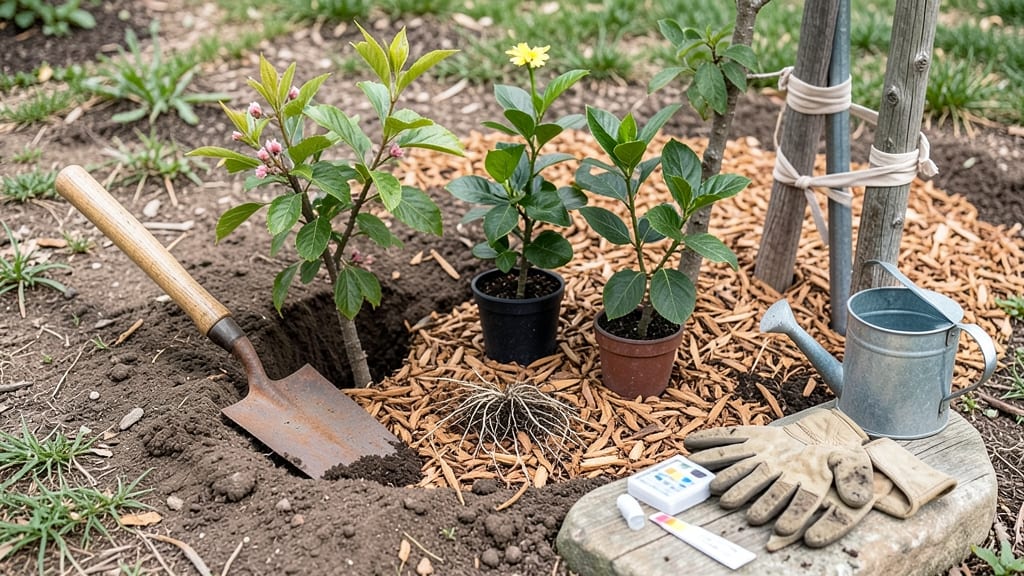
Pro tip: Mulch heavily (3-4 inches) with wood chips to regulate soil temperature and retain moisture. Avoid mulching against the trunk—keep it 2-3 inches away to prevent rot. In South Texas, where summers are brutal, consider shade cloth for young trees during their first year to reduce stress.
Texas A&M AgriLife Extension offers free chill-hour maps and regional planting guides—bookmark their site for localized advice. Remember, patience is key: fruit trees planted at the right time may take 3-5 years to bear fruit, but proper timing now ensures decades of harvests.
🌱
How to choose the right fruit trees for your Texas climate Zone
Texas spans multiple USDA hardiness zones, from Zone 6a in the Panhandle to Zone 10b in South Texas. This diversity means your fruit tree choices should match your local chill hours and microclimate.
In North Texas, traditional varieties like peaches and apples thrive, while South Texas demands low-chill citrus and tropical fruit trees. Let's break down the best options for each region to ensure your trees fruit reliably.
First, understand that chill hours (the number of hours below 45°F a tree needs to flower) are critical. North Texas gets 500-1,000 chill hours, perfect for peaches and plums, while South Texas often sees under 300 chill hours, making figs and loquats ideal. West Texas requires drought-resistant varieties like pomegranates or Texas redbuds for shade and fruit.
Your choice should align with your local frost patterns and water availability.
🌱 Best Fruit Trees by Texas Region
- North Texas (Zones 7-8): Peach ('Elberta'), Apple ('Anna'), Plum ('Santa Rosa') — 500-1,000 chill hours.
- Central Texas (Zones 8-9): Fig ('Celeste'), Persimmon ('Fuyu'), Pecan ('Western') — 300-500 chill hours.
- South Texas (Zones 9-10): Citrus ('Meyer Lemon'), Loquat, Mango ('Julie') — 0-300 chill hours.
- West Texas (Zones 7-8): Pomegranate, Texas Redbud, Dwarf Citrus — drought-tolerant, low-maintenance.
For North Texas, prioritize stone fruits like peaches and plums, which handle the region's cold winters and hot summers. Look for varieties labeled "late-blooming" to avoid late spring frosts.
In Central Texas, figs and persimmons are excellent because they tolerate moderate chill and dry spells. Pecan trees are also a staple, thriving in the caliche soil common to this area.
If you're in South Texas, forget traditional apple or pear trees—they won't survive the lack of chill hours.
Instead, opt for citrus, loquats, or mangoes, which flourish in the warm winters and humid summers. Dwarf varieties are perfect for small yards, and windbreaks are essential to protect these tropical trees from hurricane-force winds.
In West Texas, water conservation is key, so choose native or adapted species like pomegranates or Texas redbuds, which need minimal irrigation once established.
Don't overlook microclimates within your region. A north-facing slope in North Texas might stay frost-free longer, allowing you to grow low-chill varieties like apricots. Conversely, a low-lying area in South Texas could experience colder pockets, making it suitable for semi-tropical fruit trees like satsumas.
Always observe your yard's unique conditions—sun exposure, wind patterns, and soil type—before selecting your trees.
Finally, consider dwarf or semi-dwarf varieties if space is limited. These trees produce fruit faster and are easier to maintain, making them ideal for urban gardens or small homesteads.
Pair your fruit trees with companion plants like herbs (to deter pests) or flowers (to attract pollinators), and always mulch heavily to retain moisture in Texas' intense heat. With the right choices, your Texas fruit trees will reward you with years of bountiful harvests.