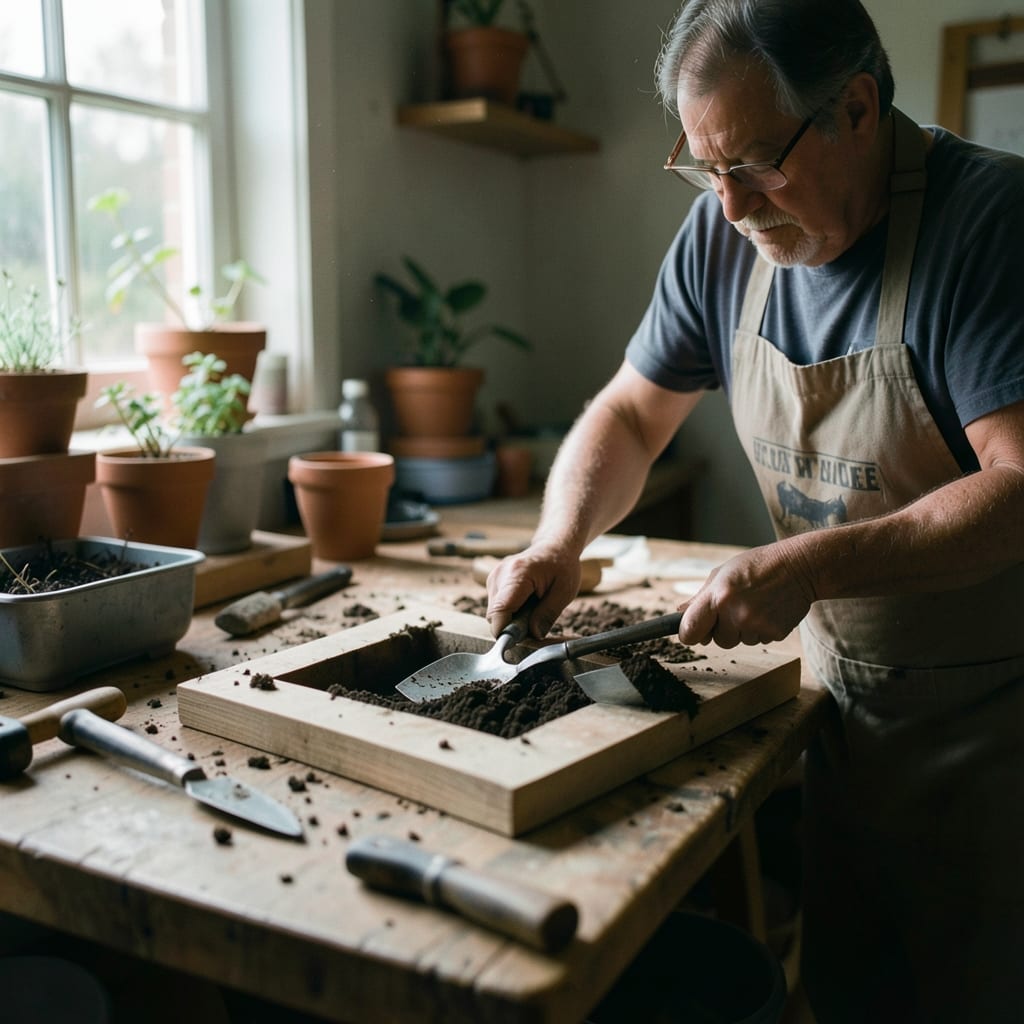
Why I started Planter Home
It was a Saturday morning in early April, and I’d just planted my first batch of heirloom tomatoes from seed. The soil was too cold, the pots too small, and by the third week, the seedlings were stretching toward the light like starving ghosts.
My grandmother—who’d taught me to pinch off the suckers before they got too long—just sighed and said, *‘You’re doing it all wrong, but at least you’re trying.’* That was the moment I realized most gardening advice was either too vague (*‘give it sunlight’*) or too late (*‘wait until the soil warms’*).
So I started writing down what actually worked in my backyard, in my climate, with the tools I had. No grand theories, just the gritty details: how deep to bury the seeds, when to water, what to do when the leaves turn yellow.
This site is for anyone who’s ever stared at a wilting plant and wondered if they’d just given up too soon. If you’re here, you’re already part of the fix.
Meet the founder

My grandmother’s old trowel is still the one I use.
She gave it to me when I was twelve, after I’d dug up her prize-winning dahlias ‘to see how the roots looked.’ The blade was bent from years of prying weeds from cracks in the patio, and the wooden handle had split down the middle—but she said it was *‘the best tool for learning,’* because it made me pay attention.
I still wince every time I hit rock, just like she taught me.
The thing I can’t shake is checking the soil moisture with my thumb. Every time. Even when I’ve got a moisture meter. Even when it’s obvious the plant’s thirsty. My grandmother did it, so I do it too—thumb pressed into the dirt, counting the seconds until I pull it out.
If it’s dry past my first knuckle, water. If it’s damp, wait. It’s a habit that drives my roommate crazy, but I can’t break it.
The failure that changed everything was the year I lost my entire basil crop to powdery mildew. I’d followed every rule—spaced them properly, watered at the base, even pruned the flowers—but by July, the leaves were dusted white.
My grandmother just laughed and said, *‘You forgot the garlic.’* Turns out, she’d tucked a few cloves into the soil around the plants for years, and the mildew never stood a chance. That’s when I started writing down the *unspoken* rules.
I work in a sunroom that’s half greenhouse, half cluttered workshop.
The windows face south, so the light is harsh by noon, and the shelves are stacked with half-empty seed packets, a rusted pruning shears I refuse to replace, and a notebook where I scribble down what’s working (and what’s not).
The air always smells like damp earth and the faintest hint of mint—because I grow it in a pot by the door, just to have something green to touch when I walk in.
Meet the mascot

The first scribbles for what would become our mascot were on a napkin at a café in Portland, Oregon. I was sketching a seedling poking through cracked soil, but the stem kept looking like a question mark, and the leaves were just blobs.
My friend—who’s an artist—laughed and said, *‘It looks like a confused caterpillar.’* That’s when I realized the whole thing needed to be simpler: less detail, more attitude.
The proper drawn version had a proper name: *Sprout*. It started as a chubby little stem with two oversized leaves, but the eyes were the trickiest part. I wanted them to look determined, not just sad.
So I made them slanted, like they’re peering up at something just out of frame. The soil lines were drawn with a fine liner to look like real cracks, but the pot was left plain—because most of us don’t have fancy planters.
The final version lost the pot entirely. Too many pixels, too little personality. Sprout ended up as just a stem with leaves, standing in a patch of soil with a single, stubborn weed growing beside it.
The weed was the detail that made it feel real—because in my garden, the weeds always win the first round. Now it’s small enough to fit on a browser tab, but big enough to still look like it’s reaching for the sun.
What I promise you
This site isn’t about perfect gardens or Instagram-worthy blooms. It’s about the plants that survive despite you, the soil that refuses to stay loose, and the moments when you finally get it right.
What you can count on here is honesty—no ‘plant in full sun’ without telling you what *full sun* actually means where you live.
What you can hold me to
- Every tip includes what to watch for when things go wrong.
- Seasonal adjustments are noted—because ‘spring’ in Texas isn’t ‘spring’ in Maine.
- Tools and supplies are listed with what you can substitute if you don’t have them.
- If a method *doesn’t* work, I’ll tell you why and what to try instead.
How I create a recipe
A recipe here starts with a failure. Not a grand disaster—just a plant that didn’t thrive, a seed that refused to sprout, or a tip that sounded right but didn’t work in practice. I dig into the *why*: Was it the soil? The light?
The fact that I forgot to pinch back the leggy seedlings? Then I test the fix, usually three times, until I’m sure it’s not just luck.
The first stage: watching, not doing
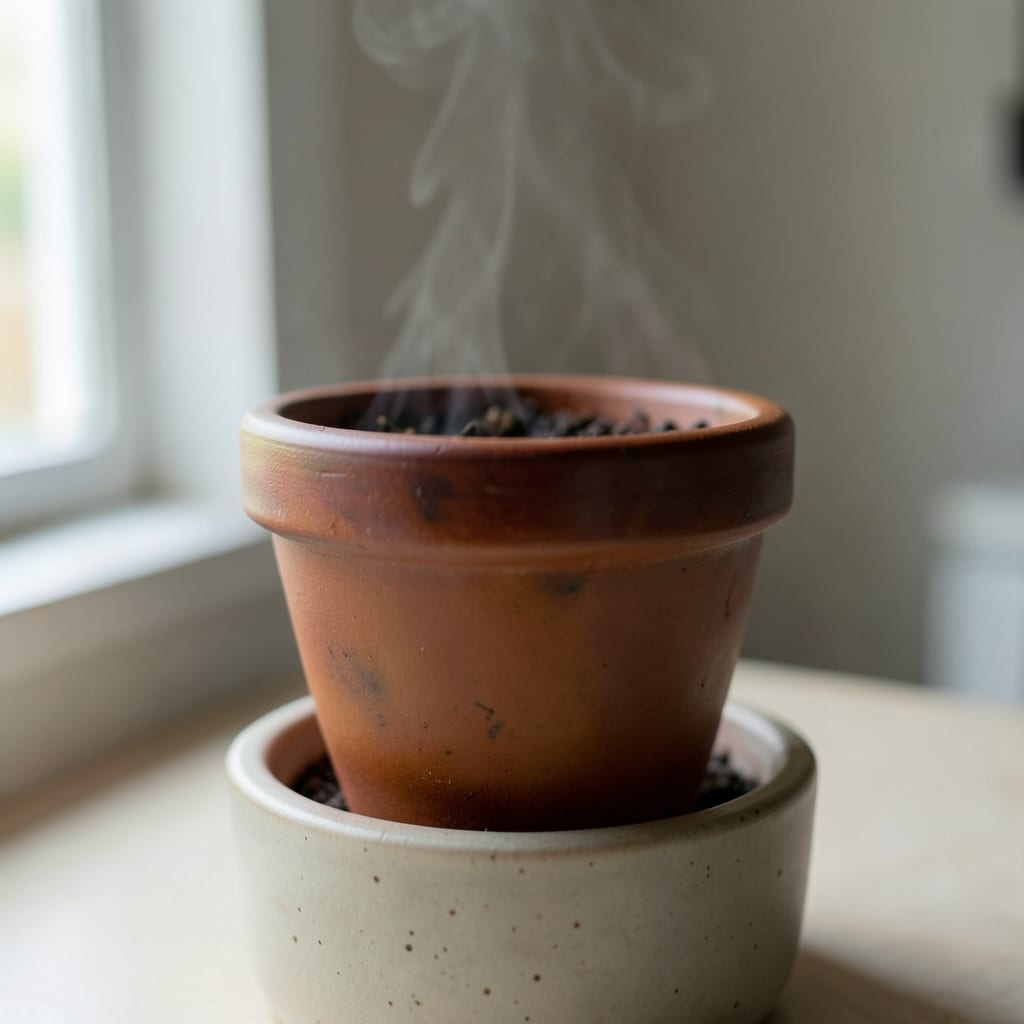
The first thing I do is *stop touching it*. Whether it’s seeds in a tray or a cutting in water, the biggest mistake is checking too often. I set a timer for three days—no peeking. If the soil’s dry, I water it *once*, then leave it alone.
If the cuttings are wilting, I trim the bottom leaves and put them back in the jar, but I don’t fidget with them. The only thing that tells me it’s working is the silence: no rustling of paper towels, no sighs of frustration.
The moment it’s gone wrong is when the soil starts pulling away from the sides of the pot. That’s not moisture—it’s the roots giving up. Or if the cuttings develop fuzzy white growth, that’s root rot, and it’s already too late to save them. The fix? Less water, more patience.
And a fresh jar next time.
The second stage: the rescue
If the seedlings are stretched too tall, I bury them deeper—up to the first set of true leaves. No drama, just a gentle push. If the soil’s compacted, I loosen it with a fork, but I never dig deeper than two inches.
The roots know where to go; I’m just giving them room. And if the leaves are yellowing, I check the undersides for pests before blaming the fertilizer. Most of the time, it’s aphids, and a spray of soapy water fixes it faster than any store-bought remedy.
The only rule I break is the one about not overwatering. If a plant’s struggling, I’ll give it a deep drink—*one*—and then I wait. The soil should feel like a damp sponge, not a swamp. If it’s still not right by the third day, I start over.
Some plants just aren’t meant to be saved, and that’s okay.
How a page gets onto this site
Every tip or guide gets written down on a notepad while the soil’s still warm from my hands. I cross out the parts that sound like common sense (*‘use gloves’*) and circle the things that took me three tries to get right (*‘pinch basil stems at the fourth leaf’*).
Then I read it aloud to my roommate, who’s not a gardener. If she doesn’t understand the first sentence, I rewrite it. The pages that get rewritten months later are the ones where I realize I left out the *real* problem—not the symptom, but the root cause.
Write to me
I love hearing about the plants that outsmarted you, the soil that refused to cooperate, or the one tip that finally made something grow. Did a method here work? Did it fail spectacularly?
Send me the details—the good, the bad, and the *‘I have no idea what I did but it’s alive’* moments. You’ll find the contact page in the menu above.
And if you’re just here because you’re tired of gardening advice that assumes you’ve got a greenhouse and a PhD in botany? You’re in the right place. Keep digging.
The guides are grouped by category: Companion Plants, Container Gardens, Flowers, How To, Lawn and Planting.