
Watering
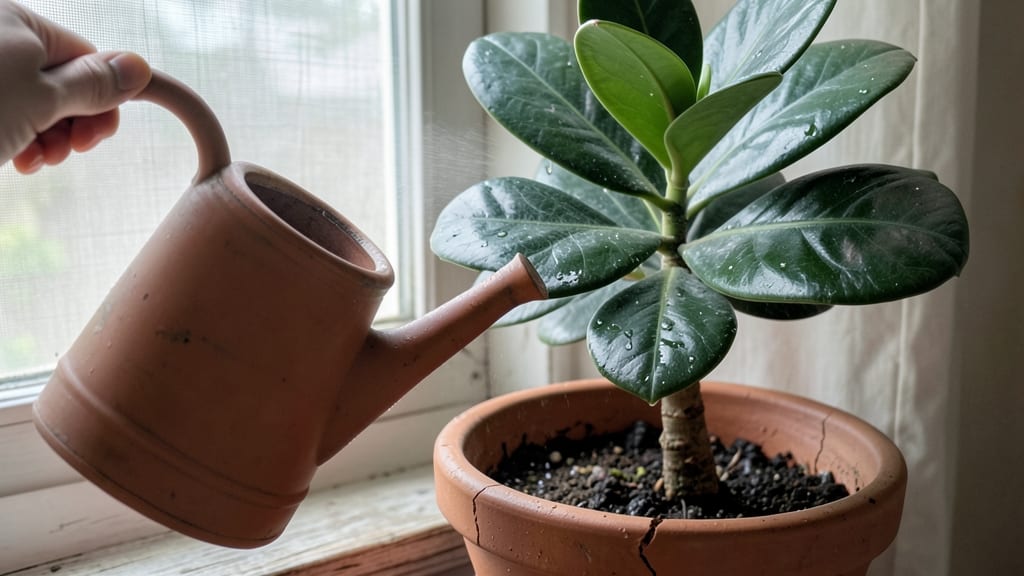
How much water does a rubber plant need? The perfect soak-and-dry schedule
Rubber plants (Ficus elastica) are surprisingly low-maintenance once you master their watering needs. Unlike thirsty tropical plants, they prefer a soak-and-dry approach—meaning deep watering followed by a drying period.
This method prevents root rot while ensuring your plant gets the hydration it needs to maintain those signature glossy leaves. The key is consistency: too much water causes soggy roots, while too little leads to crispy edges.
Your rubber plant’s water needs shift with the seasons. In spring and summer, when growth is active, it drinks more frequently. But during fall and winter, its thirst drops dramatically as it enters dormancy.
Even experienced gardeners overwater rubber plants because they assume more water equals faster growth—but this plant thrives on neglect, not attention. Let’s break down the exact schedule you need.
📋 Summary Table: Rubber Plant Watering Schedule
| Season | Watering Frequency | Soil Moisture Check | Water Amount |
|---|---|---|---|
| Spring (March-May) | Every 7-10 days | Top 1-2 inches dry | 500-750ml until drainage |
| Summer (June-August) | Every 10-14 days | Top 2-3 inches dry | 750-1000ml (larger pots) |
| Fall (September-November) | Every 14-21 days | Top 3 inches dry | 500ml (reduce growth) |
| Winter (December-February) | Every 3-4 weeks | Top 4 inches dry | 250-300ml (minimal water) |
⚠️ Pro Tip: Always water in the morning to allow excess moisture to evaporate during the day.
Start by sticking your finger 1-2 inches into the soil. If it feels dry, it’s time to water. For the soak-and-dry method, pour water until it drains freely from the pot’s bottom. Let excess water empty completely—this prevents soggy roots.
In small pots, soil dries faster, so you’ll water more often than in large containers, where moisture lingers longer. Adjust your schedule based on your rubber plant’s pot size and your home’s humidity levels.
Humidity plays a huge role in how often you water. If your home is dry (common in winter with indoor heating), your rubber plant will drink up water faster. In these cases, check soil moisture every 5-7 days instead of sticking to a rigid schedule.
A humidifier or pebble tray can help maintain ideal conditions without overwatering. Conversely, in humid climates or during summer rains, reduce watering by 25-30% to avoid root suffocation.
Pot size directly impacts watering needs. A 6-inch pot may need water every 5-7 days, while a 12-inch pot can go 10-14 days between waterings. The larger the pot, the more soil retains moisture longer.
If you’re repotting, choose a container only 2-3 inches larger than the current one—bigger pots hold too much water and encourage rot. Always use a pot with drainage holes to prevent waterlogging, a silent killer of rubber plants.
Seasonal adjustments are critical. In spring, when new growth emerges, your rubber plant will drink more as it prepares for summer. Increase watering slightly but avoid saturating the soil.
By late summer, growth slows, and you can taper off. Fall and winter are the driest periods—water only when the top 3-4 inches of soil are completely dry. Overwatering in winter is a common mistake that leads to yellow leaves and mushy stems, signs of root rot.
Signs of underwatering include dry, crispy leaf edges and a wrinkled soil surface. If you see these, water deeply and place the pot in a shower for 10 minutes to revive it. For overwatering, look for yellowing leaves, drooping stems, or moldy soil.
If caught early, reduce watering and repot in fresh, dry soil. Severe cases may require trimming affected roots. Always let the soil dry completely between waterings to avoid this pitfall.
Mulching can help regulate soil moisture. A 1-inch layer of orchid bark or coco coir on top of the soil reduces evaporation, keeping roots consistently moist without overwatering. This is especially useful in dry climates or during hot summer months.
Avoid organic mulches like straw, which can compact and trap moisture, increasing rot risk. Stick to inorganic or chunky mulches that improve airflow around the roots.
Remember, rubber plants are forgiving—they’d rather be underwatered than overwatered. If you’re unsure, err on the side of dryness. With the soak-and-dry method, you’ll give your plant the deep hydration it craves while protecting its roots from the dangers of excess moisture.
Soon, you’ll have a thriving rubber plant with glossy leaves that’ll be the envy of every plant lover you know. 🌿
Signs your rubber plant is overwatered or underwatered (and how to fix it)
Your rubber plant 🌿 speaks volumes through its leaves and soil—if you know what to listen for. Yellowing leaves or drooping stems often signal watering gone wrong, but the fixes depend on whether your plant is drowning or thirsting. Let’s decode the clues and revive your plant with precision.
First, check the soil moisture by sticking your finger 1-2 inches deep. If it’s soggy, you’re overwatering. If it’s bone-dry, your plant’s crying out for hydration. The key is balance—rubber plants hate wet feet but also despise parched roots. Let’s tackle each issue head-on.
Overwatered Rubber Plant
- Lush, vibrant leaves (temporarily)
- Reduces risk of airborne dust
- Root rot (silent killer)
- Yellowing leaves (starts at bottom)
- Mushy stems (advanced sign)
- Foul odor from decaying roots
How to Fix:
Now, let’s address the flip side: underwatered rubber plants show crispy leaf edges and wrinkled soil that pulls away from the pot. These are SOS signals your plant’s roots are desperate for moisture. The fix? A deep soak followed by a consistent schedule.
For underwatering, soak the pot in room-temperature water until it drains from the bottom. Let excess water escape completely—no soggy saucers! Afterward, water only when the top 1-2 inches of soil feel dry.
In summer, this might mean every 5-7 days, while winter slows things down to every 3-4 weeks. 🌡️
Pro tip: Use a moisture meter or the finger test to avoid guesswork. If your rubber plant’s leaves feel light as paper or curl inward, it’s thirsty.
If they’re slimy or black, it’s drowning. The solution? Adjust your watering rhythm and watch your plant bounce back in 2-4 weeks.