
Watering
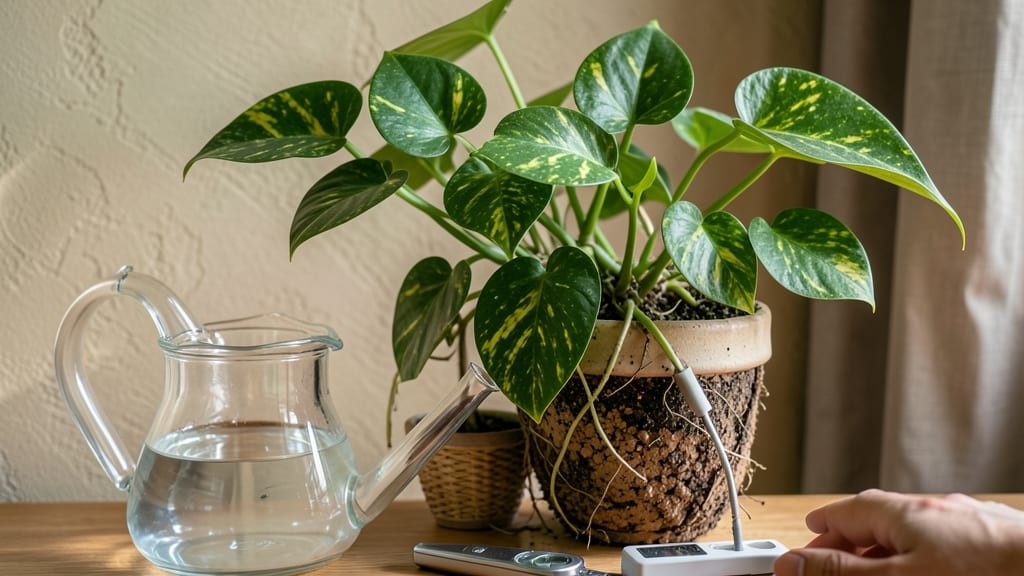
Wondering how much water your 🌿 pothos plant really needs? Most people overdo it—drowning those pretty green vines in soggy soil that actually strangles roots instead of hydrating them.
The truth is, this hardy houseplant thrives on a simple rule: water only when the top inch of soil feels bone-dry to the touch.
I’ve learned the hard way that pothos plants hate soggy bottoms, but they’re just as unhappy when left bone-dry for weeks. The key isn’t a rigid schedule—it’s reading your plant’s signals.
Yellow leaves? Probably too much water. Crispy edges? Time to hydrate. Let’s cut through the guesswork with a foolproof routine that keeps your pothos lush without the drama.
What if I told you a 4-week watering plan could transform your plant’s health overnight? That’s exactly what we’ll cover—plus how to adjust for your home’s humidity, pot size, and even seasonal shifts.
No more dead vines, no more wasted water. Just happy, trailing greenery that’s easier to care for than you think.
Ready to master the art of watering? By the end, you’ll know exactly when to water, how much to give, and what to watch for. Your pothos will thank you with glossy leaves and vigorous growth—no green thumb required.

The perfect pothos watering schedule: how often to water by season
Mastering your pothos plant watering schedule is the difference between vibrant, trailing vines and sad, crispy leaves. As someone who’s repotted more pothos than I can count, I’ve learned that seasonal adjustments and soil moisture tests are non-negotiable.
Unlike finicky tropical plants, pothos thrives on a consistent but flexible routine—one that changes with temperature, humidity, and even your home’s indoor climate. Let’s break down the science-backed approach that keeps my plants happy year-round.
Your pothos isn’t asking for a strict watering calendar—it’s communicating through its leaves. The key is understanding its root zone preferences: they hate soggy soil but despise drought stress too.
My 4-week seasonal plan adapts to your home’s microclimate, pot size, and even the material your container’s made from. Whether you’re battling dry winter air or sweltering summer heat, these adjustments will keep your plant’s roots in the sweet spot—moist but never waterlogged.
Here’s the game-changer: soil moisture tests trump guesswork every time. Stick your finger 1-2 inches deep into the soil. If it feels dry, it’s time to water. If it’s damp, wait another 3-5 days.
This simple habit prevents the two biggest pothos killers: root rot and leaf scorch. Pro tip: Clay pots dry faster than plastic, so adjust your schedule accordingly.
| Season | Watering Frequency | Soil Test Depth | Water Amount | Key Adjustments |
|---|---|---|---|---|
| Spring | Every 10-14 days | 1-2 inches | 150-200ml (deep soak) | Increase if leaves yellow |
| Summer | Every 7-10 days | 1-2 inches | 200-300ml (morning water) | Reduce if soil stays damp |
| Fall | Every 10-14 days | 1-2 inches | 150-200ml (evening water) | Check for pests |
| Winter | Every 2-4 weeks | 1-2 inches | 100-150ml (light soak) | Group plants together |
🌱 Note: Adjust for small pots (water more often) or large containers (water less frequently).
Let’s dive into the spring schedule, when your pothos wakes up from its winter nap. This is prime growth season, so you’ll see new leaves popping up like clockwork. Water every 10-14 days, but always check that top 1-2 inches of soil first.
If it’s dry, give it a deep soak until water runs out the drainage holes. Overwatering now leads to yellow leaves, while underwatering causes crispy edges. My trick? Set a reminder every 2 weeks to test the soil—consistency is key.
Summer brings the biggest challenge: heat stress. Your pothos will drink up water faster, so bump your schedule to every 7-10 days. Water in the morning to prevent fungal growth from evening moisture. Watch for drooping leaves—this is your plant’s SOS signal.
If the soil feels bone-dry at 1 inch deep, it’s time to water. Pro move: Mist the leaves occasionally to boost humidity, especially if your home has dry air from AC units.
Fall is all about transitioning slowly. Days get shorter, and your pothos starts conserving energy. Stick to the spring schedule—every 10-14 days—but reduce water slightly if your home stays cooler.
This is also the perfect time to repot if roots are circling the container. Use a pot just 1-2 inches larger in diameter to avoid overwatering the extra soil.
Winter is when pothos plants slow their growth, almost like hibernation. Cut back to watering every 2-4 weeks, and only if the top 2 inches of soil are completely dry. Grouping plants together creates a microclimate that retains moisture better.
If your home has forced-air heat, consider moving your pothos away from vents or using a humidity tray with pebbles and water.
One mistake I see all the time is ignoring the pot material. Terracotta pots dry out faster than plastic, so you’ll need to water <
Signs your pothos is thirsty (or drowning): 7 visual cues to check weekly
Your pothos plant communicates thirst through subtle—but unmistakable—visual cues. Ignoring these signs can lead to crispy leaf edges from drought or mushy stems from overwatering. The key is learning to read between the leaf patterns and growth habits to strike the perfect balance.
Start with a simple finger test: Stick your finger 1-2 inches into the soil. If it feels dry, your pothos needs water. If it’s damp, hold off for another 3-5 days. This quick check prevents overwatering, the #1 killer of houseplants like pothos.
Underwatering vs. Overwatering: Quick Diagnosis
Underwatering 💧
- Dry, crispy leaf edges
- Slow growth or no new leaves
- Drooping leaves that don’t bounce back
- Soil pulls away from pot sides
- Yellowing lower leaves (natural aging)
Overwatering 🌧️
- Yellow leaves that stay soft
- Mushy stems or blackened roots
- Wilting despite wet soil
- Foul smell from root rot
- Stunted or no new growth
Check your pothos leaves for color changes weekly. Healthy leaves are a vibrant dark green with slight variegation. Yellowing leaves often signal overwatering, but brown crispy tips mean underwatering. The leaf texture is your best clue—soft and squishy? Too wet. Dry and brittle? Needs hydration.
Observe the growth rate of your pothos. A thriving plant grows new leaves every 2-4 weeks. If growth stalls, it’s either underwatered or overwatered. Check the soil surface: If it’s cracked or pulling away, your pothos is thirsty. If it’s always damp, you’re overdoing it.
Pay attention to the roots if you repot. Healthy roots are white or light tan. Dark, mushy roots mean root rot from overwatering. Trim the bad roots with sterilized scissors and repot in fresh, well-draining soil to revive your pothos.
Adjust your watering based on your home’s humidity. Dry air (like in winter) means your pothos needs water every 10-14 days. High humidity (summer) may extend this to every 2 weeks. Grouping plants together creates a microclimate that retains moisture naturally.