
Watering
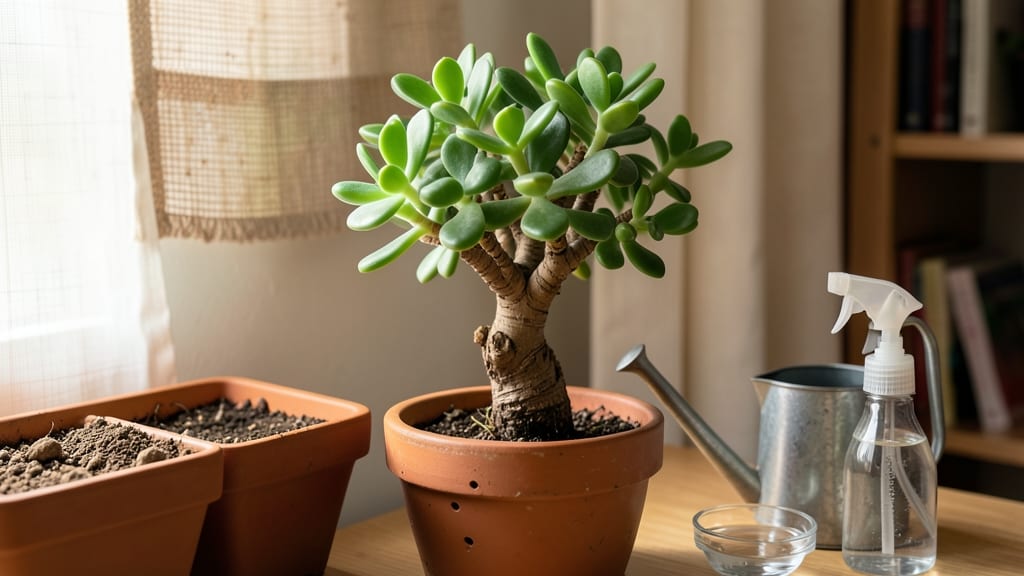
The exact jade plant watering schedule by season (prevent root rot)
Jade plants (Crassula ovata) are famously drought-tolerant, but their watering needs change dramatically by season. The biggest mistake? Assuming a one-size-fits-all schedule. In my USDA Zone 6a garden, I’ve learned that overwatering in winter kills just as many plants as underwatering in summer.
Let’s break it down by season with exact intervals and climate adjustments.
Your jade plant’s watering frequency depends on three factors: seasonal growth cycles, indoor humidity levels, and your local climate zone. For example, a jade in dry Arizona (Zone 9b) needs water 50% less often than one in humid Florida (Zone 10a).
The key is soil moisture testing—never guesswork. Stick your finger 1-2 inches deep; if it feels dry, it’s time to water.
Here’s the seasonal watering schedule I follow with my 10-year-old jade plant (now 2 feet tall). Adjust these intervals based on your humidity levels—if your home feels dry (like 30% humidity), water 1-2 days later than the schedule below.
If it’s humid (60%+), water 1-2 days earlier.
Spring is when your jade plant wakes up from dormancy, so it’s tempting to water more. But overwatering now leads to mushy stems by summer. I start by watering every 21 days in March, then reduce to every 14 days by May if I notice new leaf growth.
Pro tip: If you repotted in spring, wait 4 weeks before watering—fresh soil holds moisture longer.
Summer is the most critical season for jade plants because heat increases evaporation. My plants in full sun dry out faster than those in bright indirect light.
I switch to every 14 days and use the "lift-and-check" method: Pick up the pot—if it’s heavy, wait 3 more days. For outdoor jades, water early morning to prevent fungal risks from evening moisture.
Fall slows growth, so I extend the gap between waterings to 3-4 weeks. This is when many gardeners overcorrect from summer’s frequent watering, leading to root rot.
Watch for stem shrinkage—this is your jade’s way of saying, “I’m thirsty!” But if the stem stays thick and green, skip watering entirely. Humid falls (like in Pacific Northwest) may require earlier watering.
Winter is your jade’s dormancy period, and most watering mistakes happen now. I’ve seen jades rot in pots because owners watered monthly during winter. The rule: Only water if leaves wrinkle.
For indoor jades near heat vents, check soil every 2 weeks—dry air speeds up moisture loss. In cool basements, wait 6-8 weeks between waterings.
Climate zones matter more than you think. A jade in dry Arizona (Zone 9b) might need water only 4 times a year, while one in humid Georgia (Zone 8a) could need
5 Signs your jade plant needs water (or too much—stop guessing!)
Jade plants (Crassula ovata) are masters of survival, storing water in their thick leaves and stems. But even these drought-resistant beauties need your help reading their watering signals. The key? Learning to spot subtle cues before they turn into leaf wrinkles or mushy stems.
I’ve lost count of how many jade plants I’ve saved by paying attention to these 5 telltale signs—don’t let yours become another casualty!
Most gardeners make the mistake of sticking to a rigid schedule, but jade plants thrive on flexibility. Instead of guessing, focus on these visual and tactile indicators to adjust your watering routine.
Think of it like reading your plant’s mood: wrinkled leaves scream "I’m thirsty!" while squishy stems whisper "You’re drowning me!" Let’s decode these signals so you can water with confidence.
- 1 Leaf Wrinkles: When your jade’s leaves develop deep creases or look puckered, it’s a cry for water. Run your finger along the leaf edges—if they feel dry and rough, it’s time to hydrate. This is your plant’s way of saying, "I haven’t drunk in weeks!" 🌿
- 2 Lightweight Pot: Lift your potted jade—if it feels unusually light, the soil is bone-dry. A well-watered jade plant should have a solid, consistent weight. Pro tip: Compare it to your other houseplants; jades should feel heavier than average when hydrated. ✂️
- 3 Stem Shrinkage: Check the stems between leaves. If they look sunken or collapsed, your plant is severely dehydrated. Healthy stems should be plump and firm. This is an emergency signal—water immediately and place in bright light to recover. ☀️
- 4 Dull Leaves: Jade leaves should have a glossy, vibrant appearance. If they look dull or matte, it’s often a sign of underwatering. Run a finger across the leaf—if it feels dry and rough, hydration is needed. Think of it as your plant’s skin losing its sheen. 🪴
- 5 Mushy or Soft Stems: This is the red flag of overwatering. Gently press a stem—if it feels squishy or mushy, root rot may already be setting in. Stop watering immediately, remove the plant from its pot, and check the roots. Healthy roots are firm and white; rotten ones are brown and mushy. 💧
Once you’ve identified the issue, adjust your watering schedule accordingly. If your jade shows signs of thirst, water deeply until it drains from the bottom of the pot—then let it dry out completely before watering again.
For overwatered plants, reduce frequency to every 4-6 weeks and ensure the pot has drainage holes. Remember, jade plants store water like tiny succulent water towers—less is always more!
Pro tip: Keep a watering journal to track your plant’s responses. Note when you water, how the soil feels, and any changes in the leaves. Over time, you’ll develop an intuitive sense of your jade’s needs.
My own jade plant now "talks" to me through its leaves—no more guesswork, just confident care. Your plant will thank you with thicker stems and brighter leaves! 🌱