
Flowers
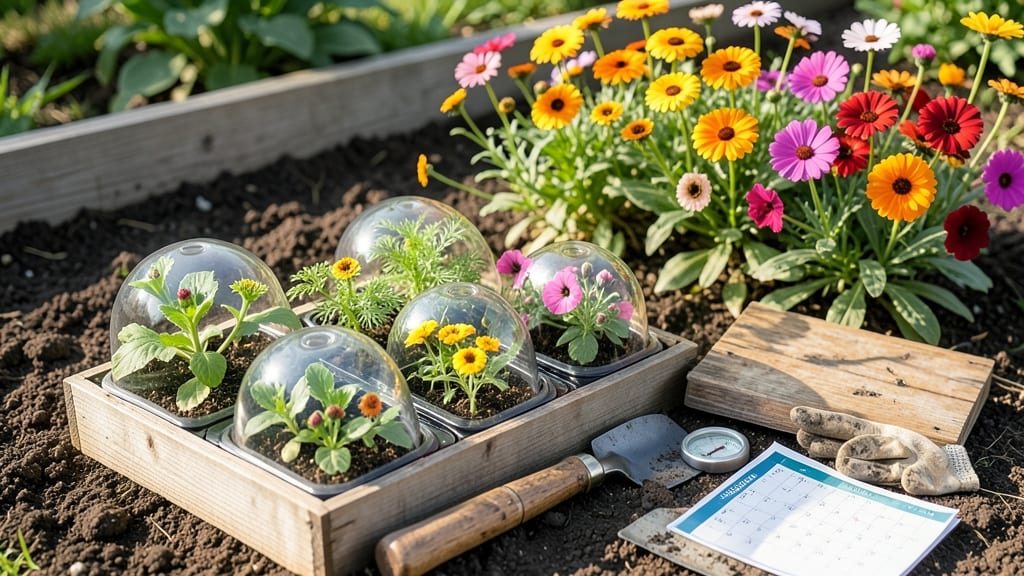
Planting flower seeds in Massachusetts isn't just about grabbing a packet and tossing it into the dirt—it's about timing your sowing to beat frost, outsmart the unpredictable 6a climate, and give your 🌸 blooms the best shot at thriving.
Too early, and a late frost will turn your tender seedlings into sad, blackened memories. Too late, and you’ll miss the full growing season.
I’ve spent years perfecting the schedule, and what I’m about to share will help you avoid those common mistakes—whether you’re a coastal gardener with milder winters or an inland grower facing harsher conditions.
From cool-season champions like pansies to heat-loving zinnias, we’ll break down exactly when to start seeds indoors versus direct-sowing outdoors. You’ll learn how to read your local frost dates, adjust for microclimates, and even extend your blooming season with simple tricks.
Ready to turn your garden into a year-round burst of color? Let’s dive into the precise planting windows that’ll have your flowers blooming like never before.
Massachusetts frost-free deadlines by hardiness Zone (2024 planting schedule)
Massachusetts spans USDA hardiness zones 5b through 7a, meaning your last frost dates can vary by nearly 3 weeks from western hills to coastal areas. Understanding these deadlines ensures your flower seeds thrive—not just survive.
Inland zones like Zone 5b (e.g., Worcester) often see frost until May 15, while coastal Zone 7a (e.g., Cape Cod) may stay frost-free by April 15. Microclimates matter: a south-facing slope warms faster than a north-facing valley, so adjust timelines accordingly.
For annual flowers, the spring planting window opens when soil temperatures hit 60°F—typically late April to early May for most zones. Perennials and biennials often tolerate cooler soil, allowing sowing as early as March under frost cloth.
Coastal gardeners can push deadlines 2 weeks earlier than inland counterparts, thanks to moderating ocean breezes. Always check 7-day forecasts before sowing outdoors to avoid late-season frost surprises.
| Zone & Location | Last Frost Date | Spring Planting Window | Fall Planting Window | Soil Temp Threshold |
|---|---|---|---|---|
| Zone 5b (Worcester, Pittsfield) | May 15 | May 1–15 (after frost) | Aug 15–Sep 15 | 60°F (spring) |
| Zone 6a (Boston, Springfield) | April 25 | April 15–May 1 | Aug 1–Sep 10 | 55°F (spring) |
| Zone 6b (Providence, Nantucket) | April 15 | April 1–April 15 | Jul 30–Aug 30 | 50°F (spring) |
| Zone 7a (Cape Cod, Martha’s Vineyard) | April 1 | March 20–April 10 | Jul 15–Aug 20 | 45°F (spring) |
*Adjust 1–2 weeks earlier for coastal microclimates, later for inland valleys.
Your hardiness zone dictates more than just frost dates—it influences soil warming speeds and germination rates.
For example, Zone 5b gardeners should wait until May 1 to sow marigold seeds outdoors, while Zone 7a coastal gardeners can start them by April 1. Biennials like foxgloves can handle cooler soil, so they’re safe to direct-sow in March across all zones.
Use a soil thermometer to confirm readiness—55°F+ for most annuals, 50°F+ for hardy perennials.
Coastal Massachusetts gardeners enjoy a 2–3 week advantage over inland areas due to moderating ocean breezes. Areas like Cape Cod (Zone 7a) often see earlier last frosts and can start warm-season flowers like zinnias 3 weeks before inland Zone 5b regions.
However, coastal soils may stay cooler longer—test with your thermometer. Inland valleys (e.g., Berkshires) can experience late frosts even after May 15, so monitor local weather alerts and use frost cloth for early sowings.
For fall planting, aim to sow 8–10 weeks before your first frost. This means August 15–September 15 for most zones, with Zone 7a extending to early October for cold-hardy varieties like pansies. Biennials such as sweet William benefit from early fall sowings to establish roots before winter.
Coastal areas can push fall deadlines 2 weeks later than inland zones, thanks to warmer ocean-influenced nights. Always mulch newly sown seeds with 2–3 inches of straw to protect against early autumn chills.
Microclimates create localized planting windows—even within a single town. A south-facing slope in Zone 6a may warm enough for spring sowing by April 1, while a north-facing garden might need to wait until May 1.
Urban heat islands (e.g., Boston’s Back Bay) can extend growing seasons by 10–14 days compared to rural areas. Use these microclimate tricks: plant heat-loving flowers near dark pavement or brick walls
Best flower seed varieties for Massachusetts: early vs. late planting guide
Massachusetts gardeners face a unique challenge: our short growing season and variable frost dates demand precision when planting flower seeds.
The key is matching varieties to early spring or late summer planting windows while accounting for soil temperatures that must reach 40°F for cool-season flowers and 60°F for warm-season varieties. Let’s break down the best performers for each timing strategy.
For cool-season champions, I recommend starting seeds indoors in February-March or direct-sowing in March-April after the last frost threat. These varieties thrive in 50-65°F soil and can handle light frosts. Pansies and snapdragons are my top picks—they bloom early and tolerate 30°F temperatures without damage.
Meanwhile, heat-loving annuals like marigolds and zinnias need to wait until May-June when soil warms consistently above 60°F.
🌱 numbered highlights 🌱
- 1 Cool-Season Flowers (March-April): Pansies, snapdragons, sweet alyssum, and calendula. Germination: 7-14 days at 50-65°F. Care: Thin seedlings to 6-12 inches apart; mulch to retain moisture.
- 2 Warm-Season Flowers (May-June): Marigolds, zinnias, sunflowers, and cosmos. Germination: 5-10 days at 60-70°F. Care: Use black plastic mulch to warm soil faster; avoid overcrowding.
- 3 Fall Planting (August-September): Cosmos, bachelor’s buttons, and asters. Germination: 7-21 days at 55-65°F. Care: Sow 8-10 weeks before first frost; deadhead for prolonged blooms.
- 4 Perennials with Staggered Sowing: Coneflowers, black-eyed Susans, and bee balm. Germination: 10-20 days at 60-70°F. Care: Plant in early spring or late summer; divide clumps every 3-4 years.
Perennials deserve special attention because they often require staggered sowing to ensure continuous blooms. For example, coneflowers and black-eyed Susans can be direct-sown in early spring or late summer, but I’ve found that late summer planting (August) gives them a head start before winter.
These hardy perennials return year after year, making them a low-maintenance investment for Massachusetts gardens.
Don’t overlook succession planting for annuals like zinnias and marigolds. These heat-lovers perform best when sown in two batches: the first in late May and the second in early July.
This strategy ensures blooms from July through October, even as summer fades into fall. For marigolds, I swear by the ‘French Marigold’ variety—they’re disease-resistant and attract pollinators like crazy.
One of my biggest mistakes as a beginner was planting warm-season flowers too early. Zinnias and cosmos seeds sown in April often rot in cold, wet soil. Now, I wait until mid-May when the soil temperature consistently stays above 60°F.
Use a soil thermometer to check—it’s a game-changer for germination success. For cool-season flowers, I’ve learned to harden off seedlings gradually if starting indoors, especially for pansies, which can handle light frosts but wilt if shocked by sudden temperature drops.
Pro tip: Mulch after planting to regulate soil temperature and retain moisture. A 2-inch layer of straw works wonders for cool-season flowers, while black plastic mulch speeds up soil warming for warm-season varieties. And remember—consistent moisture is critical during germination.
Keep seeds evenly moist (not soggy) until they sprout, then taper back to weekly watering once established. With these strategies, your Massachusetts garden will burst into color from spring through fall—no gaps allowed! 🌷