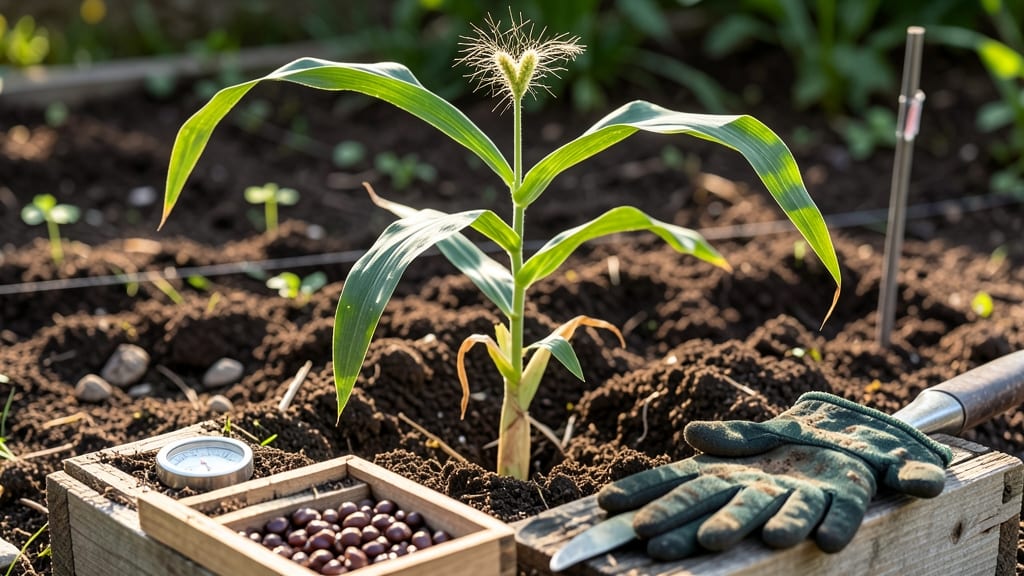
Planting corn in Nebraska isn’t just about the calendar—it’s about outsmarting 5b-6a zone surprises like frost sneaking back or soil that’s still too cold.
I’ve learned the hard way that waiting for 60°F soil (not air temp!) and timing it right after that last April 15 frost makes all the difference between a bumper crop and a sad patch of stalks.
Here’s the kicker: Nebraska’s mid-April to early June window is your sweet spot, but it shifts depending on whether you’re in the Panhandle or Eastern Corn Belt. Too early, and frost zaps tender seedlings; too late, and drought steals your harvest.
I’ll break down exactly how to read your soil’s signals—and when to pull the trigger for 🌽 that’ll actually thrive.
You’ll also discover how to pick corn varieties that match your local climate, plus pro tips for spacing and soil prep that’ll have your ears plumping up like they’re in a Nebraska cornfield commercial. No more guessing—just science-backed timing to turn your plot into a goldmine.
Let’s get into the nitty-gritty: soil thermometers, frost-free date math, and the 3-step checklist I use to lock in the perfect planting window. Your future July-October harvest starts with these moves.
Jan
❄️
Feb
❄️
Mar
🌱
Apr
🌱
May
🌽
Jun
🌱
Jul
☀️
Aug
☀️
Sep
🍂
Oct
🍂
Nov
🍂
Dec
❄️
Optimal Nebraska corn planting dates based on soil temperature zones
Nebraska’s diverse climate—from the arid Panhandle to the humid Eastern Corn Belt—means planting corn at the wrong time can mean the difference between a bumper crop and a total loss.
The key? Soil temperature and frost-free windows vary dramatically across the state, so I’ll break it down by region to help you pinpoint the perfect planting window for your location.
According to the USDA, corn seeds need soil temperatures of 50°F+ for 10+ consecutive days to germinate reliably. However, for optimal growth, aim for 60°F+—this ensures faster emergence and stronger root development.
Nebraska’s last average frost dates also shift from early April in the southeast to late May in the western plains, creating a 6-week planting window that shifts east to west.
Below, I’ve compared planting windows for 10 key Nebraska cities, including Omaha, Lincoln, Grand Island, and Scottsbluff. Each location has unique microclimates that affect when you should plant, whether you’re growing sweet corn, field corn, or popcorn.
Use this as your guide to avoid frost damage and maximize yield potential.
🌱
| Region/City |
Soil Temp Trigger (50°F+) |
Avg. Last Frost |
Ideal Planting Window |
Risk Factors |
| Omaha (Southeast) |
Mid-April |
April 15 |
April 20–May 10 |
Late frost, heavy rain |
| Lincoln (Central) |
Late April |
April 20 |
April 25–May 15 |
Drought, wind |
| Grand Island (Central) |
Early May |
April 25 |
May 1–May 20 |
Hail, erratic rain |
| Scottsbluff (Panhandle) |
Late May |
May 10 |
May 15–June 1 |
Extreme heat, drought |
| Hastings (Central) |
Late April |
April 22 |
April 30–May 15 |
Late frost, wind |
| North Platte (West) |
Early May |
May 5 |
May 10–May 25 |
Drought, high winds |
| Kearney (Central) |
Late April |
April 20 |
April 25–May 10 |
Heavy rain, hail |
| Beatrice (Central) |
Mid
How to adjust planting timing for Nebraska’s unpredictable weather patterns
Nebraska’s spring weather can shift from 60°F sunshine to 30°F frost in a single week, making corn planting a delicate balance. The key is flexibility—using real-time data instead of relying on average frost dates.
I’ve learned that even a 5-day delay can mean the difference between thriving plants and frost-nipped seedlings.
Start by checking your local NOAA frost-free date (typically April 15 for most of Nebraska), but don’t plant until the soil warms to at least 50°F for 10+ days. A soil thermometer placed 4 inches deep—where roots will grow—gives you the most accurate reading.
I’ve buried mine near my planting rows and check it daily after rain or cold snaps.
🌽 Nebraska Corn Planting Timeline
🌡️ Soil Temp:
50°F+
10+ days
📅 Planting Window:
Mid-April
to June 1
⏰ Frost Risk:
After April 15
Check NOAA alerts
Pro Tip: Use short-season varieties (75-85 days) in the Panhandle and long-season (100+ days) in Eastern Nebraska. Adjust planting dates by 1-2 weeks based on your microclimate.
For short-season varieties (like Pioneer 32N33), plant as early as April 20 in Western Nebraska if soil temps are stable. In Eastern Nebraska, wait until May 1 to avoid early frost.
I’ve found that planting 1-2 weeks later in the eastern half often yields better results because the growing season is longer.
Use a Nebraska Weather Risk Checklist daily to decide when to plant. Check for:
- ✅ Soil temp ≥50°F for 10+ days
- ✅ NOAA frost risk below 10% for next 7 days
- ✅ No rain in forecast for 24 hours
If any of these fail, delay planting. I once lost a 3-acre field because I ignored the 10% frost risk warning—don’t make the same mistake.
Flexible schedules work best. If you’re unsure, plant half your seeds early (mid-April) and the rest 2 weeks later. This spreads risk and ensures at least some corn matures. For long-season varieties, prioritize June 1 planting in Western Nebraska to avoid drought stress during tasseling.
Remember, Nebraska’s weather is unpredictable, but with a soil thermometer, NOAA alerts, and a flexible schedule, you can turn uncertainty into opportunity. The goal isn’t perfection—it’s resilience. 🌱
★★★★★4.9(3 reviews)
|