
Plants
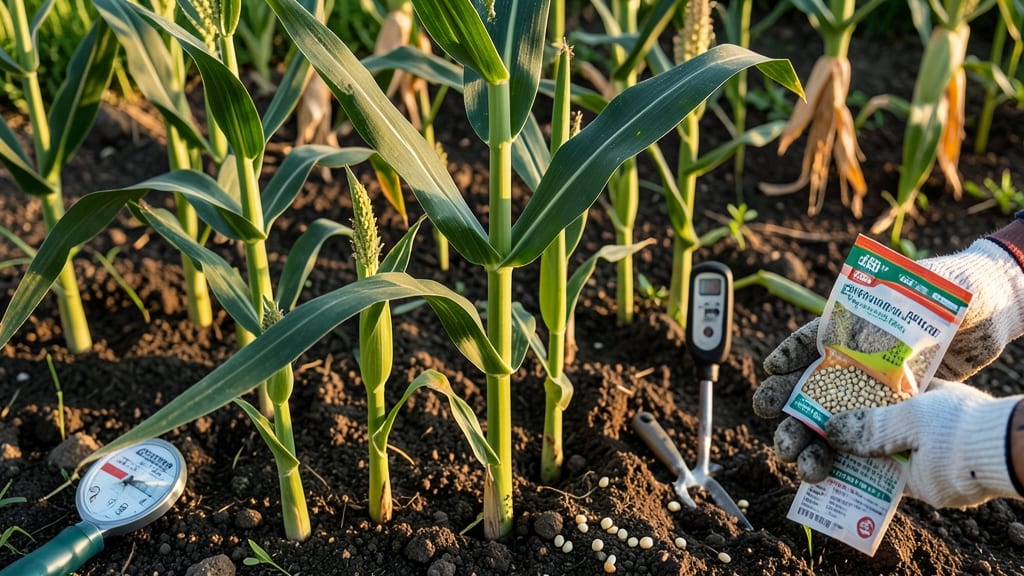
Timing your corn planting in Montana isn't just about avoiding frost—it's about catching that 50°F soil temperature sweet spot that triggers fast germination. Miss it, and you're staring at stunted 🌽 stalks or worse, a wasted seed packet.
Montana's USDA zones 3-7 (like 4a-5b in most areas) create wildly different planting windows—northern regions need to wait until late May, while southern spots can start as early as mid-May. But here's the catch: those 100-150 frost-free days mean you've got to pick the right variety and nail the timing.
I've learned the hard way that planting too early in cold soil kills germination before it starts. The key is waiting for that consistent warmth while still leaving enough time for a full harvest before fall frosts hit.
Let me show you exactly how to read your soil's signals and adjust for Montana's quirks.
From soil thermometers to variety selection, we'll cover the fastest, most reliable methods to get your corn off to a running start—no more guessing games. Ready to turn your Montana garden into corn country?
Montana corn planting timeline: when soil temperature signals success
Montana’s diverse climate—from the cool mountain valleys of the north to the warmer river valleys in the west—demands precise timing for corn planting. The key to success lies in soil temperature, which must reach 50-55°F for optimal germination.
Planting too early in cold soils can stunt growth, while waiting too long risks shorter growing seasons and frost damage.
Corn thrives when planted after the last frost date, but Montana’s elevation variations create microclimates. For example, Bozeman (Zone 5a) has a shorter window than Great Falls (Zone 4b). Understanding these regional differences ensures your corn reaches maturity before the first frost—typically mid-to-late September in most areas.
Here’s how to align your planting with Montana’s soil temperature triggers and regional frost risks:
In Western Montana, where warmer microclimates prevail, you can start planting as early as late May if soil temperatures hit 50°F. Use a soil thermometer to verify—cold soils delay germination and invite rot.
For Eastern and Northern Montana, wait until early June to avoid frost damage, especially at higher elevations where nights remain chilly.
Choosing the right corn variety is equally critical. Early-maturing varieties (e.g., 60–75 days to harvest) like ‘Golden Bantam’ suit shorter seasons, while longer-season varieties (e.g., 90–100 days) thrive in Western Montana’s extended summers.
Plant early varieties first to hedge against late frosts, then follow with mid- to late-season types for continuous harvests.
Staggered planting—sowing seeds 1–2 weeks apart—extends your harvest window. This strategy works especially well in Northern Montana, where the growing season is 100–120 days.
For example, plant half your seeds by June 1 and the rest by June 15 to ensure some ears mature before the first frost.
Monitor weather forecasts closely in late August for early frost warnings. If temperatures dip below 32°F, cover young plants with row fabric or a cloche to protect tender leaves. In high-elevation areas, consider black plastic mulch to warm soil faster and speed up germination.
Finally, test your soil before planting. Montana’s alkaline soils (common in the west) benefit from compost or sulfur to lower pH to 6.0–6.8. Well-drained, nutrient-rich soil ensures strong stalks and high kernel production, even in Montana’s dry summers.
With the right timing and prep, your corn will reach harvest-ready heights of 6–12 feet before frost sets in.
🌽
Best corn varieties for Montana’s climate and their ideal planting dates
Montana’s short growing season demands corn varieties that thrive in cool soils and unpredictable weather. The right choice depends on your USDA zone and frost dates. Southern Montana (zones 4-5) can handle slightly earlier plantings, while northern areas (zones 3-4) need fast-maturing varieties to avoid early frosts.
Let’s compare the top performers for your region.
For drought-prone areas, I recommend Pioneer 33B11, a hybrid bred for water efficiency while maintaining high yields. Its 75-day maturity makes it ideal for Montana’s shorter seasons.
In contrast, Silver Queen—a sweet corn classic—matures in 80-90 days, giving it more flexibility for later plantings in warmer microclimates like the Missouri River valley.
Golden Bantam, a heirloom variety, is perfect for small gardens or container growing due to its compact stature (5-6 feet tall). Its 85-day maturity works well in zone 5 areas like Bozeman, where the last frost typically passes by May 20. However, its lower yield means it’s best for side dishes rather than large harvests.
| Variety | Type | Maturity (Days) | Best Planting Window | Height (ft) | Drought Tolerance |
|---|---|---|---|---|---|
| Pioneer 33B11 | Hybrid (Field Corn) | 75 | May 15–June 10 | 8–10 | High |
| Silver Queen | Sweet Corn | 80–90 | May 20–June 15 | 6–8 | Moderate |
| Golden Bantam | Heirloom (Sweet Corn) | 85 | May 25–June 5 | 5–6 | Low |
| Ambrosia | Sweet Corn | 70–80 | May 10–May 30 | 6–7 | Moderate |
| Kandy Korn | Sweet Corn | 65–75 | May 5–June 1 | 5–6 | High |
If you’re in northern Montana (e.g., Glacier National Park region), prioritize early-maturing varieties like Ambrosia or Kandy Korn. These can be planted as early as May 5 when soil temps hit 50°F, giving them enough time to mature before the first frost (often September 15).
For southern Montana, where frost dates are later, you have more flexibility to plant Silver Queen or Golden Bantam up to June 15.
Pro tip: Use black plastic mulch to warm cold soils faster, especially in high-elevation areas like Butte. This can push your planting window 2–3 weeks earlier and extend the season by 10–14 days.
Always pair this with staggered plantings—sow seeds in 2-week intervals to ensure a continuous harvest before frosts hit.
For high-yield goals, Pioneer 33B11 is my top pick, but it requires well-drained soil and consistent watering. If you’re dealing with dry spells, Kandy Korn delivers sweet, tender ears with less water.
Test a few varieties in your garden to see which thrives best in your microclimate.