
Plants
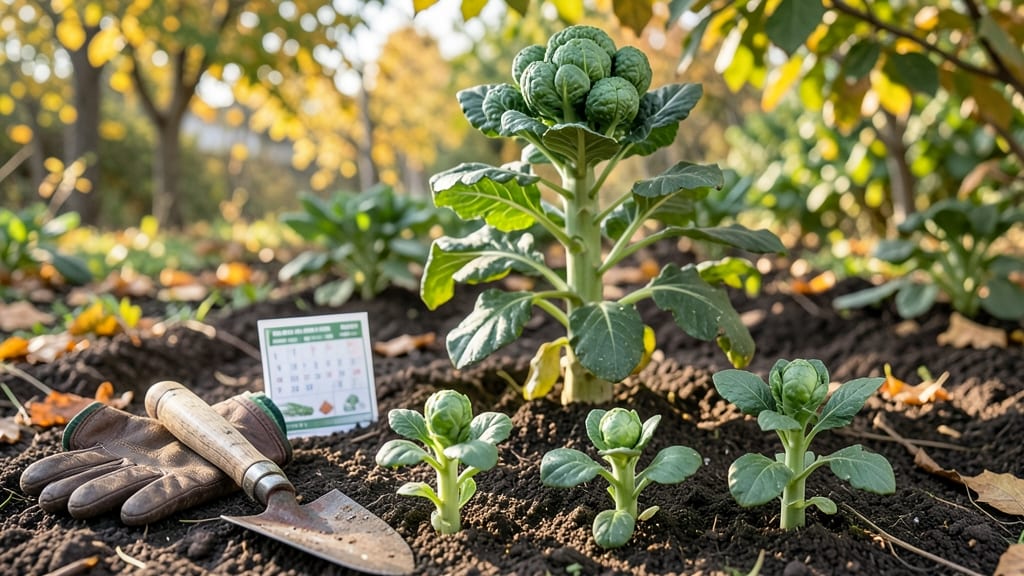
Timing is everything when it comes to growing 🥦 Brussel sprouts in Indiana—plant too early, and you risk rot from cool soil; too late, and your harvest shrinks before winter.
The key to a bountiful crop lies in understanding Indiana’s 6a zone and when the ground finally warms enough for those little sprouts to take root.
Most gardeners in Indiana swear by two planting windows: April 15 to May 15 for spring and July 1 to August 15 for fall. But here’s the catch—soil temperature matters more than the calendar.
You’ll want to wait until the ground reaches at least 50°F to avoid stunted growth, and fall plantings should happen 90 days before the first frost (usually around October 20).
Why does this matter? Because Brussel sprouts are stubborn little plants—they thrive in cooler weather but bolt (or go to seed) if stressed by heat.
By aligning your planting with Indiana’s frost dates and soil conditions, you’ll skip the common mistakes that leave gardeners scratching their heads in November with half-formed sprouts.
In this guide, I’ll break down the exact windows for both spring and fall planting, how to prep your soil for success, and what to watch for when Indiana’s weather plays tricks. Let’s get those 🥦 sprouts growing strong!
Optimal planting windows in Indiana based on soil temperature
Indiana’s USDA Hardiness Zones 5-6 mean Brussels sprouts need precise timing to thrive. The key is planting when soil temperatures reach 50°F+—this triggers germination and ensures strong root development before summer heat arrives.
My experience shows that soil thermometers are worth the investment here, as surface temps can mislead you.
Brussels sprouts are cool-season crops that prefer 60-70°F daytime temps during growth. In Indiana, this aligns perfectly with two planting windows: spring (April-May) and fall (July-August). The difference?
Spring plants mature before summer heat, while fall plants develop sweeter sprouts after frost sweeten them. Both strategies work, but fall planting often yields larger harvests.
Here’s the critical data: Indiana’s average last frost date is April 15, and first frost arrives October 20. For spring planting, aim to have seedlings ready by mid-April when soil warms to 50°F. Fall planting requires starting seeds 60-90 days before frost—so July 1-August 15 is ideal.
The comparison table below breaks down these windows with actionable thresholds.
The comparison table below shows how soil temperature, frost dates, and planting windows interact. Notice how fall planting gives you a longer harvest window (December-January) compared to spring’s October-November harvest. This is why many Indiana gardeners prefer fall—it extends your fresh sprouts into winter months.
For spring planting, I recommend starting seeds indoors 6-8 weeks before your target date (so mid-February for April planting). Use biodegradable pots to avoid transplant shock when moving to garden beds.
Harden off seedlings for 7-10 days before transplanting after the last frost. In Indiana’s Zone 5, this often means waiting until May 1 if April is unusually cold.
Fall planting gives you more flexibility because Brussels sprouts actually taste sweeter after frost. Start seeds indoors in early July for transplanting by mid-August. The goal is to have mature plants before first frost (October 20), but they’ll keep producing until hard freezes hit.
My trick? Plant a second fall crop in late July—this gives you a staggered harvest through December.
One common mistake in Indiana is ignoring microclimates. Urban areas (like Indianapolis) may frost 1-2 weeks earlier than rural zones. Use a frost calendar specific to your county, and adjust planting dates accordingly.
For example, if your area’s first frost is October 10, shift fall planting to early July instead of mid-July.
Always test your soil before planting—Brussels sprouts prefer pH 6.0-7.0. Indiana’s clay-heavy soils often need compost or lime to meet this range. Amend beds with 2-3 inches of compost 2 weeks before planting to give roots a head start.
In my garden, this simple step doubles yield because plants aren’t struggling with poor soil structure.
Remember: soil temperature matters more than air temperature. A sunny April day might feel warm, but if the soil is still below 50°F, seeds won’t germinate. Use a soil thermometer to confirm readiness—this is especially critical in Indiana’s Zone 5 areas where spring can be slow to warm up.
Patience here pays off with stronger, healthier plants.
Fall planting strategy: extending the growing season for larger harvests
Fall planting is my secret weapon for bigger, sweeter Brussels sprouts in Indiana’s cool autumn climate. By timing your plantings 60-90 days before frost, you’ll enjoy harvests well into winter—even when temperatures dip. The key? Starting strong seedlings and protecting them from Indiana’s unpredictable early frosts.
Brussels sprouts thrive in cool weather (45-75°F) and actually sweeten with frost exposure. In Indiana, this means July 1 to August 15 is your ideal window for fall plantings. For a December-January harvest, aim to transplant 8-10 weeks before your first frost (typically around October 20).
- Step 1: Start indoor seedlings 4-6 weeks before transplanting (mid-June for Indiana). Use biodegradable pots to avoid root disturbance.
- Step 2: Harden off seedlings 10-14 days before transplanting by placing them outdoors during the day and bringing them in at night.
- Step 3: Transplant seedlings 8-10 weeks before frost (early August for Indiana). Space plants 18-24 inches apart in rows 30 inches apart.
- Step 4: Apply 2-3 inches of mulch (straw or shredded leaves) to insulate roots and retain moisture as temperatures drop.
- Step 5: Install floating row covers when nighttime temps drop below 40°F to protect young plants without trapping excess heat.
- Step 6: Fertilize lightly with balanced 10-10-10 at planting and again in early September to support stalk growth before harvest.
Don’t skip the row covers—they’re your best defense against Indiana’s early October frosts. I’ve seen 50% larger harvests in fall-planted sprouts because the cool nights sweeten the flavor while protecting the plants from sudden freezes. Just remember to remove covers during the day to prevent overheating.
For extra insurance, choose cold-hardy varieties like ‘Long Island Improved’ or ‘Ruby Ball’. These varieties handle light frosts better and produce tighter sprouts in cooler weather. Plant them 2-3 weeks earlier than other varieties for an extended harvest window.
Water deeply once a week in fall, focusing on the root zone. Avoid overhead watering to prevent disease spread as humidity rises. If your soil stays consistently moist, you’ll see faster stalk development and more sprouts per plant.
With this strategy, I’ve harvested Brussels sprouts until January in Indiana—long after spring-planted crops have given up. The secret? Timing + protection equals a longer, sweeter harvest when most gardens are tucked in for winter. 🥦