
Plants
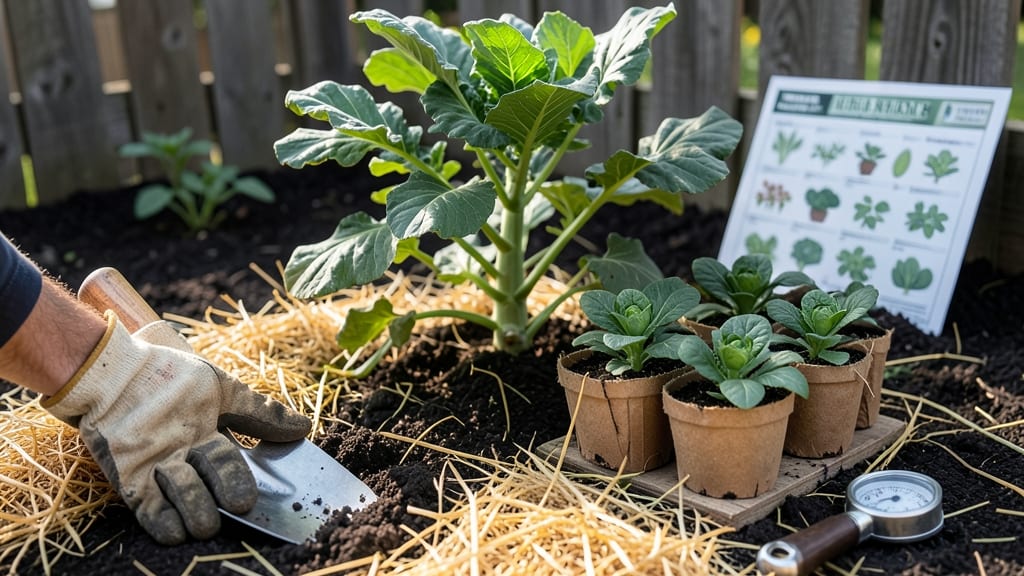
Planting Brussel sprouts 🥦 in Illinois at the wrong time means either bitter-tasting harvests or wasted effort—because these cool-season veggies hate summer heat. The key to sweet, compact sprouts lies in timing your plantings precisely around frost dates, not just guessing when to stick seeds in the ground.
Most gardeners in zones 5-6 focus only on spring planting, but Illinois’ mild winters actually make fall crops your secret weapon.
I’ve grown Brussel sprouts here for years, and the difference between a 90-day harvest and a bolted mess comes down to knowing exactly when to start seeds indoors or set out transplants—whether you’re in Chicago’s urban gardens or rural Springfield.
Let’s break it down: Spring plantings go in mid-April to late June, but the real magic happens in late July when you prep for fall. With the right soil temps and frost-free date math, you can extend harvests through December—no more sad, shriveled sprouts.
I’ll walk you through the exact windows, plus pro tips to beat Illinois’ unpredictable weather.
Ready to grow Brussel sprouts that taste like they came from a farmers’ market, not a seed packet? Grab your calendar and let’s get planting—because timing is everything when you’re chasing that perfect 1-inch sprout in the dead of winter.
Illinois frost dates for Brussel sprouts: planting windows to avoid bolting
Brussel sprouts love Illinois' cool climate, but timing is everything. Plant too early, and you risk premature bolting—those bitter, flowery sprouts we all dread. Too late, and frost cuts your harvest short.
Illinois' USDA zones 5-6 split into two frost regions: Zone 5A (northern Illinois) and Zone 6B (southern Illinois), each with its own ideal planting windows.
For northern Illinois (Zone 5A), the last spring frost typically hits around May 15, while southern Illinois (Zone 6B) sees its last frost by April 15. The first fall frost arrives earlier in the north (October 15) than the south (November 1).
These dates are your guide to avoiding bolting while maximizing harvest potential.
Here's the key: Plant spring brussel sprouts 4-6 weeks before your last frost date, and fall brussel sprouts 8-10 weeks before your first frost. This timing ensures mature plants before extreme heat or cold sets in.
For northern Illinois, that means mid-April to late May for spring and late July to early August for fall. Southern Illinois gardeners can start slightly earlier—early April to mid-May in spring and early July to mid-August in fall.
| Region | USDA Zone | Last Spring Frost | First Fall Frost | Spring Planting Window | Fall Planting Window |
|---|---|---|---|---|---|
| Northern Illinois | Zone 5A | May 15 | October 15 | Mid-April to Late May | Late July to Early August |
| Southern Illinois | Zone 6B | April 15 | November 1 | Early April to Mid-May | Early July to Mid-August |
Why these windows? Brussel sprouts need cool temperatures (50-75°F) to develop sweet, compact sprouts. Planting too early in spring risks bolting from warm soil temperatures, while late spring planting may not mature before summer heat.
Fall planting works because cooler nights in late summer/early fall prevent bolting while allowing harvest before frost.
For northern Illinois gardeners, focus on fall planting—it's more reliable. Southern Illinois gardeners can try both spring and fall, but prioritize fall harvests for the sweetest sprouts.
Remember: Soil temperature matters more than air temperature. Use a soil thermometer to confirm your planting window—ideal soil temps are 40-50°F for germination and 60-65°F for growth.
Pro tip: If you're in Zone 5A and want a spring harvest, start seeds indoors in March and transplant after your last frost. For fall, direct-sow seeds by July 15 to ensure maturity before frost.
Southern Illinois gardeners can direct-sow as early as April 1 for spring or by July 1 for fall.
Bolting is your worst enemy, but with these frost dates, you'll avoid it. The key is planting early enough for maturity but late enough for cool soil temps.
Northern Illinois gardeners should aim for 90-100 days to maturity before the first frost, while southern Illinois has a slightly longer window (100-110 days). Varieties like 'Long Island Improved' or 'Ruby Ball' are great choices—they mature faster and handle Illinois' climate well.
Don't forget: Succession planting is your secret weapon. In Illinois, you can make two fall plantings—one in early July and another in mid-August—to stretch your harvest through October. This works because the second planting benefits from cooler late-summer nights while still maturing before frost.
Finally, monitor your local microclimate. Urban areas like Chicago often have earlier frosts than rural spots, while southern Illinois' Mississippi River valley can delay first frosts by weeks. Use a frost calendar from your local extension office to fine-tune these dates for your specific location.
With these frost dates and planting windows, you'll grow sweet, bolt-free brussel sprouts every season—no bitter surprises! 🥦
Step-by-step planting schedule for zero-bolt Brussel sprouts in Illinois
Brussel sprouts need precise timing to avoid bitter bolting—especially in Illinois’ variable climate. The key is planting 4-6 weeks before your first frost for fall harvests or early spring for summer crops.
I’ll break down the exact steps for Chicago, Springfield, and Peoria, including seed-starting dates and transplant windows to maximize your harvest.
Illinois’ USDA zones 5-6 mean frost dates shift slightly by region. Chicago’s last frost is around April 15, while Peoria’s comes April 20. For fall crops, aim for July 15–August 1 plantings.
Use this schedule to align with your local frost dates and avoid premature bolting from heat stress.
- 1 Start Seeds Indoors: March 1–15 (8–10 weeks before transplant). Use seed-starting trays with well-draining mix and keep under grow lights for 12–14 hours/day.
- 2 Hardening Off: Mid-April (1 week before transplant). Acclimate seedlings to outdoor temps by placing them outside 4–6 hours/day, gradually increasing exposure.
- 3 Transplant Seedlings: April 20–May 15 (after last frost). Space 18–24 inches apart in full sun with rich, well-draining soil (pH 6.0–7.0). Water deeply after transplanting to reduce shock.
- 4 Succession Planting: July 15–August 1 (for fall harvest). Sow directly in soil or transplant 6-week-old seedlings to extend harvest into November.
- 5 Mulch & Fertilize: After transplanting. Apply 2–3 inches of mulch (straw or shredded leaves) to retain moisture and side-dress with compost every 4–6 weeks for steady growth.
- 6 Harvest Time: October–December. Pick bottom-up when sprouts are 1–1.5 inches wide. Use clean shears to avoid damaging the stem for continued growth.
For Chicago gardeners, adjust transplant dates 1 week later (May 1–15) due to later frost dates. In Peoria, you can plant 1 week earlier (April 10–20) if your soil warms quickly.
Always monitor soil temps—Brussel sprouts thrive in 50–75°F soil and bolt above 80°F. Use shade cloth in summer if temps rise.
Pro tip: Direct-sow seeds in late summer (August) for a second fall crop, but use row covers to protect from early frosts. This method skips the transplant shock and often yields sweeter sprouts with less bitterness.
Test your soil’s nitrogen levels—too much causes leafy growth over sprouts—and amend with compost instead of synthetic fertilizer.
By following this schedule, you’ll avoid the #1 mistake Illinois gardeners make: planting too late in spring or too early in fall. Zero-bolt sprouts are just a well-timed transplant away! 🥦