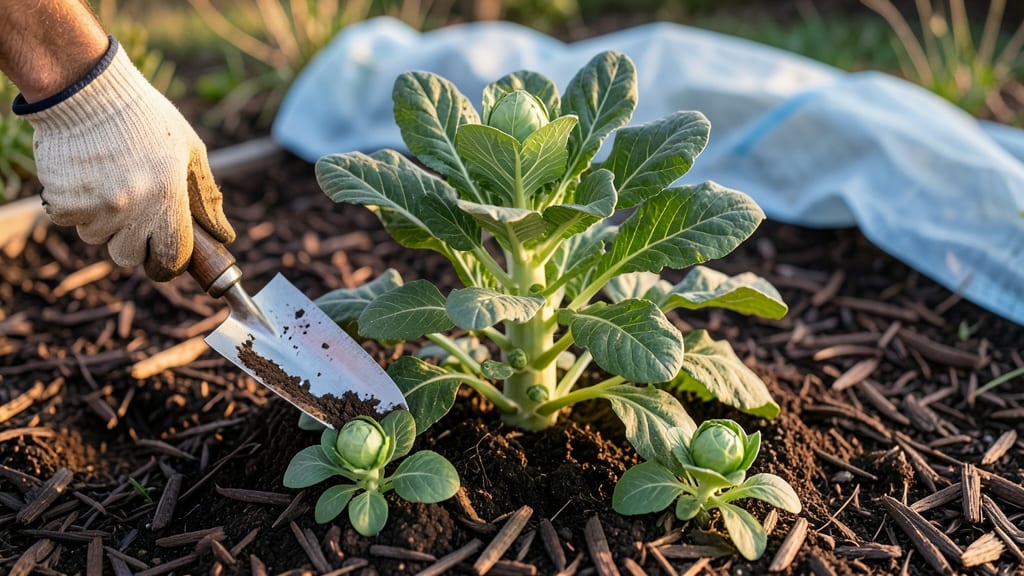
Timing your Brussel sprouts 🥦 planting in Wisconsin isn’t just about following a calendar—it’s about outsmarting the unpredictable frosts that can turn your hard work into a sad, wilted pile.
Plant too early, and a late frost will nip your seedlings in the bud; too late, and your harvest might never even form before winter sets in.
Here’s the secret: Wisconsin’s USDA Zones 4b-5b demand precision, and the late March to mid-April window for transplants—or early July to early August for a fall harvest—isn’t just a suggestion, it’s your ticket to a bountiful garden.
But with frost dates shifting from mid-May in the north to mid-October in the south, even the best-laid plans can go sideways.
What if I told you there’s a way to stagger your plantings so you’re harvesting crisp, flavorful sprouts from October through November—even when your neighbors are still waiting for their first frost? It starts with understanding your county’s microclimate and a few proven strategies to beat Wisconsin’s short growing season.
Let’s break it down: exactly when to plant, how to protect your crop from late-season chills, and the soil prep tricks that’ll make your Brussel sprouts 🥦 thrive when others give up. Ready to turn your garden into a fall harvest goldmine?
Jan
❄️
Feb
❄️
Mar
🌱
Apr
🌱
May
🌸
Jun
☀️
Jul
☀️
Aug
🌱
Sep
🥦
Oct
🥦
Nov
🥦
Dec
🌱
Best planting dates for Brussels sprouts in Wisconsin by county
Wisconsin’s USDA Hardiness Zones 3-5 create unique challenges for growing Brussels sprouts, but with the right timing, you can enjoy a bountiful fall harvest. The key is planting 4-6 weeks before the first frost—typically late July to early August—while accounting for regional frost variations.
Northern counties like Bayfield or Ashland face earlier frosts, while southern areas like Walworth or Kenosha have longer growing seasons.
Brussels sprouts thrive in cool fall temperatures, making them perfect for Wisconsin’s climate. However, planting too early risks bolting (premature flowering) from summer heat, while late plantings may not mature before frost.
Below is a county-specific guide to help you time your plantings for success, whether you’re growing in Zone 3, 4, or 5.
| County |
USDA Zone |
Last Frost (Avg.) |
First Frost (Avg.) |
Transplant Window |
Direct Sow Window |
Harvest Window |
| Bayfield |
3 |
May 10 |
September 20 |
June 15-30 |
July 1-15 |
October 10-November 1 |
| Ashland |
3 |
May 15 |
September 25 |
June 15-July 10 |
July 1-15 |
October 15-November 5 |
| Dodge |
5 |
May 5 |
October 10 |
June 1-30 |
July 1-August 1 |
October 1-November 15 |
| Milwaukee |
5 |
May 1 |
October 15 |
June 1-August 10 |
July 15-August 15 |
October 10-December 1 |
| Walworth |
5 |
April 25 |
October 20 |
May 15-August 15 |
July 1-August 20 |
October 15-December 10 |
| Kenosha |
5 |
April 20 |
How to extend your Brussels sprout harvest season in Wisconsin
Wisconsin’s short growing season can make Brussels sprouts tricky, but with the right strategies, you can enjoy fresh harvests well into winter. The key is staggering plantings and protecting your crops from early frost.
By combining succession planting with frost protection methods, you’ll turn your garden into a year-round Brussels sprout factory—even in Wisconsin’s cold climate.
Brussels sprouts thrive in cool weather, making them perfect for Wisconsin’s fall and early winter. However, a sudden frost can ruin your harvest if you’re not prepared. The solution? Plant in stages and use protective covers to shield your plants.
This way, you’ll have a steady supply from October through December, even when temperatures drop below freezing.
5 Proven Techniques to Extend Your Harvest
- Succession Planting: Start your first batch in late July for a fall harvest, then follow with 4-week intervals until early August. This ensures a continuous supply as older plants mature.
- Row Covers: Use lightweight floating row covers to protect plants from light frost (28°F). These allow sunlight and air circulation while shielding against cold snaps.
- Cold Frames: For a later harvest, build or purchase a cold frame. It can extend your season by 4-6 weeks by trapping heat during the day and insulating at night.
- Hardening Off: Gradually expose seedlings to cold temperatures starting 2 weeks before transplanting. This toughens them up for Wisconsin’s unpredictable fall weather.
- Mulch Heavily: Apply a 4-inch layer of straw or leaves around the base of plants. This insulates roots and keeps soil temperatures stable, even when frost is in the forecast.
One of my favorite tricks is planting a mix of early and late varieties. Early varieties like ‘Long Island Improved’ mature faster, giving you sprouts by early October, while late varieties like ‘Ruby Ball’ can hold off until December.
This diversity ensures you’re never left without fresh Brussels sprouts, even when Wisconsin’s first hard frost hits.
Don’t forget to harvest strategically. Start picking from the bottom of the stalk upward once sprouts reach 1-1.5 inches in diameter. This encourages more sprouts to form higher up on the plant.
If a frost is forecasted but your sprouts aren’t ready, cover them with a thick blanket or tarp and remove it during the day to let them photosynthesize.
With these techniques, you’ll turn Wisconsin’s short growing season into a Brussels sprout bonanza. Your neighbors will be jealous when you’re still harvesting in December while their gardens are buried under snow. Just remember: protection, patience, and planning** are your best friends in Wisconsin’s unpredictable climate.
★★★★★4.7(12 reviews)
|