
Plants
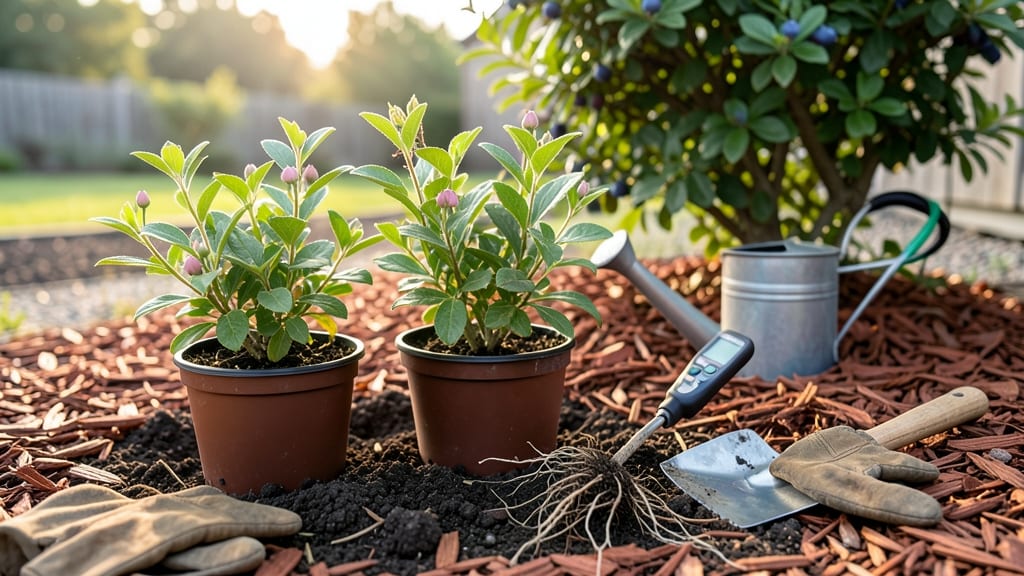
Planting blueberries in Zone 9 isn't just about the calendar—it's about matching varieties to your region's unique chill hours. Too early, and your 🫐 bushes might not get the cold snap they need; too late, and summer heat could stress young roots before they establish.
The key is planting between late December and February, when soil stays cool and frost-free conditions align with dormancy needs.
Most gardeners in Southern California, Arizona, or Nevada desert regions assume blueberries won't thrive here—but the right varieties (like 'Misty' or 'Centennial') can flourish with precise timing.
These low-chill varieties need 300–600 hours of cold, and planting in late winter gives them the best shot at strong root growth before the heat ramps up.
Here's what sets Zone 9 apart: unlike colder climates, you won't worry about frost damage, but summer heat can be brutal. That's why mulching and morning watering become your best friends.
I'll show you exactly how to prep your soil, choose the right planting window for your microclimate, and keep your bushes happy through the hottest months.
Ready to turn your backyard into a blueberry patch? Let's dive into the science-backed schedule that'll have you harvesting sweet, juicy berries by next spring—no guesswork required.

Zone 9 blueberry planting calendar: chill-hour requirements by variety
Growing blueberries in Zone 9 requires careful timing to balance chill-hour needs with extreme summer heat. Unlike colder zones, Zone 9’s mild winters mean most traditional varieties won’t thrive—but the right low-chill varieties can flourish with precise planting schedules.
The key is planting when soil temps are cool (60°F or below) and before summer’s brutal heat sets in.
Blueberries need chill hours (temperatures between 32–45°F) to set buds for fruit production. In Zone 9, varieties range from 300–900 chill hours, with Southern Highbush and Rabbiteye types being the most adaptable.
Coastal areas (like San Diego) may get 300–500 chill hours, while inland desert regions (like Phoenix) might see 500–900 hours—so variety selection matters.
📅 Optimal planting windows in Zone 9 are November through March, with December–February being ideal. Planting in late fall (November) gives roots time to establish before summer, while early spring (March) risks heat stress before dormancy. Container-grown plants offer flexibility—you can plant them year-round in mild microclimates, but bare-root plants need cooler soil.
Here’s your Zone 9 blueberry planting calendar, broken down by variety and chill-hour needs:
For coastal Zone 9 (e.g., Los Angeles, San Diego), aim for December–January planting to align with natural chill periods.
Inland areas (e.g., Phoenix, Las Vegas) should plant November–December to avoid early heat spikes. Container-grown blueberries can be planted year-round but thrive best when moved to shaded areas during summer.
After planting, prioritize deep watering (1–2 gallons per plant) every 3–5 days to encourage root growth. Avoid fertilizing until late winter—blueberries in Zone 9 need time to establish roots before pushing new growth. Use shade cloth (30–50%) during peak summer (June–August) to protect young plants from heat stress.
Pro tip: Monitor your local chill-hour accumulation using a home weather station or online tools like PlantMap. If your area gets fewer than 300 chill hours, consider heirloom varieties like 'Top Hat' or 'Jubilee,' which are bred for minimal chill requirements.
These can even produce fruit with as little as 200 chill hours!
Once established, your Zone 9 blueberry bushes will reward you with harvests from April–June. The secret? Planting at the right time ensures they bloom, fruit, and survive the heat—without skipping a beat. 🫐
How to adjust planting timing for heat tolerance and summer dormancy
Zone 9’s intense summer heat and minimal chill hours can make blueberry cultivation tricky. The key to success lies in strategic planting timing and seasonal adjustments to protect young plants while ensuring proper dormancy.
Unlike cooler climates, blueberries in Zone 9 need early planting to establish roots before summer stress hits.
Blueberries thrive when planted in late winter (December–February), but even then, summer dormancy becomes critical. Without proper care, your bushes may suffer heat shock or fail to produce fruit. Here’s how to optimize planting timing and protect your plants through the hottest months.
- 1. Mulch heavily with 3–4 inches of wood chips to retain soil moisture and regulate root temperature. Use acid-loving mulch like pine bark or cedar.
- 2. Install shade cloth (30–50%) over newly planted bushes during peak summer months (June–August) to reduce leaf scorch and slow water loss.
- 3. Water deeply early in the morning (before 8 AM) to avoid evaporation. Aim for 1–2 gallons per plant every 3–5 days, increasing frequency during heatwaves.
- 4. Prune lightly in late winter to remove dead wood and open canopy for airflow. Avoid heavy pruning in summer, as it stresses the plant.
- 5. Monitor soil pH (keep it 4.5–5.5) and amend with sulfur if needed. Acidic soil is non-negotiable for blueberry health in Zone 9’s alkaline conditions.
Adjusting your irrigation schedule is one of the most critical steps. Blueberries in Zone 9 hate soggy roots but need consistent moisture during heatwaves. I recommend drip irrigation to deliver water directly to the root zone, reducing waste and fungal risks.
If using overhead sprinklers, water before 6 AM to prevent fungal diseases like botrytis.
Summer dormancy isn’t just about survival—it’s about preparing for next year’s harvest. After the first year, your blueberries will enter a natural dormancy period in late summer (August–September).
During this time, reduce watering slightly but keep the soil lightly moist. This mimics their wild habitat and ensures stronger root growth when cooler weather returns.
For container-grown blueberries, timing adjustments are even more critical. Containers heat up 30% faster than in-ground plantings, so I recommend planting in late January and moving pots to partial shade by May. Use self-watering pots with acidic potting mix to maintain ideal conditions.
Finally, don’t forget that microclimates matter in Zone 9. Coastal areas (like Southern California) have cooler summers and can handle slightly later plantings (March), while inland desert regions (like Arizona) need earlier plantings (December–January) to avoid extreme heat.
Observe your local conditions and adjust accordingly—your blueberries will thank you with a bountiful harvest! 🫐