
Plants
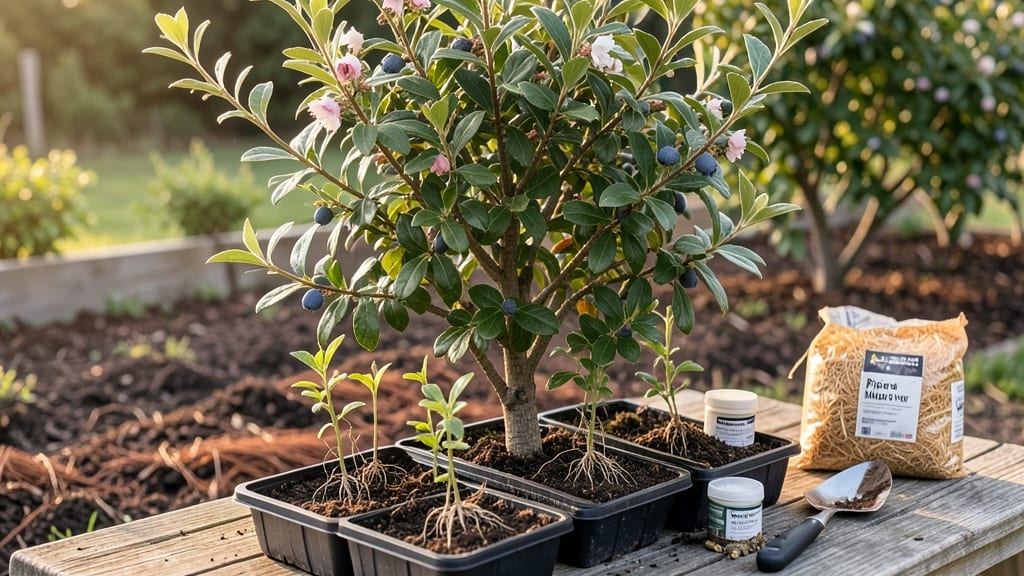
Planting a blueberry bush 🫐 in Alabama isn't just about throwing it in the ground—it's about timing it right to match your variety's chill-hour needs with the state's unpredictable weather.
Get this wrong, and you could end up with bushes that flower but never fruit, or worse, die back from heat stress before they even establish.
Alabama's warm winters mean most blueberry varieties need careful selection and precise planting windows to thrive. Whether you're planting bare-root bushes in late fall or container-grown plants in early spring, understanding your specific zone (7a-8b) and variety requirements is the key to success.
The right timing ensures your bushes get the dormancy they need while avoiding Alabama's infamous summer humidity and pest pressures.
I've learned the hard way that not all blueberries are created equal in the South. Some varieties like Southern Highbush need 300-400 chill hours, while Rabbiteye types can handle up to 900 hours.
In this guide, I'll walk you through exactly when to plant each type in Alabama, plus how to adjust for early freezes, late frosts, and those infamous Alabama heatwaves that can throw off even the best-laid plans.
Ready to grow blueberries that actually produce fruit? Let's dive into the perfect planting schedule for your Alabama garden, including soil prep tips and variety recommendations that will have you harvesting sweet 🫐 berries in late spring.
You'll discover how to match your bushes to your microclimate and avoid the most common mistakes that keep Alabama gardeners from success.
Best planting months in Alabama by blueberry variety and chill-hour needs
Alabama’s climate presents unique challenges for blueberry growers, where chill-hour requirements directly impact fruit production. The state spans USDA Zones 7a-8b, with North Alabama typically receiving 600-900 chill hours and South Alabama averaging 300-600 hours.
Choosing the right blueberry variety and planting at the optimal time ensures your bushes break dormancy properly and produce abundant harvests.
For most Alabama gardeners, the best planting windows are late fall (October-November) or early spring (March-April). Fall planting allows roots to establish before winter, while spring planting gives bushes a head start in warmer months.
However, Rabbiteye varieties often require more chill hours and may need adjustments based on your specific microclimate.
In North Alabama, where chill hours are abundant, Rabbiteye varieties like 'Powderblue' or 'Climax' thrive when planted in November-December or February-March. These varieties need the extra cold to set fruit properly, so planting too early can lead to premature bud break and frost damage.
For Southern Highbush varieties like 'Southern Belle', stick to October-November planting to avoid summer heat stress.
For South Alabama, where chill hours are limited, Southern Highbush varieties are your best bet.
Plant them in October-November or March-April, but consider providing partial afternoon shade during peak summer months to prevent leaf scorch. Half-high varieties like 'Tifblue' are a great compromise, offering moderate chill-hour needs while producing consistently in both regions.
Regardless of variety, always plant bare-root bushes when they’re dormant to minimize transplant shock. If using container-grown plants, you can plant year-round except during extreme heat. Before planting, amend your soil with peat moss or sulfur to maintain the acidic pH (4.5-5.5) blueberries crave.
A soil test is a smart first step to avoid costly mistakes.
One common mistake in Alabama is planting too late in spring. By mid-April, soil temperatures often rise too quickly, stressing young roots. If you miss fall planting, aim for early March at the latest.
For container plants, you have more flexibility, but still avoid planting during summer heatwaves, which can cause wilting and poor establishment.
Microclimates play a huge role in Alabama’s gardening success. If you’re in a valley or low-lying area, chill hours may accumulate earlier, while higher elevations might experience later frosts. Monitor your local Alabama Cooperative Extension Service frost dates and adjust your planting timeline accordingly.
In some cases, a 1-2 week delay can mean the difference between a thriving bush and a struggling one.
After planting, focus on mulching to retain moisture and regulate soil temperature. Use pine straw or wood chips, keeping the mulch 3-4 inches deep but avoid piling it against the stem.
Water deeply 1-2 times per week during the first growing season, ensuring the root zone stays consistently moist but not waterlogged. This careful balance sets the stage for healthy growth and abundant fruit in years to come.
With Alabama’s unpredictable weather, having a backup planting plan is wise. If an early frost threatens, cover young bushes with frost cloth or row covers. Conversely, if summer heat arrives early, provide temporary shade with shade cloth to protect leaves.
By aligning your planting schedule with your blueberry variety’s chill-hour needs and local microclimate, you’ll maximize your chances of a bountiful harvest every season.
How to adjust planting timing for Alabama’s unpredictable weather patterns
Alabama’s variable climate—with sudden freezes, late frosts, and scorching heatwaves—can derail even the most well-planned blueberry planting schedule. Late frosts in March or early freezes in October are common, forcing gardeners to adapt. The key is soil temperature monitoring and flexible planting strategies that account for these fluctuations.
For bare-root blueberries, I always aim for late fall (October-November) or early spring (March-April) when soil temps hover between 40°F-50°F. This gives roots time to establish before summer heat stress. Container-grown bushes offer more flexibility, allowing planting even in mild winters (December-February), but avoid extreme heat.
Here’s my step-by-step guide to adjusting planting timing for Alabama’s unpredictable weather, including soil prep, mulching, and backup schedules:
- 1
- 2
- 3
- 4
- 5
- 6
For container-grown blueberries, I’ve had success planting as late as May in South Alabama, but I water deeply every 2-3 days and use shade cloth (30%) during 100°F+ heatwaves. The key is consistent moisture—containers dry out 3x faster than in-ground soil.
If you’re in North Alabama, prioritize Southern Highbush varieties like ‘Climax’ or ‘O’Neal’, which tolerate fewer chill hours (300-400). For South Alabama’s warmer zones (8a-8b), Rabbiteye varieties like ‘Powderblue’ thrive with 500-900 chill hours.
Pro tip: Test soil pH before planting—blueberries need pH 4.5-5.5. If your soil is too alkaline, amend with sulfur or peat moss 4-6 weeks before planting. This gives the soil time to acidify naturally.
By combining soil temperature checks, mulching, and backup schedules, you can outsmart Alabama’s unpredictable weather and still enjoy a bountiful blueberry harvest every year. 🫐