
Companion Plants
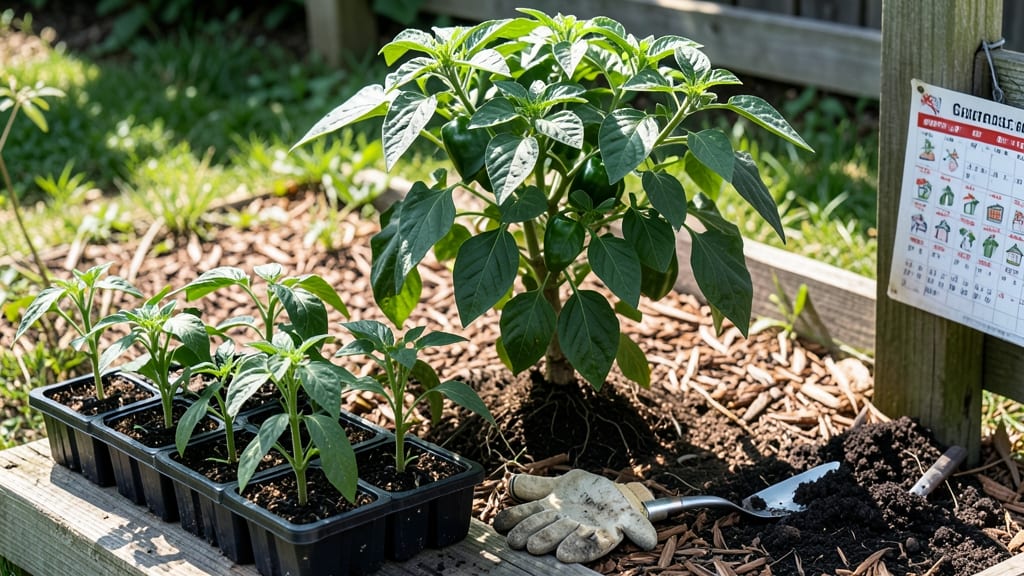
Planting your 🌶️ bell peppers at the wrong time in Pennsylvania could mean the difference between a bumper crop and a sad, wilted garden. The key isn't just waiting for spring—it's knowing when your soil is warm enough and the frost risk has vanished for good.
With USDA zones ranging from 5b to 7a, Pennsylvania's planting window shifts from mid-May in the cooler north to early June in warmer southern regions.
But timing isn't just about dates—it's about soil temperature hitting 60°F consistently, which can vary by weeks depending on whether you're near Pittsburgh's urban heat or the cooler Poconos.
Whether you're starting seeds indoors or transplanting seedlings, I'll break down the exact steps to time your planting perfectly. You'll learn how to adjust for your specific microclimate, choose the right varieties, and even extend your harvest season with simple tricks that work in PA's unpredictable weather.
No more guessing games—just a clear, actionable plan to get your bell peppers thriving from day one. Let's get those seeds in the ground at the perfect moment.
Pennsylvania’s bell pepper planting zones: last frost dates by region
Pennsylvania’s diverse climate creates distinct planting windows for bell peppers. The state spans USDA Zones 5b-7a, with last frost dates ranging from mid-April in southern regions to late May near Lake Erie.
To avoid frost damage, wait until soil temperatures consistently reach 55°F+—a critical threshold for seedling survival.
In southern PA (Philadelphia, Harrisburg), gardeners can plant bell pepper seedlings outdoors by mid-May. Meanwhile, northern PA (Erie, Scranton) often waits until late May to early June due to colder springs. Mountainous regions (Poconos, Allegheny Plateau) may face even later dates, sometimes pushing planting to early June.
For indoor seed starting, begin 8-10 weeks before your region’s last frost date. This means early March for southern PA and late March to early April for northern areas. Use grow lights or a sunny windowsill to ensure seedlings get 12-16 hours of light daily until transplanting.
Soil temperature is just as critical as air temperature. Bell peppers thrive in soil that’s at least 60°F—use a soil thermometer to confirm readiness. In cooler regions, black plastic mulch can raise soil temps by 5-10°F, accelerating the growing season by 2-3 weeks.
Here’s how Pennsylvania’s three key regions compare for bell pepper planting:
If you’re growing early-maturing varieties (60-70 days), you can push planting dates slightly earlier. For example, in Philadelphia (Zone 7a), you might transplant early May for a July harvest. Conversely, late varieties (80-90 days) need to go in by early June to mature before first frost.
For container gardening, start seeds indoors 2-3 weeks later than the table suggests, as pots warm up more slowly. Use heat mats to maintain soil temps if your porch or balcony is chilly.
In urban areas like Pittsburgh, microclimates near buildings can stay 5-10°F warmer, allowing for 1-2 week earlier planting.
Always monitor local weather forecasts in late spring—PA’s unpredictable frost risks can delay planting by weeks. Use row covers or cold frames to protect seedlings if late frosts threaten. For maximum yield, pair bell peppers with basil or marigolds, which deter pests and improve growth.
Pro tip: Mark your calendar for June 15th as a final deadline for most of PA. After this date, even fastest varieties may not mature before frost. If you miss this window, opt for longer-season varieties or use a greenhouse to extend the season.
How to adjust planting timing for early vs. late bell pepper varieties
Choosing between 60-day and 90-day bell pepper varieties in Pennsylvania isn’t just about harvest timing—it’s about matching your plants to your local summer length. The Poconos (USDA Zone 6) have shorter growing seasons than Philadelphia (Zone 7a), so your variety choice should reflect your first frost date risks.
Early varieties like 'Early California Wonder' (60 days) thrive in cooler summers, while late varieties like 'Jupiter' (90 days) need heat to ripen fully.
PA’s frost-free window ranges from 165 days in northern zones to 200 days in the south. This means 60-day varieties are safer bets for northern PA, while 90-day varieties can stretch into October harvests in southern regions.
The key is calculating your planting window backward from your expected first frost—typically mid-October—to ensure mature peppers before cold snaps hit.
Heat tolerance is the game-changer. Early varieties handle 75–85°F daytime highs, while late varieties need 85–95°F to ripen. In Pittsburgh, where July averages 80°F, early varieties excel, but in Allentown, where August can hit 90°F, late varieties shine. Use this heat-tolerance chart to match your microclimate:
| Variety Type | Days to Maturity | Ideal PA Region | Heat Tolerance (°F) | Succession Planting? |
|---|---|---|---|---|
| Early Varieties | 60–70 days | Northern PA (Zones 5b–6a) | 75–85°F | Yes (every 2 weeks) |
| Mid-Season | 75–85 days | Central PA (Zones 6b–7a) | 80–90°F | Yes (every 3 weeks) |
| Late Varieties | 90+ days | Southern PA (Zone 7a–7b) | 85–95°F | No (plant once) |
For continuous harvests, use succession planting. Start 60-day varieties every 2 weeks from late May through early July. This ensures peppers ripen in July–September before frost threatens.
In Zone 7, you can even squeeze in a second planting of early varieties in mid-July for a late-summer crop, though yields may be smaller.
Extend your season with row covers or low tunnels. These can add 2–4 weeks of warmth to your growing season, letting late varieties like 'Black Beauty' mature in northern PA.
Remove covers during daytime heatwaves (above 85°F) to prevent overheating, but replace them at night to protect from unexpected frosts in September.
Pro tip: Test soil warmth before planting. Use a soil thermometer—bell peppers need 60°F+ soil to germinate. In cool PA springs, delay planting until late May or use black plastic mulch to warm soil faster.
This simple step can mean the difference between stunted seedlings and vigorous plants ready to produce.
Adjusting your planting timing isn’t just about dates—it’s about reading your microclimate. Start with early varieties in northern PA, lean into late varieties in the south, and use succession planting to stretch your harvest. With these tweaks, you’ll turn PA’s short summers into a pepper-producing powerhouse.