
Plants
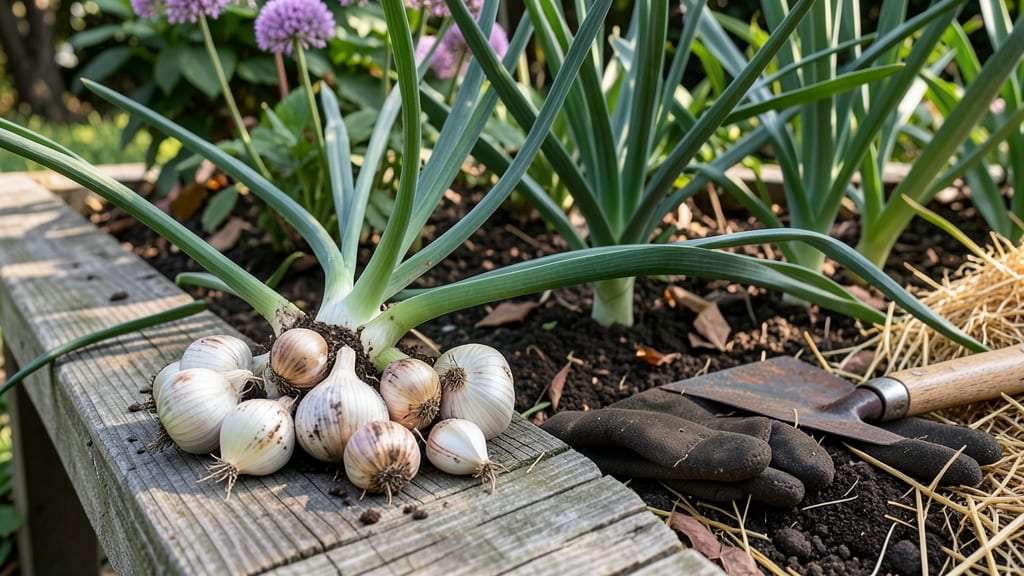
Planting garlic in North Carolina at the wrong time could leave you with weak, underdeveloped bulbs—or worse, nothing at all.
The secret to bigger, stronger garlic lies in matching your variety to the chill hours your region actually delivers, whether you're in the Piedmont's cooler hills or the Coastal Plain's milder winters.
Most gardeners in NC's 7a-8a zones know fall planting is ideal, but timing matters more than you think. Plant too early, and your garlic might bolt before winter sets in; too late, and it won't get enough cold to form proper bulbs.
I'll show you exactly when to put those cloves in the ground for the best harvests, plus how to pick the right variety for your microclimate.
Hardneck varieties like 'Music' thrive in colder zones, while softnecks like 'Silverskin' handle NC's warmer winters better. We'll break down the chill-hour requirements and regional adjustments so you can avoid common mistakes—like planting in September when your soil is still too warm or skipping mulch in December.
Ready to grow garlic that rivals the farmers' market? Let's dive into the perfect planting windows and soil prep tricks that'll give you plump, flavorful bulbs by next summer—no guesswork required.
North Carolina garlic planting dates by chill-hour requirements
North Carolina’s diverse climate—from the Coastal Plain’s mild winters to the Mountains’ crisp air—means garlic growers must match varieties to chill-hour zones for optimal bulb size. Hardneck varieties need 4,000–6,000 chill hours, while softneck and elephant garlic thrive with 3,000–5,000 hours.
Planting at the wrong time risks stunted bulbs or bolting. Let’s break down the best windows for each region.
In Piedmont (e.g., Raleigh, Greensboro), where chill hours range from 5,000–7,000, aim to plant hardneck varieties like ‘Music’ or ‘Chesnok Red’ in October. For the Coastal Plain (e.g., Wilmington, Fayetteville), with 4,000–5,500 chill hours, opt for softneck or elephant garlic planted in November.
Mountain regions (e.g., Asheville, Boone) with 7,000+ chill hours can plant hardnecks as early as September.
Here’s your quick-reference guide to match varieties, chill hours, and planting windows by region:
Spring planting is possible in warmer microclimates (e.g., Coastal Plain), but bulbs will be smaller. Plant softnecks in February–March for a summer harvest, but prioritize fall planting for larger yields. In Mountain regions, you can even plant hardnecks in early September to ensure enough chill hours before winter.
Pro tip: Use a soil thermometer to confirm planting readiness—soil should be 50–60°F and 4–6 weeks before frost. In Raleigh, that’s typically mid-October; in Asheville, aim for late September. Mulch heavily with straw or leaves to protect cloves from freezing and retain moisture.
For Coastal Plain gardeners, consider elephant garlic—it’s hardier in heat and stores well. In Piedmont, ‘Music’ garlic is a local favorite with excellent flavor and high yields. Mountain growers should try ‘German Red Stripe’ for its bold flavor and long storage life.
Timing is everything: Plant too early, and cloves may sprout before winter; too late, and bulbs won’t develop fully. Use your local frost dates as a guide—count back 4–6 weeks to land on the perfect window.
For example, if your first frost is November 15, plant by October 1.
Don’t forget: Hardneck varieties produce scape shoots in spring—harvest these for extra flavor and to redirect energy to bulb growth! In NC’s Piedmont, scapes appear in April–May; in Mountains, they may arrive as early as March. Use them in pesto or stir-fries to avoid waste.
With the
Best garlic varieties for North Carolina’s climate zones
North Carolina’s diverse climate zones (5–8a) demand careful variety selection for garlic. The wrong choice can lead to small bulbs or even bolting—especially in warmer coastal areas.
My top recommendations balance chill-hour needs, flavor profiles, and storage life to match NC’s microclimates. Let’s dive into the best performers for your region.
For coastal NC (zones 8a–8b), where winters are milder, varieties like ‘Silverskin’ and ‘Artichoke’ thrive with 4,000–5,000 chill hours. These softnecks store well but lack the bold flavor of hardnecks.
Inland areas (zones 6a–7a), like the Piedmont and Mountains, can handle ‘Music’ or ‘German White’, which need 6,000–8,000 chill hours for full bulb development.
‘Music’ is my top hardneck pick for NC’s Piedmont and Mountain regions. It delivers bold, spicy flavor and large bulbs with 7,000–8,000 chill hours. Plant it in October–November for a June–July harvest. Its purple-striped bulbs also add visual appeal to your garden.
If you’re in coastal NC (zones 8a–8b), ‘Silverskin’ is a storage champion with 4,000–5,000 chill hours. It stores for up to 12 months and handles warmer winters better than hardnecks. Trade-off? Its milder flavor suits cooking but lacks the punch of hardnecks like ‘German White’.
For flavor enthusiasts, ‘German White’ is a standout in NC’s cooler inland zones. It needs 6,000–7,000 chill hours and produces large, mild bulbs with excellent storage life. Try it in Asheville or the Blue Ridge for peak performance.
Pro tip: Test your chill hours using local weather data. NC’s coastal areas often fall short for hardnecks, while inland zones can support ‘Music’ or ‘German White’ without issues. Adjust planting dates 2–4 weeks earlier if your zone leans warmer.
For year-round harvests, mix varieties: Plant ‘Silverskin’ in fall for summer storage and ‘Music’ in early spring for a late-summer crop. This strategy ensures fresh garlic year-round while matching NC’s climate nuances. 🌱