
Plants
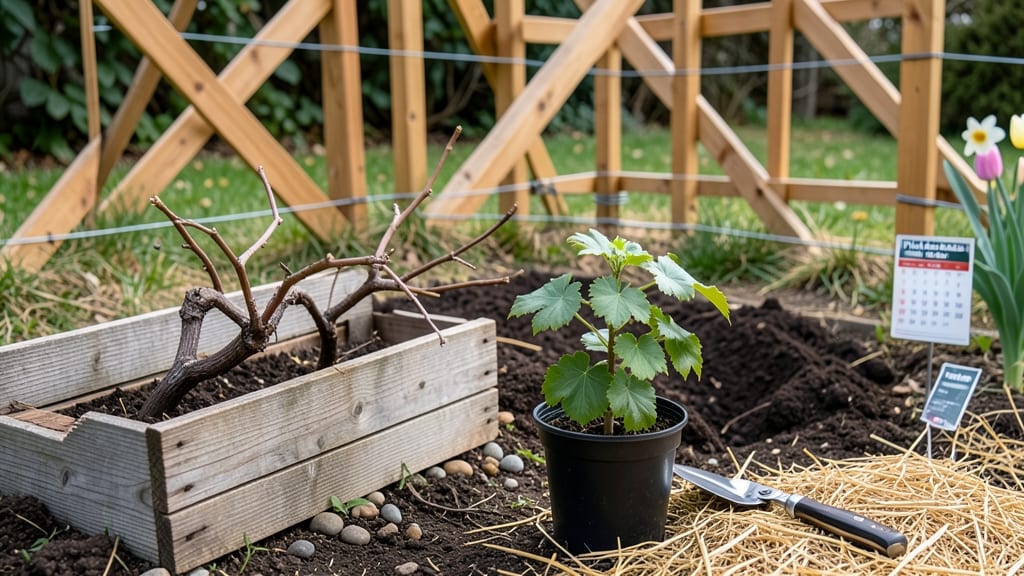
Timing your 🍇 grape planting in Illinois is the difference between a thriving vineyard and a sad pile of frozen roots—because those 5-6 zone winters don’t play around.
Plant too early, and a late frost will wipe out your whole season. Too late, and your vines won’t establish strong roots before the cold hits again.
Most gardeners in Illinois swear by early spring (March-April) or fall (September-October) planting, but the real secret lies in matching your variety to your chill hours. Cold-hardy grapes like Concord need 500+ chill hours, while others demand 1,000+—and Illinois’ zones can swing wildly between north and south.
Get this wrong, and you’ll end up with weak vines or no fruit at all.
I’ve tested the best strategies for Illinois soil and climate, from bare-root planting in spring to potted vines in fall. You’ll learn exactly when to prep your site, how to protect young plants from late frosts, and which varieties actually thrive in your backyard.
Let’s get those grapes growing the right way.
Skip the guesswork and follow a step-by-step timeline that accounts for your specific frost dates, soil type, and even your county’s unique microclimate. Because in Illinois, the best time to plant grapes isn’t just about the calendar—it’s about survival.
Illinois frost Zones & best grapes for each region (chill-hour guide)
Illinois spans USDA Hardiness Zones 4 through 7, creating dramatic differences in winter survival for grapes. Northern regions like Chicago (Zone 5) face 1,000+ chill hours, while southern areas like St. Louis (Zone 6) need 500-700 chill hours—and choosing the wrong variety means winter dieback.
The key? Matching grape types to your chill-hour zone and planting at the right time to avoid frost damage.
Cold-hardy varieties like Concord and Niagara thrive in Zones 4-5 with 1,000+ chill hours, while Catawba and Valvin Muscat suit Zones 6-7 with 500-700 chill hours.
But even the hardiest grapes need proper planting windows: early spring (March-April) for bare-root vines or fall (September-October) when soil temps drop below 60°F.
Why chill hours matter: Grapes require dormancy periods to survive winter. Too few chill hours (500) mean weak buds, while too many (1,200+) can cause bud break failures. Illinois’ varied climate means Northern Illinois gardeners must prioritize cold-resistant rootstocks, while Southern Illinois can experiment with warmer-climate varieties like Chambourcin.
| Illinois Region | USDA Zone | Chill Hours | Best Varieties | Planting Window | Frost Risk |
|---|---|---|---|---|---|
| Northern IL (Chicago) | 4-5 | 1,000+ | Concord, Niagara, Frontenac | Early spring (March-April) | High (late frost risk) |
| Central IL (Peoria) | 5-6 | 700-900 | Catawba, Valvin Muscat, Marechal Foch | Spring or fall (Sept-Oct) | Moderate |
| Southern IL (St. Louis) | 6-7 | 500-700 | Chambourcin, Norton, Traminette | Fall (Sept-Oct) preferred | Low (mild winters) |
In Zone 4-5, like Northern Illinois, Concord grapes are the gold standard—they handle 1,000+ chill hours and produce juice-worthy fruit. But if you’re in Zone 6-7, Chambourcin offers disease resistance and earlier ripening, perfect for warmer microclimates.
Always check University of Illinois Extension for your exact county’s last frost date—planting too early can fry new vines.
Fall planting (September-October) gives roots time to establish before winter, but Northern Illinois gardeners should wait until soil temps drop below 60°F to avoid root rot.
In Southern Illinois, fall planting is ideal—vines enter dormancy naturally. Mulch heavily with straw or wood chips (4-6 inches) to insulate roots during winter temperature swings.
For potted grapes, plant in late spring (May) after frost risk passes. Use well-draining soil with 50% sand to prevent waterlogged roots.
In containers, grapes need larger pots (15+ gallons) and winter protection (move to unheated garage or wrap in burlap). Dwarf varieties like Flame Seedless work best in pots but still need 6+ hours of sun.
Mistake: Assuming all grapes need full winter dormancy. Hybrid grapes (e.g., Frontenac) are c
Step-by-step planting timeline for Illinois grapes (spring vs. fall)
Timing is everything when planting grapes in Illinois, where USDA zones 5-6 bring unpredictable frost patterns. Northern Illinois gardeners should plant 4-6 weeks before last frost (typically late March to early April), while Southern Illinois growers can extend planting into late September or October for fall success.
The key? Avoid planting when soil temps drop below 40°F—this stunts root growth and invites disease.
For bare-root vines, the dormant season (fall or early spring) offers the best survival rates. Potted grapevines, however, can be planted anytime the ground isn’t frozen, but spring planting gives them a full growing season to establish roots before winter.
Always check your county’s frost-free window—Illinois Extension provides tools to calculate this for your exact location.
📅 Illinois Grape Planting Timeline
-
1
Soil Prep (4-6 Weeks Before Planting)
Test soil pH (6.0-6.5) and amend with compost. Till 12-18 inches deep for drainage. Northern Illinois: Prep by March 1; Southern Illinois: Prep by September 15.
-
2
Planting Window (Spring: March-April | Fall: Sept-Oct)
Spring: Plant after last frost (avg. April 15 in Northern IL). Fall: Plant 6 weeks before first frost (avg. October 15 in Southern IL). Bare-root vines need immediate watering to settle soil.
-
3
Rootstock Selection & Spacing
Choose cold-hardy rootstock (e.g., Riparia or Rupestris). Space vines 6-10 feet apart for airflow. Trellis installation should begin within 2 weeks of planting.
-
4
Post-Planting Care (First 30 Days)
Water deeply 2-3x weekly (1-2 gallons per vine). Mulch with 4-6 inches of straw to retain moisture. Avoid fertilizing until new growth appears (spring) or roots establish (fall).
-
5
Winter Protection (Fall-Planted Vines)
Mound soil 6-8 inches high around base before first frost. Wrap trellis with burlap and add 12+ inches of mulch. Prune in late winter (Feb-March) to remove dead wood.
Northern Illinois gardeners should prioritize early spring planting (March-April) to give vines time to establish before the short growing season. For example, in Chicago’s zone 5b, planting by April 1 ensures vines have 120+ frost-free days to mature.
Southern Illinois (e.g., Carbondale, zone 6b) can safely plant until October 15, leveraging the region’s longer frost-free window.
Pro tip: Use black plastic mulch in early spring to warm soil faster—this is especially helpful in cool, wet springs like those in Northern Illinois. Always monitor soil temperature with a probe; grapes won’t thrive if roots are chilled below 50°F.
For county-specific frost dates, visit the Midwestern Regional Climate Center or your local University of Illinois Extension office.
Remember, fall-planted vines need extra care in Illinois’ harsh winters. If you plant in fall, delay pruning until late winter to avoid frost damage to new growth.
With the right timing and prep, your grapes will reward you with juicy clusters by late summer—just in time for homemade jam or fresh eating! 🍇