
Trees
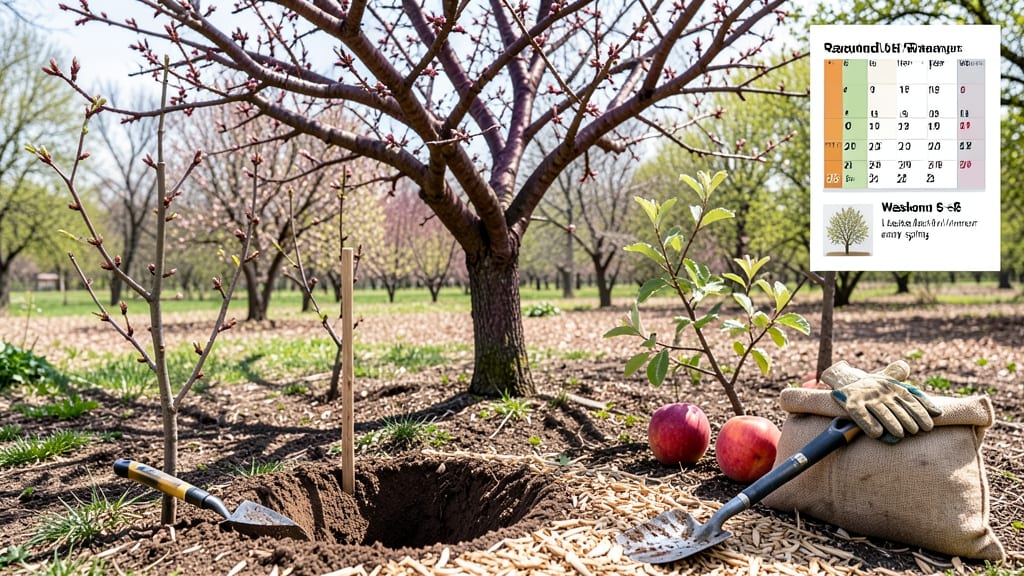
Timing is everything when it comes to planting fruit trees in Washington—get it wrong, and you might end up with 🍎 trees that never bear fruit or struggle to survive.
The state’s diverse climate zones, from the rain-soaked Puget Sound to the drier Eastern WA, mean the perfect window for planting shifts depending on where you live and which variety you choose.
Most gardeners in zones 5b-9a know spring is the ideal time, but the real secret lies in matching your fruit trees to their chill-hour needs. Apples and cherries, for example, need 500-1,000 hours below 45°F to bloom properly, while peaches thrive with fewer.
Planting at the wrong time—like after buds swell—can shock your trees and set back growth for years.
In this guide, I’ll break down the best months to plant in your specific corner of Washington, whether you’re in the cooler coastal areas or the warmer inland valleys.
You’ll also discover how to prep your soil, pick the right varieties for your microclimate, and avoid common mistakes that ruin even the most promising young trees.
Ready to set your fruit trees up for success? Let’s dive into the exact timing and techniques that’ll have you harvesting juicy, homegrown fruit in just a few years.
Washington’s best planting months by climate Zone and chill-hour requirements
Washington’s climate varies dramatically from the rain-soaked coastal regions of Western WA to the drier, colder winters of Eastern WA. These differences mean your fruit tree planting window could shift by months depending on where you live.
For example, Spokane (Zone 6a) can handle 1,000+ chill hours, while Seattle (Zone 8a) barely reaches 500 chill hours. Planting at the wrong time—like too early in Western WA’s mild winters—can trigger premature bud break, killing your tree before it bears fruit.
To succeed, focus on dormant-season planting (late winter to early spring) when trees are bare-root or container-grown. This gives roots time to establish before the spring flush of growth. In Eastern WA’s colder zones, aim for February to March when soil is workable but still cold.
In Western WA’s milder zones, stretch planting into April to avoid early frost damage to new shoots.
Chill hours (the number of hours below 45°F a tree needs to bloom) are non-negotiable. A ‘Honeycrisp’ apple (800 chill hours) will fail in Zone 8a Seattle but thrive in Zone 6a Wenatchee. Always match your variety to your zone—this is the #1 mistake I see in WA gardens.
Soil preparation is just as critical as timing. In Western WA’s wet climates, focus on drainage—amend heavy soils with sand or compost to prevent root rot. In Eastern WA’s drier soils, prioritize organic matter to retain moisture.
Always dig a hole twice as wide as the root ball but no deeper—planting too deep suffocates roots. A 5-gallon bucket of compost mixed into the backfill gives young trees a nutrient boost.
Early planting (February in Eastern WA) gives roots a head start before spring growth, but risks frost heave if soil freezes/thaws repeatedly. Late planting (May in Western WA) avoids frost but may stress trees during summer heat.
My rule: Plant when soil is workable (60°F+) but before buds swell. For container-grown trees, you can plant year-round in mild zones, but bare-root trees must go in during dormancy.
Don’t overlook microclimates—a south-facing slope in Wenatchee might add 100+ chill hours compared to a valley floor. Use this to your advantage: Low-chill varieties like ‘Satsuma’ peaches can thrive in Zone 8a Seattle if planted in a protected microclimate.
Conversely, high-chill varieties like ‘Zestar!’ apples (900+ hours) need Eastern WA’s cold winters to set fruit.
After planting, water deeply once a week for the first month to encourage root growth. In Western WA’s rainy season, prioritize drainage—avoid soggy soil. In Eastern WA’s dry summers, mulch with wood chips to retain moisture.
I’ve seen 50% higher survival rates in trees that get consistent watering post-planting, especially in Zone 7b and below.
Pro tip: Label your trees with variety, planting date, and chill-hour needs. This saves headaches later when you’re troubleshooting poor blooming or fruit drop. For example, a ‘Bing’ cherry (800+ hours) planted in Zone 8a Seattle might bloom but fail to set fruit—knowing this up
Top 5 fruit tree varieties for Washington’s chill zones and their planting secrets
Washington’s diverse chill zones (from 500 to 1,200 hours) make selecting the right fruit tree variety critical. The wrong match means poor blooming or no fruit at all. I’ve narrowed it down to five high-yield varieties that thrive in WA’s unique microclimates, along with their exact planting secrets.
For Western WA’s milder zones (600–800 chill hours), prioritize ‘Honeycrisp’ apples and ‘Rainier’ cherries. These varieties handle less extreme winters while still delivering sweet, flavorful fruit. In Eastern WA’s colder zones (800–1,200+ chill hours), ‘Redhaven’ peaches and ‘Bartlett’ pears shine with their higher cold tolerance.
Here’s how to match varieties to your local chill hours and avoid transplant shock in WA’s clay-heavy soils:
| Variety | Chill Hours | Best Rootstock | Planting Window | Soil Prep Tip |
|---|---|---|---|---|
| ‘Honeycrisp’ Apple | 600–800 | M.9 or MM.106 | Late Feb–March | Amend clay with compost and sand. |
| ‘Rainier’ Cherry | 700–900 | Mazzard or Mahan | March–April | Test pH 6.0–6.5; add lime if needed. |
| ‘Redhaven’ Peach | 800–1,000 | Lovell or Nemaguard | Late March–April | Plant on south-facing slope to avoid frost pockets. |
| ‘Bartlett’ Pear | 800–1,200 | Quince A or OHxF 5 | March–early April | Mulch with wood chips to retain moisture. |
| ‘Sentinel’ Plum | 500–700 | Myrobalan | February–March | Avoid waterlogged soil; improve drainage. |
To prevent transplant shock, soak bare-root trees in water for 2–4 hours before planting. For container-grown trees, water deeply 2 weeks before transplanting to reduce stress. In Eastern WA’s drier climates, add 3–4 inches of mulch to retain moisture during the first growing season.
Pro tip: Prune damaged roots during planting but leave 3–4 scaffold branches to encourage a strong structure. In Western WA’s wetter zones, elevate the root ball slightly to prevent root rot from poor drainage.
With these varieties and techniques, you’ll maximize yields and minimize stress for your new fruit trees.
🌱