
Plants
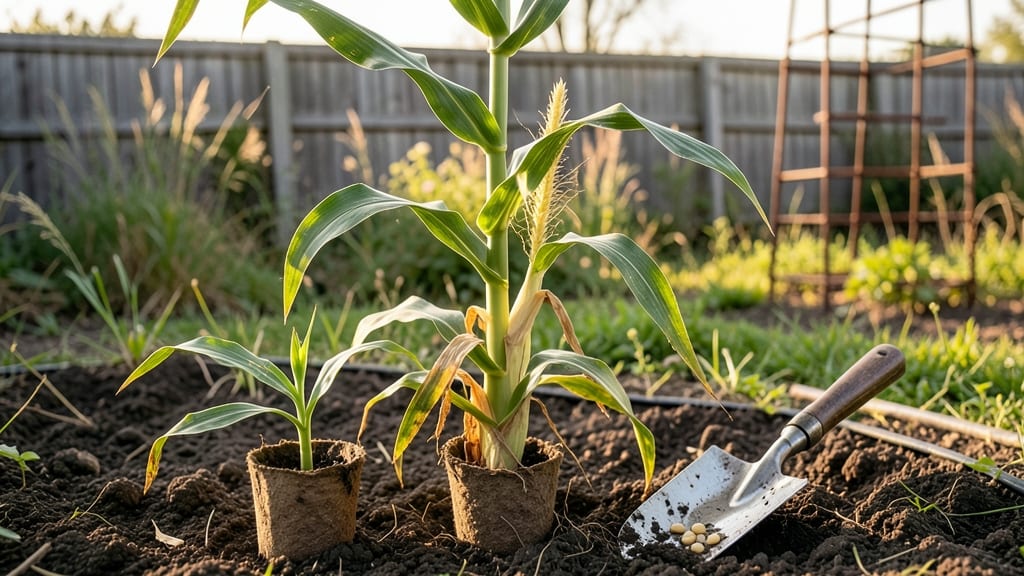
Planting corn in Pennsylvania at the wrong time can mean the difference between a bountiful harvest and wasted seeds. The key isn’t just waiting for spring—it’s knowing when your soil warms to 60°F or higher, typically between mid-April and mid-May, depending on your microclimate.
I’ve learned the hard way that rushing too early (when frost still lingers) or waiting too long (missing peak germination windows) can ruin your entire crop.
But with the right timing, you’ll see those 🌽 stalks shooting up in just 7–10 days, setting you up for ears ready by late July.
This guide breaks down the exact soil temperature triggers, regional planting windows, and even tricks to speed up germination if your spring drags on. Whether you’re in the cooler 5b zones or the warmer 7a areas, you’ll know precisely when to drop those seeds for maximum success.
Ready to turn your garden into a cornfield? Let’s get those seeds in the ground at the perfect moment—no more guesswork, just fast-growing, high-yielding results.
Pennsylvania corn planting calendar: exact dates by region and soil temperature
Corn thrives when planted at the right time, but Pennsylvania’s three distinct climate zones create major differences in optimal planting windows. The Southeast (warmer) can start weeks earlier than the Northwest (cooler), while Central PA falls somewhere in between.
The key? Soil temperature—corn seeds need 50°F+ for germination, but faster growth happens at 60°F+. Using Penn State Extension data, I’ve broken down the best planting dates by region to help you avoid frost damage and maximize yield.
Your first step is checking last frost dates, which vary wildly across PA. The Southeast typically sees its last frost around April 15, while the Northwest can linger until May 10. However, don’t rely solely on frost dates—soil temperature is the real game-changer.
Cold soil slows germination, leaving young plants vulnerable to late frosts. For example, planting in 50°F soil might work, but you’ll see 30% slower sprouting compared to 60°F+ soil.
Here’s the non-negotiable rule: Wait until the 5-day forecast shows nighttime temps above 50°F and soil temps consistently at 60°F+. In my Central PA garden, I’ve learned the hard way—planting too early in 45°F soil led to moldy seeds and stunted growth. Use a soil thermometer (just $10 at garden centers) to avoid this mistake.
🌽
| Region | Last Frost Date | Optimal Planting Window | Soil Temp for Germination | Best Varieties | Harvest Window |
|---|---|---|---|---|---|
| Southeast (e.g., Pittsburgh, Erie) | April 15–May 1 | Mid-April to early May | 55°F+ (earlier for fast varieties) | Silver Queen, Golden Bantam | Late July–early October |
| Central (e.g., Harrisburg, State College) | April 25–May 10 | Late April to mid-May | 60°F+ (critical for germination) | Pioneer 39T23, Early Sunglow | Late July–mid-October |
| Northwest (e.g., Scranton, Williamsport) | May 10–May 20 | Late May (or early June for safety) | 65°F+ (warmer soil needed) | Ambrosia, Bodacious | August–early October |
If you’re in the Southeast, you can push the envelope with early varieties like ‘Golden Bantam,’ which matures in just 60–70 days. But in the Northwest, even short-season varieties may struggle—opt for 85–90 day maturing types like ‘Ambrosia’ to avoid frost.
My Central PA garden uses a mix: I plant Silver Queen in early May for a July harvest and Pioneer 39T23 in late May for a September bounty.
Don’t forget succession planting! Corn loves space, so if you have room, plant a second batch 2–3 weeks later to stretch your harvest. In my 500 sq ft garden, this strategy adds 4–6 weeks of fresh ears.
Just ensure your second planting has enough time to mature before the first frost—aim for 150–200 frost-free days total.
One common mistake I see is planting based on air temperature alone. Soil stays cold long after air warms up, especially in shady or clay-heavy soils. To speed things up, till in compost or aged manure 2 weeks before planting—this raises soil temp by 3–5°F and improves drainage.
I’ve also had success covering beds with clear plastic for 3–5 days before planting to create a mini greenhouse effect.
For container growing, timing shifts slightly. Potted corn needs warmer soil (70°F+) and benefits from black pots that absorb heat. In my tests, container-grown corn in Central PA germinated 5 days faster than in-ground when using dark-colored pots.
Just remember: containers dry out 3x faster, so water daily during germination.
🌡️
Final rule: When in doubt, wait. Corn seeds can last
How to test soil temperature and prepare beds for fast corn germination
Corn seeds need consistent warmth to germinate quickly, and Pennsylvania’s spring soil can be a cold, unpredictable challenge. The key to fast sprouting lies in soil temperature monitoring—aim for 60°F or warmer at a 4-inch depth.
Without this warmth, seeds may rot in the ground or take weeks to emerge, leaving your plants vulnerable to pests and late-season frost.
I’ve learned the hard way that planting too early—even with frost-free forecasts—can stall germination. Last year, my early May planting of ‘Silver Queen’ corn sat in 52°F soil for 10 days before sprouting.
By the time they emerged, my earlier-sown neighbors’ plants were already 3 inches tall. Don’t let this happen to you!
⚠️ WARNING: Common Mistakes That Delay Germination ⚠️
To avoid these pitfalls, start by testing your soil temperature daily with a soil thermometer (available for $10–$15 at garden centers). Insert it 4 inches deep—this is where corn seeds should sit—and check readings at 9 AM and 3 PM for accuracy.
If temperatures hover around 50–55°F, your seeds may take 2+ weeks to sprout, giving slower varieties no chance to mature before frost.
For faster warming, cover your planting beds with black plastic mulch 1–2 weeks before planting. This method can raise soil temperatures by 10–15°F and suppress weeds. Alternatively, spread a 2-inch layer of compost over the bed and till it in—this adds organic matter that retains heat and moisture.
I’ve seen compost-amended beds reach 65°F in just 5 days compared to 58°F in untreated soil.
Adjust your planting depth based on soil temperature: in cooler soils (55–60°F), plant seeds 1.5 inches deep to protect them from temperature swings near the surface. In warmer soils (60°F+), stick to the standard 1-inch depth.
Pro tip: Use a seedling heating mat ($20–$30) if you’re starting seeds indoors—it mimics the warmth of a pre-warmed bed and speeds up germination by 3–5 days.
Once your soil hits 60°F consistently, plant seeds in blocks (not rows) to improve pollination. Water gently but deeply to settle soil around seeds, then mulch with straw or grass clippings to maintain moisture and temperature.
With these steps, you’ll see sprouts in 5–7 days—not the 2+ weeks of cold-soil failures. Happy planting! 🌱