
Plants
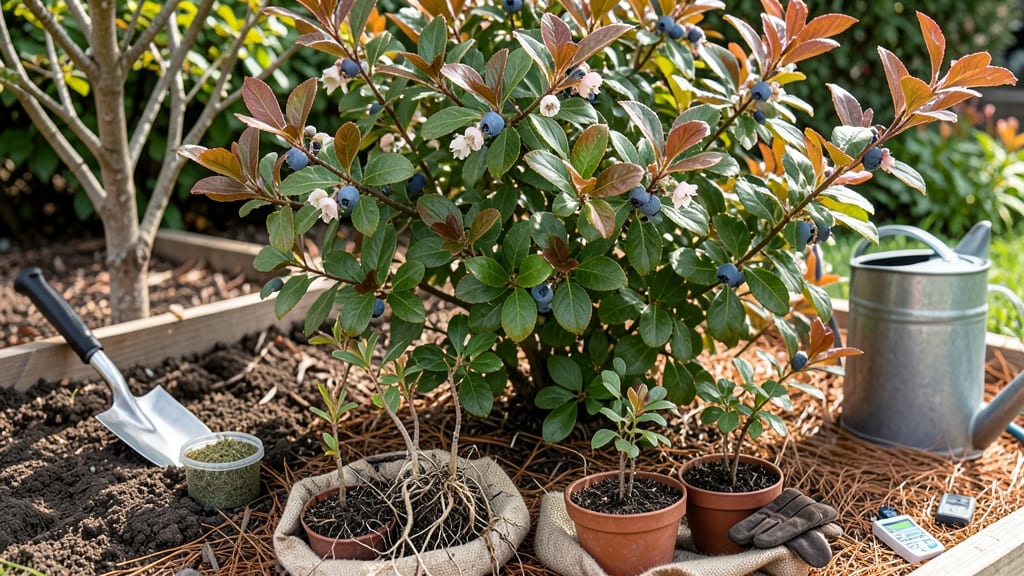
Planting blueberries in Washington State isn’t just about the right time—it’s about matching your variety to the chill hours your region actually delivers. Get it wrong, and you might end up with bushes that flower but never fruit, or worse, die before they even get a chance.
The 5b-8b zones across the state create wildly different conditions, from the damp coastal air of Western WA to the crisp, dry winters of Eastern WA.
If you’ve ever wondered why your neighbor’s blueberries thrive while yours struggle, the answer likely lies in timing. The optimal planting window shifts between late winter and early spring or fall, depending on whether you’re in a maritime climate or an inland one.
But here’s the kicker: even the best timing won’t help if you’re growing a variety that needs 900 chill hours in a zone that only hits 500.
I’ve spent years testing different varieties and planting schedules, and what I’ve learned could save you from years of frustration.
Whether you’re a first-time gardener or a seasoned pro, this guide will help you pick the perfect time to plant—so you can enjoy juicy 🫐 harvests in just a few seasons, not decades.
Let’s break down exactly when to plant, which varieties work best in your specific zone, and the simple tricks to ensure your blueberries not only survive but thrive in Washington’s unpredictable climate.
Best planting months for Washington blueberries by climate Zone
Washington State’s diverse climate—from the cool maritime west to the drier inland east—creates distinct planting windows for blueberries. Timing matters because late frosts in Zone 5b can kill young plants, while Zone 8b areas might bake them if planted too early.
I’ll break down the best months for each region, including soil prep timing to maximize survival.
First, identify your climate zone. Western Washington (e.g., Seattle, Bellingham) falls under USDA Zones 7b-8b with milder winters, while Eastern WA (e.g., Spokane, Wenatchee) is Zone 5b-6a with harsher frosts.
High-elevation areas (e.g., Mount Rainier foothills) can be even colder, requiring earlier planting to avoid frost damage.
For all regions, fall planting (September–October) is ideal because roots establish before winter dormancy. However, spring planting (February–April) works in milder zones if soil isn’t frozen. Let’s dive into the specifics for each zone, including frost risk and soil prep timing.
⚠️ CRITICAL: Avoid planting when soil temps drop below 40°F (4°C). Use a soil thermometer to check—roots won’t grow in cold soil. In high-elevation zones, wait until May to plant to avoid spring frosts.
Here’s a quick reference for your region’s optimal planting window, frost risks, and soil prep timing:
| Climate Zone | Best Planting Months | Frost Risk | Soil Prep Timing | Key Varieties |
|---|---|---|---|---|
| Western (Marine) Zone 7b-8b | September–October (fall) or February–March (spring) | Low risk after March 15 | Prepare soil 4-6 weeks before planting | ‘Duke’, ‘Legacy’, ‘Jersey’ |
| Eastern (Inland) Zone 5b-6a | September (fall only) | High risk until May 1 | Prepare soil 6-8 weeks before planting | ‘Bluecrop’, ‘Patriot’, ‘Earliblue’ |
| High-Elevation Zone 4b-5a | May–June (spring only) | Risk until June 15 | Prepare soil 8-10 weeks early | ‘Northblue’, ‘Polaris’ |
In Western Washington, where winters are mild, you have flexibility to plant in early spring (February–March) if soil isn’t soggy. However, fall planting is still preferred because established roots handle winter moisture better.
For example, in Bellingham (Zone 8a), I’ve seen blueberries thrive when planted in late September—just avoid the first frost, which typically hits around November 15.
For Eastern Washington, like Spokane (Zone 5b), fall planting is non-negotiable. The soil must be prepped by late August to allow roots to establish before the ground freezes.
I recommend testing soil pH (aim for 4.5–5.5) and amending with sulfur or peat moss 4–6 weeks before planting. Skip spring planting here—late frosts in April can kill young bushes.
High-elevation areas, such as those near Mount Rainier, require patience. Plant in May–June after the last frost (usually around June 1). Use container planting if your soil stays cold too long, as containers warm up faster in spring. Varieties like ‘Northblue’ are cold-hardy and perfect for these zones.
No matter your zone, soil prep is 50% of success. Test your soil’s pH and amend it 4–8 weeks before planting. Blueberries are acid-loving, so if your soil is alkaline, add elemental sulfur (follow package rates).
In Western WA, I’ve seen gardeners add pine bark fines to improve drainage and acidity simultaneously.
After planting, mulch heavily (3–4 inches of pine straw or wood chips) to protect roots from temperature swings. In Eastern WA, I’ve used black plastic mulch in early spring to warm the soil faster.
Water deeply once a week for the first month to encourage root growth, then taper off as rains return.
Finally, avoid planting near walnut trees—their roots release juglone, a toxin that stunts blueberry growth. If you’re in Western WA and have a late frost warning in March, cover young plants with frost cloth until the danger passes.
With the right timing, your blueberries will fruit in 2–3 years—and you’ll never have to buy them again!
How to match blueberry varieties to Washington’s chill hours
Washington’s diverse climate—from the cool maritime air of the western coast to the colder inland valleys—means not all blueberry varieties thrive equally. Chill hours (the number of hours below 45°F during dormancy) determine whether your bushes will flower and fruit.
Skipping this step could leave you with bare branches year after year. Let’s match your location to the perfect blueberry cultivars for reliable harvests.
Most of Washington State falls within 400–1,000 chill hours, but Western WA (Zone 7b-8b) often sees 600–900 hours, while Eastern WA (Zone 5b-6b) can exceed 1,000 hours. Choosing a variety outside this range risks poor pollination or no fruit at all.
For example, ‘Duke’ (800+ hours) struggles in low-chill zones, while ‘Legacy’ (400–600 hours) may not set buds in high-chill areas.
| Variety | Chill Hours | Best WA Regions | Fruit Ripens | Notes |
|---|---|---|---|---|
| ‘Duke’ | 800–1,000 | Eastern WA, High-Elevation | Mid-July | Large berries, needs cross-pollination |
| ‘Legacy’ | 400–600 | Western WA, Lowland | Early July | Self-pollinating, dwarf size |
| ‘Jersey’ | 500–700 | Central WA, Puget Sound | Late July | Sweet flavor, compact bush |
| ‘Bluecrop’ | 600–900 | All Regions | Mid-August | High yield, versatile |
| ‘Top Hat’ | 300–500 | Western WA, Containers | Early July | Dwarf, great for patios |
If you’re in Western Washington (e.g., Seattle, Bellingham), prioritize low-chill varieties like ‘Legacy’ or ‘Top Hat’. These thrive in 400–600 hours and produce fruit reliably. Meanwhile, Eastern WA growers (e.g., Spokane, Wenatchee) should opt for ‘Duke’ or ‘Bluecrop’, which handle 800+ hours without skipping blooms.
Pro tip: Check your local chill-hour map—many WA counties fall in the 600–900 range, making ‘Jersey’ or ‘Bluecrop’ safe bets for most backyard gardens.
For container growing, choose dwarf varieties like ‘Top Hat’ or ‘Legacy’—they fit 5-gallon pots and adapt to urban microclimates. Just ensure your container stays acidic (pH 4.5–5.5) and gets full sun.
If you’re in a high-elevation area (e.g., Mount Rainier foothills), ‘Duke’ may still work, but monitor late frosts in spring, which can damage early flowers.
Remember: Chill hours ≠ frost tolerance. Even if a variety meets your chill needs, late spring frosts (common in Zone 5b) can kill flower buds.
Plant in well-draining soil and mulch heavily to protect roots during temperature swings. Pairing two compatible varieties (e.g., ‘Duke’ + ‘Bluecrop’) also boosts pollination success.
Now that you’ve matched your chill hours to the perfect blueberry cultivars, your next step is soil prep. Washington’s native soil is often alkaline, so amend with sulfur or peat moss to hit that acidic pH range.
Plant in late fall or early spring for the best root establishment before summer heat arrives.