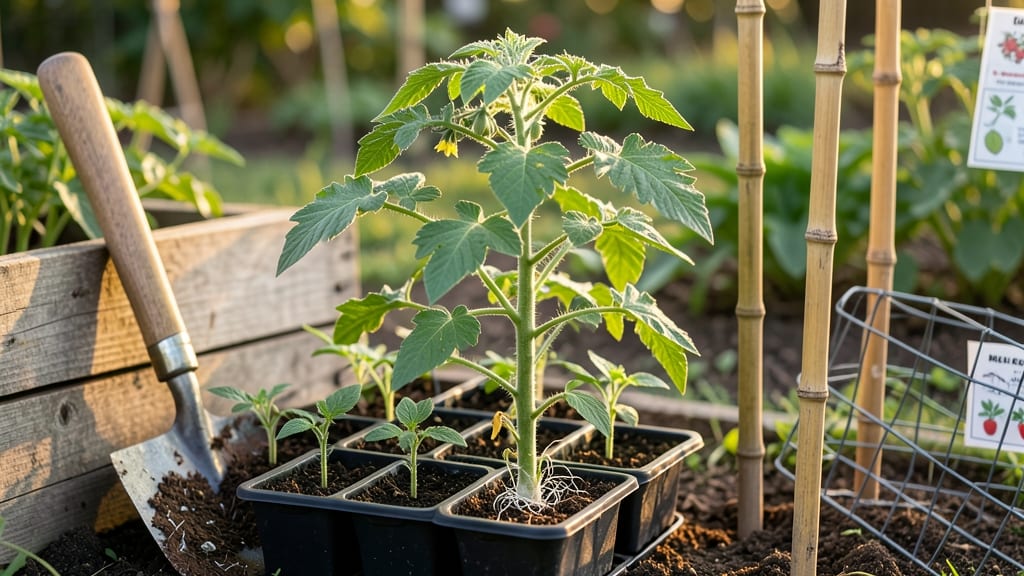
Planting tomatoes in Tennessee at the wrong time can mean the difference between a bountiful harvest and a sad, frost-nipped failure. With last frost dates shifting from mid-March in the mountains to early April in the valleys, timing your 🍅 seedlings just right is the key to success.
I’ve learned the hard way—skipping soil temperature checks or rushing seedlings out too early can leave your plants vulnerable. But don’t worry: the right strategy turns Tennessee’s unpredictable climate into your advantage.
Whether you’re in Nashville’s urban heat islands or the cooler Appalachian foothills, we’ll cover exactly when to plant for maximum yields.
From early-season varieties that beat the heat to late-planted crops that stretch into October, I’ll walk you through the perfect windows for your zone. You’ll also discover how to extend your growing season with simple tricks, so you’re harvesting juicy tomatoes long after your neighbors have given up.
Ready to grow tomatoes that rival the grocery store’s best? Let’s dive into the timeline that guarantees zero-frost regrets and a garden bursting with flavor.
🍅When to Plant Tomato
Jan❄️
Feb🌱
Mar🍅
Apr🍅
May🍅
Jun🌱
Jul☀️
Aug☀️
Sep🍂
Oct🍂
Nov🍂
Dec❄️
Ideal Time
Also Good
Tennessee’s frost zones and best tomato planting months by region
Tennessee’s USDA zones 6b-7b create a perfect balance for growing juicy, homegrown tomatoes, but timing is everything. The state’s diverse microclimates—from Nashville’s urban heat islands to Chattanooga’s mountain valleys—mean frost dates can vary by weeks.
Getting your tomato seedlings in the ground too early risks frost damage, while planting too late cuts your harvest short. Let’s break down the best planting windows by region to maximize your tomato yield.
First, understand that Tennessee’s last frost dates typically range from mid-March to early April, depending on elevation and location. For example, Memphis (Zone 7b) often sees its last frost by March 15, while Nashville (Zone 6b) might not be frost-free until April 1.
Chattanooga’s Appalachian influence can push last frosts even later, sometimes into April 15. These variations mean succession planting is key to stretching your harvest from June to October.
Here’s the critical rule: Wait until soil temperatures consistently reach 60°F (15°C) and nighttime lows stay above 50°F (10°C). Cold soil slows germination, and chilly nights stunt growth. Use a soil thermometer to check—if it’s below 60°F, hold off planting.
For early varieties, aim to transplant 2-3 weeks after your region’s last frost date. Heat-loving varieties like ‘Celebrity’ or ‘Solar Fire’ can handle Tennessee’s summer heat, but they need warm soil to thrive.
🌱Pro Tip: If you’re eager to start early, use black plastic mulch or row covers to warm the soil faster. These tricks can shave 1-2 weeks off your planting timeline, giving you a head start on the season.
Region
USDA Zone
Last Frost Date
Best Planting Window
Early Varieties
Late Varieties
Memphis
7b
March 15
April 1 - April 15
'Stupice', 'Mountain Merit'
'Celebrity', 'Solar Fire'
Nashville
6b
April 1
April 15 - May 1
'Early Girl', 'Patio'
'Better Boy', 'Brandywine'
Chattanooga
6b-7a
April 15
May 1 - May 15
'Sub-Arctic', 'Glacier'
'Cherokee Purple', 'Black Krim'
How to extend your tomato growing season in Tennessee’s unpredictable climate
Tennessee’s late spring frosts and sweltering summer heat can make tomato gardening feel like a gamble. But with the right strategies, you can protect seedlings and stretch your harvest from early summer through fall.
The key? Combining season extension tools with smart planting techniques tailored to Tennessee’s USDA zones 6b-7b.
I’ve learned the hard way that one late frost can wipe out weeks of progress, while heat spikes above 90°F can cause blossom drop and sunscald.
But by using cold frames, row covers, and succession planting, I’ve managed to double my harvest time—even in Nashville’s unpredictable climate. Here’s exactly how to do it:
🌱 5 Proven Ways to Extend Your Tomato Season
Use cold frames for 4-6 week earlier starts—place them over seedlings 2-3 weeks before your average last frost date.
Row covers (floating or hoop) add 4-8°F protection—remove when flowers appear to prevent heat stress.
Succession plant every 2 weeks from April to June—sow heat-tolerant varieties like ‘Celebrity’ or ‘Solar Fire’ for late-season harvests.
Mulch heavily with straw or black plastic to keep soil 5-10°F warmer—critical for early starts in cooler zones like East Tennessee.
Choose heat-set varieties like ‘Heatmaster’ or ‘Sun Gold’—they set fruit at 95°F+, perfect for Tennessee’s July-August heat waves.
For early starts, I swear by cold frames filled with seedling trays in late March. By placing them on south-facing slopes, I’ve seen soil temperatures rise 10°F faster than open beds.
Once seedlings hit 3-4 inches tall, I transplant them into black plastic mulch—this warms the soil 3-5°F more and speeds up germination.
In West Tennessee’s hotter zones (like Memphis), I shift to shade cloth during peak afternoon heat. A 30% shade cloth reduces temperatures by 10-15°F while still allowing 60% sunlight—enough for tomatoes to thrive. Pair this with drip irrigation timed for early morning to avoid fungal issues from humidity.
Don’t forget succession planting: I make 3 planting batches—first in early April (under row covers), second in mid-May (after last frost), and third in late June (for heat-tolerant varieties).
This ensures a continuous harvest from July through October, even if one batch struggles with late summer pests.
Pro tip: Prune aggressively during heat waves—removing lower leaves improves airflow and reduces blossom end rot. I also stake indeterminate varieties with tomato cages to prevent wind damage during summer storms, which are common in Tennessee’s humid climate.
With these strategies, I’ve gone from 2 months of harvest to 6+ months—even in Zone 7a. The secret? Layering protection (cold frames + row covers) and adapting varieties to Tennessee’s unpredictable swings from frost to 100°F heat. Your garden can do the same! 🌿