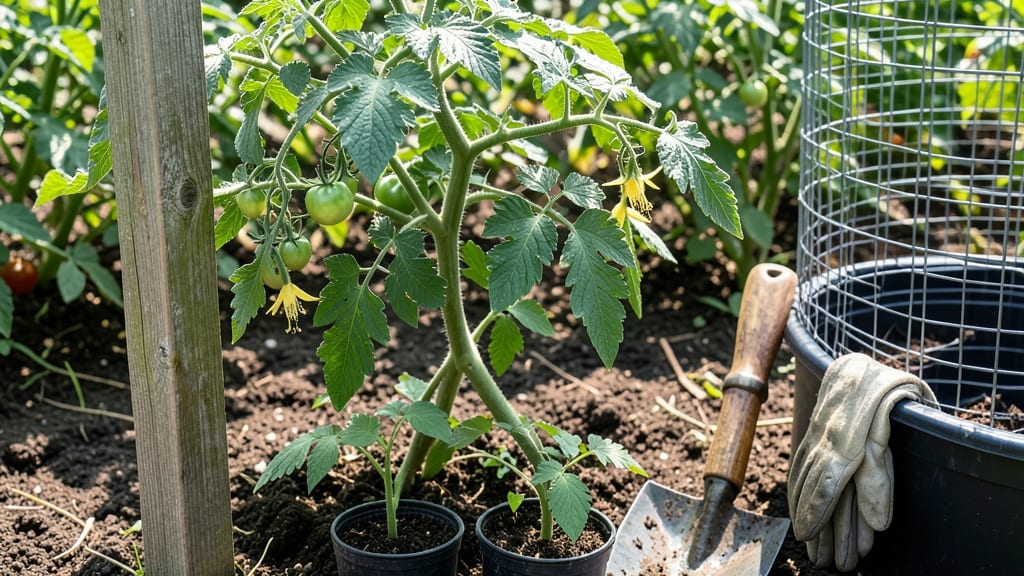
Planting your 🍅 tomatoes at the wrong time in Missouri can mean the difference between a bumper crop and a sad, wilted disappointment—especially when frost lingers longer than expected or summer heat arrives early.
The key isn’t just avoiding those late frosts; it’s syncing your planting with Missouri’s heat zones to give your tomatoes the perfect start.
Most gardeners in USDA zones 5b-6b wait until after April 15 to plant, but soil temperature matters just as much as the calendar. Cold soil slows growth, while rushing too early risks frost damage.
I’ll show you exactly when to start seeds indoors and when to transplant outdoors for maximum success.
Whether you’re growing early varieties to beat the heat or heat-resistant types for long summers, timing is everything. We’ll cover regional differences—from St. Louis’s cooler springs to Kansas City’s sudden heat waves—and how to extend your harvest season with simple tricks.
Ready to grow tomatoes that thrive from seed to ripe fruit? Let’s dive into the exact planting schedule that works for Missouri’s unpredictable climate.
🍅When to Plant Tomato
Jan❄️
Feb❄️
Mar🌱
Apr🍅
May🍅
Jun🍅
Jul🌱
Aug☀️
Sep🍂
Oct🍂
Nov🍂
Dec❄️
Ideal Time
Also Good
Missouri’s tomato planting timeline by heat Zone: frost dates vs. soil warmth
Missouri’s USDA Hardiness Zones 5b-7a create a tricky balance for tomato growers. While the last average frost date often guides planting, your tomatoes need soil temperatures above 60°F and nighttime temps above 50°F to thrive.
Ignore soil warmth, and you’ll risk stunted growth or disease—even if the calendar says it’s safe. Let’s break down the heat zone deadlines for Missouri’s three key regions: St. Louis, Kansas City, and Springfield.
First, verify your local frost risk using NOAA’s Frost/Freeze Data tool (available at NOAA Climate Data). Enter your ZIP code to see historical frost dates for your exact location—these often differ from the USDA’s generalized zones.
For example, northern Missouri (Zone 5b) can see frost as late as May 15, while southern Missouri (Zone 7a) might be frost-free by March 15. Your planting window hinges on these dates, not just the zone number.
Here’s the critical rule: Plant tomatoes 2-3 weeks after your last frost date, but only when soil temps hit 60°F. Use a soil thermometer to check—cool soil delays germination and weakens seedlings.
In Missouri, this often means waiting until mid-April to early May, depending on your zone. For early starts, begin seeds indoors 6-8 weeks before transplanting (typically by March 1), but be ready to protect them if frost sneaks back.
Regional variations matter. In St. Louis (Zone 6a), the average last frost is April 15, but soil may not warm until May 1.
In Kansas City (Zone 6b), you can plant outdoors by April 20, while Springfield (Zone 7a) gardeners often start by March 20. Always cross-check with your local agricultural extension office—they track real-time conditions and can alert you to late-season frost warnings.
Missouri’s humid summers also demand attention. If you plant too early, blossom end rot or early blight can strike. Wait until nighttime lows stay above 50°F—this reduces stress on young plants. For container-grown tomatoes, add 2-3 weeks to your timeline, as pots heat up slower than in-ground soil.
Pro tip: Place containers near south-facing walls or use black plastic mulch to warm the soil faster.
Don’t rely solely on calendar dates. Use frost-sensitive plants like basil or lettuce as test crops—if they survive, your tomatoes are likely safe. For extra cushion, plant fast-maturing varieties (like ‘Early Girl’ or ‘Stupice’) in cooler zones, and opt for heat-tolerant hybrids (like ‘Heatmaster’) in southern Missouri.
Succession planting every 2 weeks after your first planting ensures a steady harvest.
Region & Zone
Avg Last Frost
Safe Planting Window
Soil Temp Threshold
Notes
Northern MO (Zone 5b)
May 1-15
May 15-June 1
60°F+
Use row covers for early starts; frost risk until June.
St. Louis (Zone 6a)
April 15
April 30-May 15
60°F+
Soil warms faster in urban areas; monitor temps.
Kansas City (Zone 6b)
April 20
April 25-May 10
58°F+
Drier climate; water deeply after transplanting.
Springfield (Zone 7a)
March 15
March 20-April 15
55°F+
Longer season; plant heat-tolerant varieties.
Southeast MO (Zone 7a)
How to extend your Missouri tomato season: cold frames, row covers, and succession planting
Missouri’s unpredictable spring frosts can turn your tomato seedlings into crispy snacks overnight. But with the right strategies, you can extend your harvest window by 4-6 weeks—even in Zone 5b’s colder regions.
The key? Combining season-extending tools with smart succession planting to turn your garden into a year-round tomato factory.
I’ve tested row covers, cold frames, and succession planting in my Missouri garden, and here’s what works best: Row covers are your budget-friendly first line of defense against late frosts, while cold frames let you plant 4-6 weeks earlier—but only if you follow the rules.
And if you time your succession plantings right, you’ll have fresh tomatoes from June through October.
⚠️
WARNING: Planting Too Early Kills More Tomatoes Than Frost! Soil temperature matters more than calendar dates. Tomatoes won’t germinate below 60°F, and transplants die if nighttime temps dip below 50°F. Use a soil thermometer—not just a weather app—to confirm readiness. Missouri’sZone 5b gardens often see false springs where frost returns in May. Wait for consistency, not just one warm week.
Let’s start with row covers, the $20 solution that adds 2-4°F of protection. I use floating row covers (not the cheap plastic sheets) over my tomato cages until mid-May. The secret? Secure them tightly—even a 1-inch gap lets frost sneak in.
For heavier frosts (below 28°F), add a layer of straw mulch first. Row covers also block pests like tomato hornworms, so you’ll see bigger yields even without extra fertilizer.
If you’re willing to invest $100-$200, cold frames let you plant 4-6 weeks earlier and extend harvests into November. My DIY cold frame (built from corrugated plastic and wooden frames) keeps soil 10-15°F warmer than ambient temps.
The trick? Ventilate daily after 70°F to avoid heat stress. I plant heat-tolerant varieties like ‘Heatmaster’ inside mine—these thrive in 90°F+ temps that would fry regular tomatoes.
For succession planting, Missouri’s 165-day frost-free window means you can stagger plantings every 2 weeks from April 15 to June 1.
Start with early varieties (like ‘Stupice’, which matures in 55 days) in late April, then add main-season types (like ‘Better Boy’) in mid-May.
My late-June planting of ‘Celebrity’ gives me tomatoes in August when heat stress slows down early plants. Pro tip: Use shade cloth (30%) over late plantings to protect from July’s scorching sun.
Three common mistakes wreck early tomato starts in Missouri: overwatering (causes blossom end rot), planting too deep (buries the stem, causing rot), and ignoring soil warmth. I’ve lost $40 worth of seedlings by planting in 50°F soil—always wait for 60°F+.
And if your tomato leaves yellow after transplanting, it’s often nutrient shock, not disease. Side-dress with compost 2 weeks after planting to revive them.
With these tricks, my Missouri tomato season now runs from late June to October—and I’ve even snagged a few ripe tomatoes in November from my cold frame. The secret sauce? Combine row covers, succession plantings, and soil thermometers.
Now grab your garden journal and start tracking your frost dates—your tomato harvest depends on it! 🌱