
Companion Plants
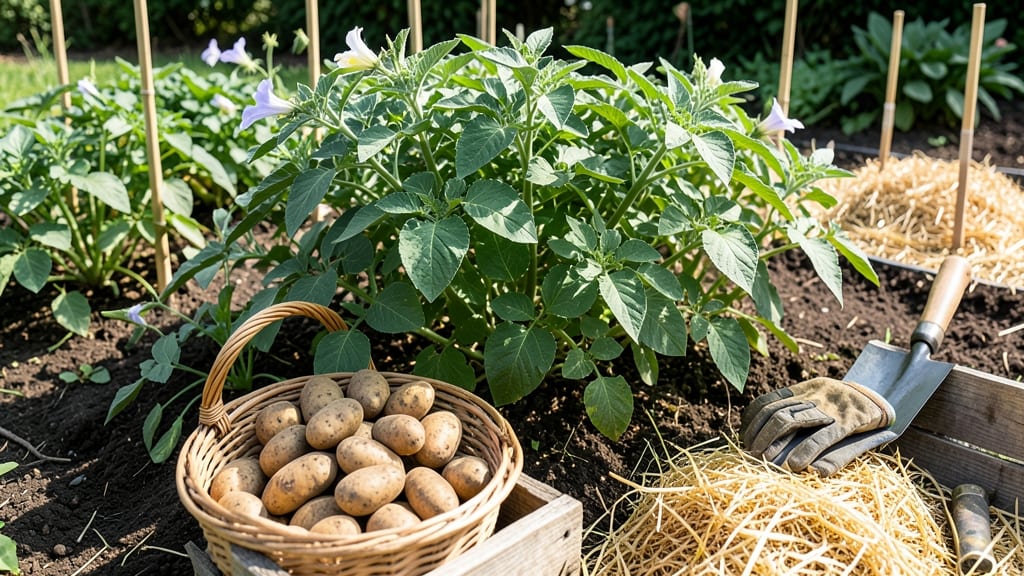
Planting potatoes in Michigan isn't just about tossing them in the dirt—it's about timing them perfectly to beat frost and maximize your harvest.
With USDA Zones 5b-6b and unpredictable springs, getting those seed potatoes in the ground at the right moment makes all the difference between a bountiful crop and a disappointing yield.
Most Michigan gardeners start their 🥔 season in early spring, but the exact window depends on your region. Whether you're in the Upper Peninsula or southern Michigan, planting too early risks frost damage, while waiting too long cuts your growing season short.
I’ll break down the ideal planting dates—plus how to prepare your soil and choose the right varieties for your local climate.
If you’ve ever wondered why some gardeners swear by early planting while others wait until May, the answer lies in soil temperature and frost dates. By following these region-specific guidelines, you’ll give your potatoes the best shot at thriving in Michigan’s short but productive growing season.
Ready to dig in? Let’s get your potatoes planted at the perfect moment so you can enjoy homegrown spuds from July through September—without the guesswork.
Best planting dates for potatoes in Michigan’s USDA Zones 5-6
Michigan’s USDA Zones 5-6 offer a short but productive growing season for potatoes, but timing is critical. Plant too early and risk frost damage to tender sprouts, too late and miss peak harvest before first frost.
The Upper Peninsula (Zone 5) has a shorter season than Southern Michigan (Zone 6), so adjust your schedule accordingly.
Potatoes thrive when soil temperatures reach 45°F or higher. In most of Michigan, this typically happens between mid-April and early May, but late April is the safest bet for most gardeners.
Use seed potatoes (not grocery store potatoes) for best results, and choose varieties suited to your region’s frost dates.
Here’s your calendar-based guide for planting potatoes in Michigan, accounting for regional differences and backup dates for unpredictable springs:
| Planting Window | Zone 5 (Upper Peninsula) | Zone 6 (Lower Peninsula) | Soil Temp Threshold | Notes |
|---|---|---|---|---|
| Early Planting (Cold-Hardy Varieties) | Mid-April to early May | Late March to mid-April | 45°F+ (use row covers) | Best for ‘Yukon Gold’ or ‘Red LaSoda’ |
| Standard Planting (Most Varieties) | Late April to mid-May | Early to mid-April | 50°F+ (ideal for sprouting) | Avoid if frost is forecasted |
| Late Planting (Backup Option) | Early May (by May 10) | Late April to early May | 55°F+ (higher risk of disease) | Use fast-maturing varieties like ‘Early Girl’ |
| Fall Planting (Greenhouse/Indoor Start) | Late August to early September | Late August to mid-September | 60°F+ (controlled environment) | Harvest before first frost (~October 15) |
For Zone 5 gardeners in the Upper Peninsula, aim to plant by May 10 to ensure tubers mature before the first frost (typically October 15). In Zone 6, you have a slightly longer window—plant by mid-May for a late harvest.
If spring is slow to warm, use row covers or a cold frame to protect early plantings.
Pro tip: Chit your seed potatoes (sprout them indoors) 4-6 weeks before planting to jumpstart growth. Place them in a bright, cool spot (around 50°F) with the cut side up. This gives you a 2-week head start on the growing season, which is crucial in Michigan’s short window.
If you’re unsure about your last frost date, check the Michigan State University Extension frost calculator or use local weather reports. For example, Traverse City (Zone 5) typically sees its last frost around May 15, while Detroit (Zone 6) averages April 20.
Planting 4-6 weeks before these dates ensures your potatoes have enough time to mature.
For early harvests, opt for fast-maturing varieties like ‘Early Rose’ (60 days) or ‘Red Pontiac’ (70 days).
These can be planted as early as late March in Zone 6 under row covers or in a greenhouse. Mid-season varieties like ‘Kennebec’ (90 days) should go in by mid-April, while late varieties like ‘Russet Burbank’ (120 days) need to be planted by early May.
Don’t forget about succession planting! In Zone 6, you can plant a second crop of early-maturing potatoes in late June for a fall harvest. Choose varieties like ‘Gold Rush’ (60 days) and harvest before the first frost. This extends your potato harvest and maximizes your garden space.
If you’re in doubt due to unpredictable spring weather, err on the side of planting later. Potatoes are more forgiving of cool soil than many other crops, and a delayed planting is better than risking frost damage. Just be prepared to harvest earlier if the season shortens unexpectedly.
🌱
How to prepare Michigan soil for potato planting (step-by-step)
Michigan’s clay-heavy soils can be a gardener’s biggest challenge when growing potatoes. Without proper preparation, your spuds may develop poor tuber formation or rot before harvest. The key is creating a loose, fertile bed with excellent drainage—here’s how I do it every spring.
First, test your soil’s pH level using a home kit (available at Michigan State University Extension offices). Potatoes thrive in slightly acidic soil between 5.0 and 6.0. If your soil tests higher, amend it with sulfur or peat moss; for lower pH, add lime in the fall.
My soil always tests around 6.5, so I add elemental sulfur before planting.
⚠️ callout-warning ⚠️
Michigan’s unpredictable springs mean soil temperature is critical. Potatoes won’t sprout until the soil reaches 45°F (7°C). Use a soil thermometer to check depth—planting too early in cold soil causes rot and poor germination. If your soil is still below 45°F, wait or use black plastic mulch to warm it faster.
Pro Tip: In the Upper Peninsula, aim for mid-May planting; Southern Michigan can start late April.
Next, break up compacted clay with a broadfork or tiller to a depth of 12 inches. I rent a rototiller from my local Michigan Farm Bureau store for this task—it saves my back!
Mix in 2-3 inches of compost or well-aged manure (chicken or cow) to improve fertility. For organic gardeners, composted leaves or worm castings work wonders.
Drainage is non-negotiable in Michigan’s wet springs. If your soil holds water after 24 hours, amend with coarse sand or perlite to create air pockets. I also build raised beds in problem areas—fill them with a mix of topsoil, compost, and peat moss for perfect potato-growing conditions.
Raised beds warm up faster in spring, too!
For planting depth and spacing, aim for 4 inches deep and 12 inches apart in rows 30 inches apart. This gives tubers room to expand without crowding. If you’re growing early varieties, you can plant slightly shallower (3 inches) to speed up harvest.
Always plant seed potatoes with eyes facing up—this ensures consistent germination.
Finally, mulch with straw or grass clippings to retain moisture and suppress weeds. I use straw mulch because it breaks down slowly and adds organic matter. Avoid fresh manure or clippings from treated lawns—these can burn potato plants or introduce diseases.
With these steps, your Michigan soil will be ready to grow bountiful, disease-free potatoes every season! 🥔