
Plants
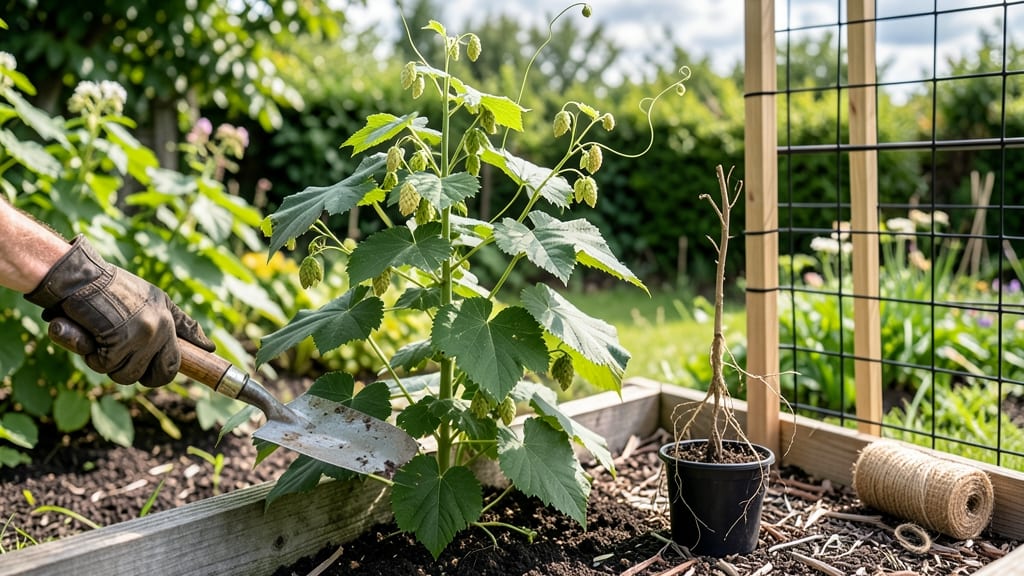
Planting hops in Michigan at the wrong time could mean losing your entire crop to frost—or missing out on a bountiful harvest.
The best time to plant hops depends on your last frost date, which can shift from mid-April in southern Michigan to early May in the northern reaches of your 5b-6b zones.
For most Michigan gardeners, late April to early May is the sweet spot—after the soil warms to at least 50°F and the danger of frost has passed. But if you're growing fast-maturing varieties like Cascade or Centennial, you might even push it to early June without sacrificing yield.
Here’s the game-changer: local microclimates can shift your planting window by weeks. Urban areas often warm up faster than rural spots, while valleys hold frost longer. I’ll show you how to check your exact frost-free date and adjust for your hop variety.
Whether you’re planting rhizomes or starts, timing is everything. Let’s break down the optimal planting schedule for Michigan’s climate so you can grow hops like a pro—no guesswork, just great results.
Michigan’s frost-free planting deadlines for hops by region (2024 guide)
Michigan’s USDA Zones 5b-6b mean your hop planting window is tight—typically just 4-6 weeks between last frost and summer heat. Aromatic varieties like Cascade need early starts, while bittering hops such as Fuggle can wait slightly longer. Missing the window risks stunted growth or frost damage to tender new shoots.
Last frost dates vary dramatically across Michigan: Northern Michigan (Zone 5) often sees frost until May 15, while Southern Michigan (Zone 6) may be frost-free by April 20.
Using local frost prediction tools like the Michigan State University Extension or Almanac’s Frost Calculator ensures you plant at the perfect moment.
Your hop variety also dictates timing: Aromatic hops (like Centennial) mature faster (90-105 days) and should go in late April, while bittering hops (like Galena) take 120+ days and can wait until early May.
Soil temperature must hit 50°F (10°C) for roots to establish properly.
Here’s your region-by-region planting timeline, including variety-specific windows and frost risk tools:
| Region | USDA Zone | Last Frost Date | Planting Window | Best Varieties | Frost Risk Tool |
|---|---|---|---|---|---|
| Northern Michigan (e.g., Traverse City, Marquette) | 5b | May 10–15 | Late April–May 1 | Cascade, Centennial, Fuggle | MSU Extension Frost Map |
| Central Michigan (e.g., Lansing, Grand Rapids) | 5b-6a | April 25–May 5 | Early April–April 20 | Galena, Chinook, Willamette | Almanac Frost Calculator |
| Southern Michigan (e.g., Detroit, Ann Arbor) | 6a-6b | April 10–20 | Mid-March–April 15 | Amarillo, Simcoe, Liberty | NOAA Frost Probability |
For Northern Michigan growers, aim to plant aromatic varieties by April 25 to ensure a 90-day harvest window.
Use row covers if late frosts linger, as young shoots are most vulnerable. Southern Michigan can push planting to mid-March for early-maturing varieties like Amarillo, but monitor soil temps closely.
Pro tip: Test your soil 2 weeks before planting—hops thrive in pH 6.0-7.0 and well-draining soil. Amend clay soils with compost or sand to prevent root rot. Mulch heavily after planting to retain moisture and regulate soil temperature.
If your local frost date is unpredictable, opt for container-grown hops or use black plastic mulch to warm the soil faster. Rhizomes (root cuttings) should be planted 2-3 inches deep, while bare-root plants need 6-8 inches of soil cover for stability.
Remember: Harvest timing is just as critical as planting. Most Michigan varieties are ready by late August to early October, but late frosts in October can ruin cones. Plan to harvest before the first frost—even a light freeze will damage your crop.
Use these 3 tools to track frost risks:
- MSU Extension’s Frost Probability Map (most accurate for Michigan)
- Almanac’s Frost/Freeze Calculator (customizable by location)
- Local weather stations (e.g., NOAA’s Midwestern Climate Center)
By aligning your planting with local frost data and variety maturity, you’ll maximize your Michigan hop harvest—whether you’re brewing at home or selling to local
How to choose the right hop variety for Michigan’s short growing season
Michigan’s short growing season demands fast-maturing hop varieties that can thrive from planting to harvest in just 100-120 days.
If you’re aiming for a homebrew harvest, selecting the right variety isn’t just about flavor—it’s about survival. Aromatic hops like Cascade or Centennial offer versatility, while bittering varieties like Fuggle or Willamette pack punch in fewer days. The key? Matching your planting timeline to your harvest goals.
For early harvests (late August), prioritize varieties with 90-100 day maturity. If you’re pushing for late-season harvests (early October), opt for 110-120 day varieties—but only if you’re in USDA Zone 6b with a longer frost-free window.
My rule of thumb? Plant Cascade or Centennial by May 1st for a reliable harvest, while Fuggle or Willamette can stretch to May 15th in warmer microclimates.
| Variety | Days to Maturity | Best Planting Window | Flavor Profile | Michigan Adaptability |
|---|---|---|---|---|
| Cascade | 95-105 days | April 25 - May 10 | Citrus, floral | High (drought-tolerant) |
| Centennial | 90-100 days | April 25 - May 5 | Earthy, herbal | Very High (early frost-resistant) |
| Fuggle | 100-110 days | May 1 - May 15 | Earthy, spicy | High (classic bittering) |
| Willamette | 105-115 days | May 1 - May 10 | Mild, grassy | Moderate (needs consistent moisture) |
| Amarillo | 90-100 days | April 25 - May 5 | Grapefruit, floral | High (compact growth) |
If you’re in Northern Michigan (Zone 5b), stick to Cascade or Centennial—these varieties mature fast enough to avoid early frosts. For Southern Michigan (Zone 6a/b), you can experiment with Fuggle or Willamette, but monitor your local first frost date closely.
Pro tip: Use a frost calendar like the one from Michigan State University to fine-tune your planting date. I’ve found that planting Centennial on May 1st in my Zone 6b garden guarantees a harvest by early September.
For late harvests, consider Amarillo—it’s a 90-day variety with bold flavors, perfect if you’re in a microclimate with a longer season. However, if you’re in a cooler area, delay planting until May 10th to avoid frost damage to young plants.
Remember, hops need full sun (6+ hours daily) and well-draining soil—Michigan’s clay-heavy soils often need amendments like compost or sand to prevent root rot.
Adjust your planting timeline based on whether you’re growing for early bittering hops (plant by May 1st) or late-season aromatics (plant by May 15th).
In my experience, Fuggle planted on May 5th yields the best bittering profile by late September, while Cascade planted on April 30th delivers peak aroma for early October harvests. Always account for a 2-3 week buffer for unexpected late frosts.
Finally, don’t overlook rhizome quality—healthy rhizomes from reputable suppliers (like Hopsteiner or Pacific Hop) give you a head start. I’ve seen Centennial rhizomes sprout within 10 days of planting in warm soil, cutting down your effective growing window.
Pair your variety choice with proper soil prep (pH 6.0-7.0) and consistent watering (1-2 inches per week) to maximize your Michigan hop harvest.