
Plants
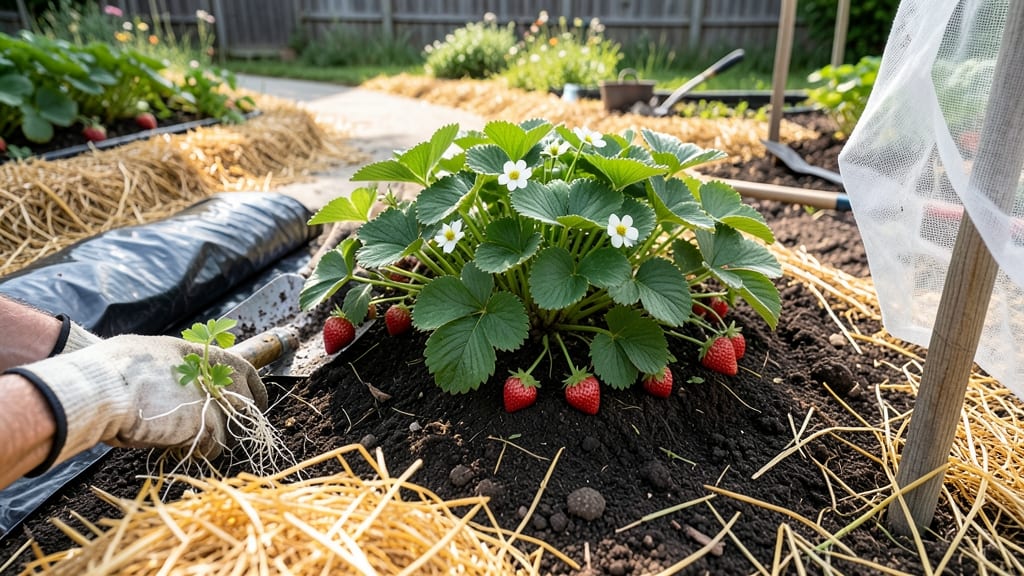
Planting strawberries in Missouri at the wrong time can mean the difference between a bountiful harvest and a sad pile of frost-bitten leaves.
The key to success lies in timing your 🍓 plantings precisely—whether you're working with June-bearing, everbearing, or day-neutral varieties—so they establish strong roots before the unpredictable Missouri frosts strike.
Missouri's 5b-6b climate means your planting window is narrow but critical: early spring (March-April) or early fall (September-October).
Get it right, and you'll enjoy sweet berries from May through June; get it wrong, and you might lose your entire crop to late frosts that can linger well into April or early May.
I've tested these strategies myself, and the results speak for themselves—healthy plants that thrive despite Missouri's humidity and variable weather. What you're about to discover isn't just theory; it's battle-tested advice for gardeners who refuse to let frost ruin their strawberry dreams.
Let's break down exactly when to plant each variety, how to prepare your soil for Missouri's unique conditions, and the simple tricks that protect your strawberries from frost damage. Your perfect harvest starts with these timing secrets—and they're easier to implement than you might think.
Missouri strawberry planting calendar: exact months by variety (June-bearing vs. everbearing vs. day-neutral)
Missouri’s USDA zones 5b-6b create a unique challenge for strawberry growers. The key to success lies in planting at the right time for your specific variety—whether it’s June-bearing (one big harvest), everbearing (two harvests), or day-neutral (continuous yield).
Timing isn’t just about months; it’s about soil temperatures and frost risk that vary across St. Louis, Kansas City, and Springfield.
For June-bearing varieties (like Jewel or Chandler), the window is tight—plant too early, and frost will kill tender shoots; too late, and you’ll miss the 60-90 day harvest window.
Everbearing types (Ozark Beauty) offer flexibility with two harvests per year, while day-neutral (Seascape) can produce berries year-round if planted correctly. Let’s break down the exact months for each variety in Missouri’s climate.
📅 Critical Dates for All Missouri Gardeners:
- Last Frost: Late March to early May (varies by region)
- First Frost: Late September to early November
- Soil Temp Threshold: 40°F+ for planting, 50°F+ for active growth
- Planting Window: 4-6 weeks before last frost (spring) or 6-8 weeks before first frost (fall)
| Variety Type | Best Planting Months | Missouri Regions | Soil Temp Requirement | Harvest Window |
|---|---|---|---|---|
| June-Bearing | March 15-April 15 (Spring) / Sept 1-15 (Fall) | St. Louis, KC, Springfield | 40°F+ (Spring) / 50°F+ (Fall) | Late May-June (1 harvest) |
| Everbearing | March 1-April 30 (Spring) / Aug 15-Sept 30 (Fall) | All regions (more frost-tolerant) | 45°F+ (Spring) / 55°F+ (Fall) | June & Sept-Oct (2 harvests) |
| Day-Neutral | April 1-May 15 (Spring) / July 15-Aug 31 (Fall) | Best for urban gardens (smaller plants) | 50°F+ (Spring) / 60°F+ (Fall) | June-Oct (continuous) |
| 🔹 Pro Tip: | Use row covers to extend spring planting by 2-3 weeks if frost threatens. | |||
For June-bearing varieties, the March 15-April 15 window is critical. In St. Louis (zone 6a), aim for March 20-April 5—this gives roots time to establish before the last frost (typically April 15).
In colder Kansas City (zone 5b), push to April 1-15 to avoid early freezes. Fall planting for June-bearers is risky but possible in September 1-15 if you’re in Springfield (zone 6b) and use mulch to insulate roots.
Everbearing varieties like Ozark Beauty are your best bet for two harvests per year. Plant these March 1-April 30 for a June harvest, then again August 15-September 30 for a fall harvest. The trick? These plants need warmer soil (45°F+) than June-bearers, so wait until mid-March in northern Missouri or early March in southern regions. In urban gardens, everbearers thrive in containers and can be moved indoors during extreme cold snaps.
If you want year-round strawberries, day-neutral varieties like Seascape are your answer. Plant these April 1-May 15 for a June kickoff, then again July 15-August 31 for a fall-to-winter extension. Day-neutral plants are heat-tolerant and can handle Missouri’s summer humidity, making them
How to time strawberry planting for Missouri’s frost zones (5-7): pro tips to avoid common mistakes
Missouri’s frost dates shift yearly, making strawberry planting a delicate balance. Urban areas like St. Louis often experience earlier frosts than rural zones, while Kansas City may see delayed spring warmth.
Without precise timing, your June-bearing varieties could bolt prematurely, or everbearing types might produce weak yields. The key lies in understanding your microclimate and adjusting planting dates accordingly.
For most of Missouri’s USDA Zones 5b-7a, the ideal planting window spans from late March to early April for spring and late September to early October for fall. However, these dates are fluid—soil temperature (not air temperature) determines readiness.
Use a soil thermometer to confirm 45°F+ at 4-inch depth before planting. In colder pockets like Springfield, wait until mid-April to avoid frost damage.
⚠️ callout warning ⚠️
Many gardeners rush to plant bare-root strawberries in February or early March, only to lose them to late frosts. Even hardy varieties like 'Chandler' or 'Jewel' can suffer crown damage if temperatures dip below 20°F. Solution: Use floating row covers for 2-3 weeks after planting to create a 5°F warmer microclimate. Remove covers during the day to prevent heat stress.
Signs of Frost Damage: Blackened leaves, mushy stems, or brown discoloration on crowns. Affected plants may recover but produce smaller berries or fail to fruit entirely.
Adjust your planting timeline based on your microclimate. Urban gardens with concrete heat absorption may warm up 1-2 weeks earlier than rural areas. Conversely, low-lying spots or northern exposures can delay warmth by 10+ days.
Test your garden’s readiness by planting a test row of spinach—if it thrives by mid-March, your strawberries are likely safe to follow.
Pre-planting soil prep is non-negotiable. Strawberries thrive in slightly acidic soil (pH 5.8-6.5) with well-draining conditions. Conduct a soil test 4-6 weeks before planting to address deficiencies. Amend heavy clay soils with compost or sand to prevent root rot.
A raised bed can extend your planting window by 2-3 weeks in Zone 6 areas by warming soil faster.
Post-planting care focuses on watering consistency and mulching. Keep soil moist but not soggy—strawberries hate waterlogged roots. Apply 2-3 inches of straw mulch to retain moisture, suppress weeds, and protect crowns from temperature swings.
In fall-planted beds, add an extra layer of mulch before first frost to insulate roots during winter.
Monitor your plants for early signs of stress. Wilting leaves, yellowing foliage, or stunted growth may signal overwatering, nutrient deficiency, or pest pressure. Slugs and earwigs are common in Missouri’s humid summers—use beer traps or diatomaceous earth to protect young plants.
With precise timing and attentive care, your strawberry patch will reward you with sweet, abundant harvests year after year.