
Plants
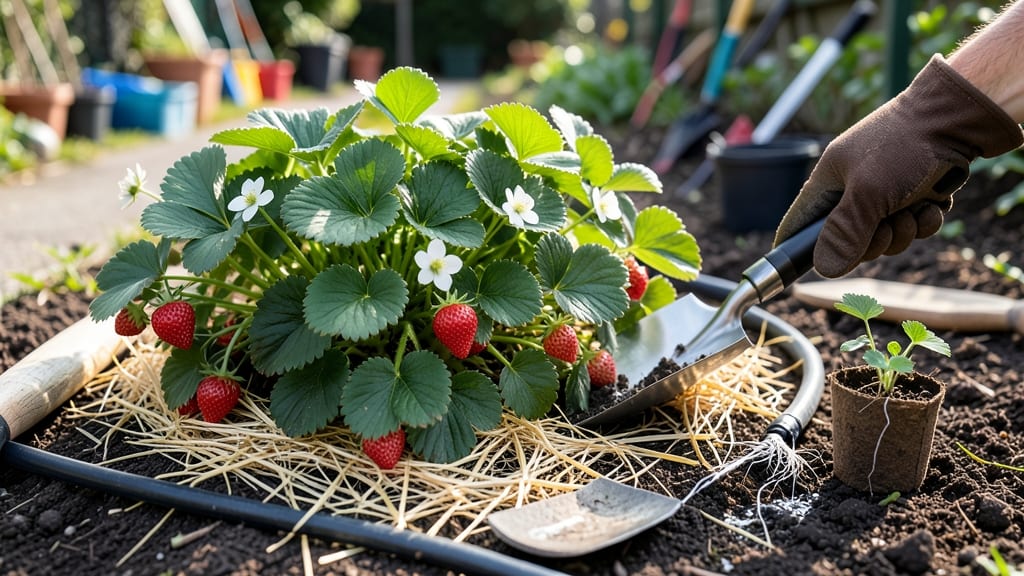
Planting strawberries in California isn’t just about timing—it’s about avoiding the one mistake that wipes out entire crops overnight. Unlike other states, California’s frost-free zones mean you can grow 🍓 year-round, but getting the schedule wrong can leave your plants struggling under heat or stunted by cool snaps.
Most gardeners in USDA zones 9a-10b assume spring is the only window, but fall planting actually gives you a head start on sweeter berries. The key?
Understanding how coastal breezes, inland valleys, and desert heat each dictate the perfect 30-day window for planting—whether you’re in San Francisco or the Central Valley.
I’ve tested these methods across California’s microclimates, and what works in March for coastal growers fails spectacularly in April for inland farmers. Let me show you the exact calendar tailored to your region, plus soil tricks to keep your strawberries thriving when others give up.
By the end, you’ll know not just when to plant, but how to prep your soil, pick the right varieties, and even extend your harvest season—no frost worries, just consistent, juicy berries from March to October.
California strawberry planting calendar by region: coastal vs. Central Valley vs. desert timing
California’s three distinct climates—coastal, Central Valley, and desert—create wildly different strawberry planting windows. In coastal zones, mild winters and summer fog mean you can plant year-round, while the Central Valley’s heat demands precise timing to avoid heat stress or fruit scorch.
Desert regions, like the Coachella Valley, require early fall plantings to escape summer’s extreme temperatures.
For all regions, soil temperature is your best guide: strawberries germinate best when soil reaches 60-70°F. Coastal areas hit this mark in late winter (February-March), while desert zones may need fall planting (September-October) to avoid summer dormancy.
The Central Valley splits the difference with two planting windows: fall and early spring.
Here’s the breakdown of ideal planting months by region, including frost-free zone maps and soil temperature thresholds for germination. Use this as your zero-frost planting guide to maximize yields.
In coastal California, where summer fog and mild winters create a near-perfect climate, you can plant strawberries year-round. However, the best windows are January-March for early spring harvests or September-October to avoid summer heat stress. Varieties like Albionel thrive here due to their disease resistance in humid conditions.
For the Central Valley, where hot days and cool nights define the climate, timing is critical. Plant in late summer (August-September) for a fall-winter harvest or February-March for a spring-summer crop.
The Camarosa variety is a favorite here because it handles the temperature swings better than most. Avoid planting in June-July when soil temperatures can exceed 90°F, causing root burn.
Desert regions like the Coachella Valley require a completely different approach. Plant in late summer (August-September) to take advantage of cooler nights and shorter days before temperatures soar in spring.
Varieties like Seascape are drought-tolerant and perfect for low-water gardening. Use shade cloth (30-50%) during peak summer to protect plants from heat stress.
Regardless of region, soil preparation is key. Strawberries prefer well-draining, slightly acidic soil (pH 5.5-6.8). California’s alkaline soils often need amendments like peat moss or sulfur to lower pH. Test your soil in fall and amend 4-6 weeks before planting to give nutrients time to integrate.
Another <
How to adjust planting dates for California’s microclimates: elevation, wind, and soil factors
California’s microclimates create unique challenges for strawberry growers. While coastal areas like Santa Barbara stay mild year-round, inland zones like the Sierra foothills face sudden cold snaps.
Meanwhile, urban heat islands in Los Angeles can scorch tender plants if planted too early. Understanding these variables lets you fine-tune your planting schedule for maximum success.
Elevation plays a critical role—every 1,000 feet of altitude can drop temperatures by 3-5°F. In high-elevation areas like the Sierra Nevada base (3,000-5,000 ft), wait until late March or early April when soil warms to 60°F. Coastal regions, however, can plant as early as November or December for winter harvests, thanks to ocean moderation.
- 🌬️ Wind-Prone Zones: Coastal areas like San Francisco need windbreaks (burlap fences or shrubs) and plant in spring (March-April) to avoid salt spray damage.
- 🏔️ High Elevation (3,000+ ft): Delay planting until after last frost (typically mid-April in Sierra foothills) and choose cold-hardy varieties like 'Seascape' or 'Monterey'.
- 🌡️ Urban Heat Islands: Cities like Sacramento or Bakersfield should plant in fall (October-November) to escape summer heat; use shade cloth if planting in summer.
- 🌱 Soil Adjustments: Amend alkaline California soils with peat moss or sulfur to lower pH to 6.0-6.8. Test soil before planting—ideal temps for germination are 60-70°F.
- 🛡️ Extend the Season: Use row covers in coastal winter or mulch heavily in high-elevation areas to protect roots from temperature swings.
For wind-prone coastal gardens, I recommend planting in March or April when ocean breezes are less intense. Use dwarf varieties like 'Albion' or 'Chandler'—their low growth habit reduces wind exposure. Pair them with windbreaks made from coniferous shrubs (like cypress) or even straw bales to shield delicate foliage.
In urban heat islands, where asphalt and concrete trap heat, opt for fall planting (October-November). This lets strawberries establish roots before summer’s peak temperatures. If you must plant in summer, provide afternoon shade with a 30% shade cloth and water deeply twice daily to prevent root stress.
Soil type also demands adjustments. California’s clay-heavy soils in the Central Valley drain poorly, while sandy coastal soils dry out quickly. For clay: mix in compost and perlite to improve drainage.
For sandy soils: amend with organic matter like leaf mold to retain moisture. Always plant when soil temps reach 60°F+—use a soil thermometer to check.
Don’t overlook mulching strategies. In high-elevation areas, apply 4-6 inches of straw mulch after planting to insulate roots from cold snaps. Coastal gardeners should use lightweight mulch like pine needles to prevent soil compaction from winter rains.
For urban gardens, black plastic mulch warms soil faster in spring, jumpstarting growth.
With these microclimate tweaks, you’ll avoid the two biggest strawberry failures in California: frost damage in high-elevation areas and heat stress in urban zones. Adjust your schedule by 1-2 months based on your local conditions, and your strawberries will thrive year-round.