
Watering
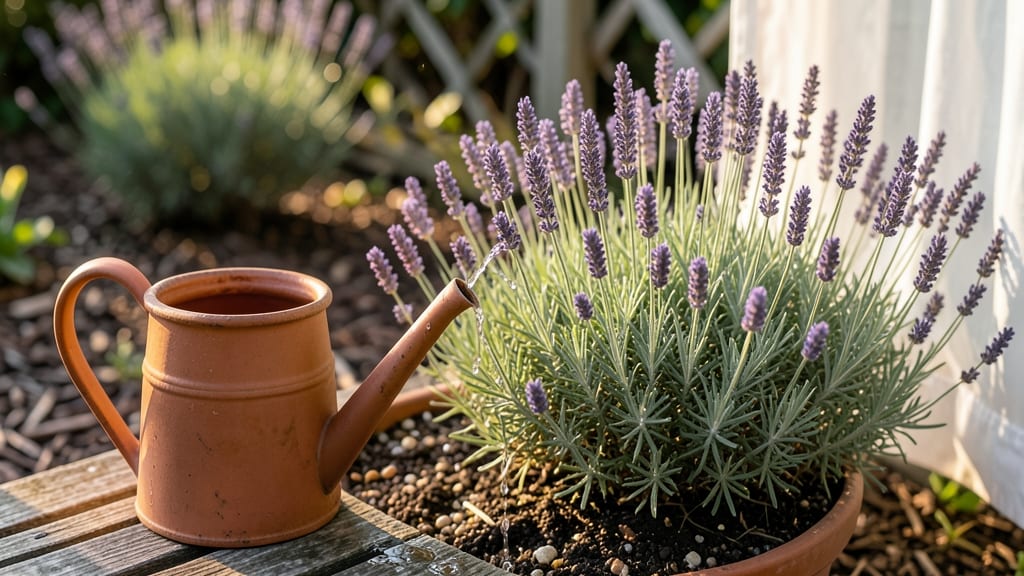
If your lavender plant needs how much water to thrive, you might be watering it all wrong—because lavender hates soggy soil. The key to keeping it thriving lies in a simple rule: deep watering, but only when the soil is bone-dry.
Most gardeners overdo it, thinking lavender needs constant moisture, but this Mediterranean herb actually craves drought-like conditions. I’ve learned the hard way that even a slight overwatering can lead to root rot, turning your fragrant beauty into a mushy mess.
In this guide, I’ll show you exactly how much water lavender needs—whether you’re growing it in pots or the ground—and when to skip watering entirely. You’ll also discover the best techniques to keep your lavender healthy, from morning watering to soil checks that save time and stress.
Ready to stop guessing? Let’s dive into the drought-tolerant schedule that’ll have your lavender blooming like never before.

How much water does a lavender plant need per week?
Lavender thrives on minimal water—its natural drought tolerance makes it one of the easiest herbs to grow, but getting the balance right is key. Unlike thirsty annuals, lavender hates soggy soil, which can suffocate its roots and lead to fungal diseases.
The secret? Deep, infrequent watering that encourages strong root growth while preventing wasteful evaporation.
As someone who’s learned the hard way that lavender wilts faster from overwatering than underwatering, I’ve perfected a simple rule: "When in doubt, wait another week." Most gardeners overestimate how much water lavender needs, especially in humid climates.
Let’s break down the exact schedule to keep your lavender lush without drowning it.
📋 Ideal Watering Schedule for Lavender
| Season | Frequency | Amount | Soil Check | Notes |
|---|---|---|---|---|
| Spring | Every 2-3 weeks | 1-2 gallons per plant | Top 2" dry | New growth needs moisture |
| Summer | Every 3-4 weeks | 1 gallon per plant | Top 3" dry | Heat reduces evaporation |
| Fall | Every 4-6 weeks | ½ gallon per plant | Top 4" dry | Prep for dormancy |
| Winter | Monthly or none | ¼ gallon if frozen | Top 6" dry | Only water if ground is frozen |
| Containers | Every 7-10 days | 1 cup per pot | Top 1" dry | Dries out faster than ground |
Your lavender’s water needs shift dramatically with the seasons. In spring, when new growth emerges, it’s okay to water more frequently—but even then, deep soaking (1-2 gallons per mature plant) is better than frequent shallow drinks.
Think of it like giving your lavender a long drink of water instead of sipping all day.
By summer, lavender enters its drought-tolerant phase. Most established plants won’t need water for 3-4 weeks unless your region experiences extreme heat (above 90°F). The key is to water at the base in the early morning to reduce evaporation and fungal risks.
Pro tip: Mulch with gravel (not organic mulch) to reflect sunlight and keep roots cool.
Fall and winter are when lavender needs the least water. In fact, overwatering during dormancy is a common mistake that leads to root rot. Only water if the ground is frozen or you’re in a rainless winter.
A simple test: Stick your finger 2-3 inches deep—if the soil feels damp, wait another week.
Container-grown lavender dries out 3x faster than in-ground plants, so check pots weekly. The soil in containers stays moist longer on the surface but can be bone-dry below. Always water until you see water draining from the bottom—this ensures the roots get hydrated, not just the topsoil.
A terracotta pot with drainage holes is ideal for lavender.
Signs your lavender is thirsty (but not yet desperate) include slightly wilting leaves that perk up after watering. However, if the stems become soft or mushy, it’s already too late—this means overwatering.
Healthy lavender should feel firm when squeezed and have a silvery-green hue. If the leaves turn yellow or the plant smells musty, you’ve crossed the line.
To avoid guesswork, I recommend grouping lavender with succulents in your garden. Their similar water needs create a low-maintenance zone. And if you’re unsure, remember: Lavender’s
Signs of overwatering vs. underwatering lavender (and how to fix it)
Lavender is famously drought-tolerant, but even this hardy herb can suffer when watering goes wrong. I’ve seen yellowing leaves, mushy stems, and stunted growth—all from simple watering mistakes.
The key is understanding the subtle differences between overwatering and underwatering so you can act fast before your plant declines.
Overwatering is the #1 killer of lavender, causing root rot and fungal diseases. You’ll notice dark, soggy soil that smells musty, and leaves turning yellow or brown at the edges.
Underwatering, meanwhile, leads to dry, crispy foliage and a woody, brittle appearance. Both issues require immediate attention, but the fixes couldn’t be more different.
Overwatering vs. Underwatering Lavender
✅ Overwatering Signs
- Yellow leaves (especially lower ones)
- Mushy stems or wilting despite wet soil
- Foul odor from soggy roots
- Mold or mildew on soil surface
🔧 Fix It:
- Stop watering immediately
- Repot in well-draining soil with perlite
- Trim rotted roots and let soil dry completely
- Water only when soil is bone-dry 2-3 inches down
✅ Underwatering Signs
- Dry, crispy leaves curling inward
- Brittle stems that snap easily
- Dull, faded foliage (loses purple hue)
- Stunted growth or no new blooms
💧 Fix It:
- Water deeply (1-2 inches per week)
- Use morning watering to reduce evaporation
- Mulch with gravel or pebbles to retain moisture
- Avoid watering leaves to prevent fungal risk
For overwatered lavender, the first step is always to halt watering. I’ve saved many plants by repotting them into a mix of sandy soil and gravel—this mimics their natural Mediterranean habitat.
If the roots smell rotten, trim them back to healthy tissue with sterilized scissors and let the plant recover in drier conditions.
When underwatering is the issue, lavender bounces back surprisingly fast. Water the base of the plant slowly and deeply until you see moisture seep out the drainage holes.
In containers, I’ve found that drip irrigation or a soaker hose delivers water right to the roots without wetting the foliage, which is crucial for preventing disease.
Pro tip: Stick your finger 2-3 inches into the soil. If it feels damp, wait. If it’s dry, it’s time to water. Lavender’s roots are shallow, so they need consistent moisture at the surface but hate soggy conditions.
Even in summer’s heat, most lavender varieties only need water every 2-3 weeks once established.
Remember, lavender’s fragrant foliage is a sign of health—if it’s wilting or turning brown, your watering routine needs adjustment. With the right balance, your lavender will reward you with vibrant blooms and that signature calming scent for years to come. 🌿