
How To
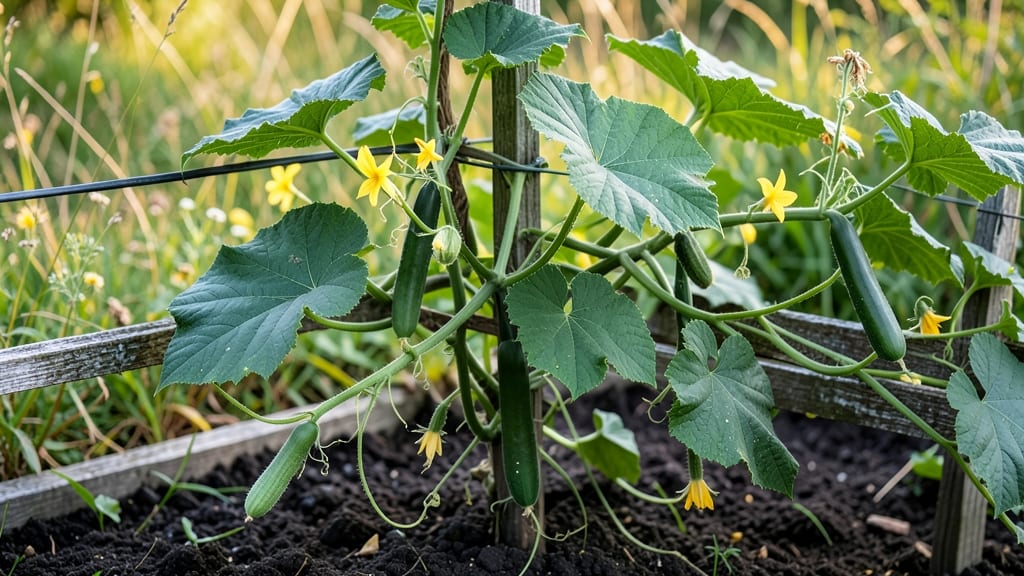
If you're planning your garden layout this spring, knowing how tall cucumber plants grow could make or break your space strategy—because those rambling vines can either become your best friend or your biggest headache.
Most home gardeners assume all cucumbers sprawl like wild vines, but the truth is there are two distinct types: bush varieties that stay compact (around 3–5 feet) and vining types that can shoot up to 20+ feet if left unchecked.
Without proper planning, you might end up with tangled messes or wasted garden real estate.
I’ve learned the hard way that skipping support structures or overcrowding plants leads to poor air circulation, which invites pests and diseases. The good news? With the right techniques—like trellising, pruning, and choosing the right variety—you can keep your cucumbers manageable while maximizing your harvest.
Whether you’re a beginner or a seasoned gardener, this guide will help you predict growth, avoid common mistakes, and create an efficient cucumber-growing system that works for your space. Let’s get those 🥒 plants thriving the right way!

Cucumber plant height by variety: vining vs bush types explained
When planning your garden layout, knowing how tall cucumber plants grow is crucial—especially since varieties range from compact bushes to towering vines. Bush cucumbers stay between 3–5 feet tall, making them ideal for small spaces, while vining types can stretch 6–20+ feet without support.
The difference isn’t just about height; it impacts space needs, structural support, and even harvest efficiency. Choosing the wrong type for your garden could lead to overcrowding, poor airflow, or wasted vertical space.
I’ve grown both types in my garden, and the space savings with bush varieties are undeniable—especially in containers or raised beds. But vining cucumbers often produce larger yields when trained properly. The key is matching your garden layout and climbing habits to the variety.
For example, ‘Bush Champion’ stays under 3 feet, while ‘Straight Eight’ vines can reach 10+ feet if given a trellis. Let’s break down the differences so you can pick the perfect fit for your space.
🌱 Visual Tip: Use a trellis or cage for vining types to save ground space and improve air circulation, reducing disease risk. For bush types, focus on mulching to retain moisture and prevent sprawl.
If you’re working with limited garden space, bush cucumbers are your best bet—they thrive in 5-gallon containers or raised beds without sprawling. Varieties like ‘Spacemaster’ or ‘Diva’ stay under 2 feet tall, perfect for patios or windowsills.
These types also mature faster, giving you earlier harvests in the season. However, they may produce smaller yields compared to vining types, so plan for closer spacing (12–18 inches apart).
For maximum yield and vertical gardening, vining cucumbers are unbeatable—but they demand dedicated support structures. A 6-foot trellis can train vines to climb, saving ground space while improving airflow and disease resistance.
My ‘Marketmore 76’ plants hit 12 feet last summer with a sturdy bamboo trellis, and I harvested 30% more cucumbers than my bush varieties. Just ensure your trellis can handle 10+ pounds of vine weight when fully grown.
💡 Pro Tip: Mix bush and vining types in your garden! Place bush cucumbers near the edges or in containers, while training vines along fences or arbors. This creates a multi-level harvest system and maximizes your growing area.
One common mistake I see is underestimating vine spread. Even if a cucumber plant is only 6 feet tall, its vines can stretch 8–10 feet outward without support. This leads to overcrowding, pests hiding in dense foliage, and reduced sunlight for neighboring plants.
Always allocate at least 3–4 feet of ground space per vining plant unless you’re using a trellis. For bush types, stick to 12–18 inches apart to prevent competition for nutrients.
Another factor affecting height is pruning habits. Vining cucumbers benefit from regular pruning to direct energy upward rather than outward. Pinch off side shoots (suckers) below the first 3–4 leaves to encourage a single main vine.
This keeps the plant taller and more manageable while boosting fruit production. I prune my vining cucumbers weekly during peak growth to maintain control—it’s a small effort for big rewards!
If you’re growing cucumbers in containers or small spaces, choose bush varieties or compact vining types like ‘Salad Bush’, which tops out at 4 feet. Even then, use a mini trellis or cage to keep vines contained. For large gardens
How to control cucumber plant height naturally (pruning & training tips)
If your cucumber plants are shooting up like unruly vines and taking over your garden, don’t panic—you can naturally control their height with simple techniques. Whether you’re dealing with 6-foot vining monsters or 3-foot bush types, proper training and pruning will keep your plants manageable while boosting yield.
The key is to guide their growth rather than force it, using organic methods that work for both indoor and outdoor setups.
For vining cucumbers, which can sprawl 10–20 feet without intervention, trellising is your best friend. These plants thrive when their heavy fruits don’t drag them to the ground, which reduces disease risk and improves air circulation.
Meanwhile, bush varieties need less support but still benefit from light pruning to focus energy on fruit production. Let’s break down the step-by-step process to keep your cucumbers in check—naturally and effectively.
- For vining types, use trellises (6–10 ft tall) or A-frame structures to guide vertical growth.
- For bush varieties, a low cage (2–3 ft) or stakes suffices to prevent sprawling.
- Install supports at planting time to avoid damaging roots later.
- Gently tie main vines to the trellis using soft plant ties or old fabric strips.
- Encourage one strong main stem by pruning side shoots near the base (leave 2–3 leaves above the pruning point).
- For bush types, pinch back tips of lateral branches to promote bushier growth.
- Remove yellow or diseased leaves regularly to prevent fungal spread.
- For vining plants, prune excessive side shoots (those without flowers) to redirect energy to fruit-bearing vines.
- Leave 3–5 leaves below each fruit to ensure nutrient support.
- Apply compost tea or fish emulsion to slow rapid growth if vines are too leggy.
- For indoor plants, reduce light exposure slightly (move 1–2 ft away from grow lights) to stunt height without harming fruit production.
- Avoid over-fertilizing with nitrogen, which promotes leafy growth over fruit.
- Pick cucumbers every 2–3 days to encourage bushier growth and prevent vines from over-extending.
- For bush types, harvesting smaller fruits (4–6 inches) stimulates more production.
- Use sharp pruners to avoid tearing vines when cutting.
One common mistake gardeners make is waiting too long to prune or using metal ties that can girdle vines. Always opt for flexible, breathable materials like cotton strips or old T-shirts.
If your cucumbers are still growing too tall after training, consider topping the main vine—simply pinch off the top 2–3 inches to signal the plant to focus on fruit rather than height.
For container gardening, choose compact varieties like ‘Bush Champion’ or ‘Spacemaster’, which max out at 3–4 feet with minimal training. Even in pots, dwarf trellises (4–5 ft tall) work wonders for vertical growth control.
Remember, the goal isn’t to stunt your plant but to guide it efficiently—so your cucumbers stay productive and your garden stays tidy.
With these natural height-control methods, you’ll enjoy healthier plants, bigger yields, and a neater garden layout—all without harsh chemicals. Happy pruning! 🌱✂️🥒