
Plants
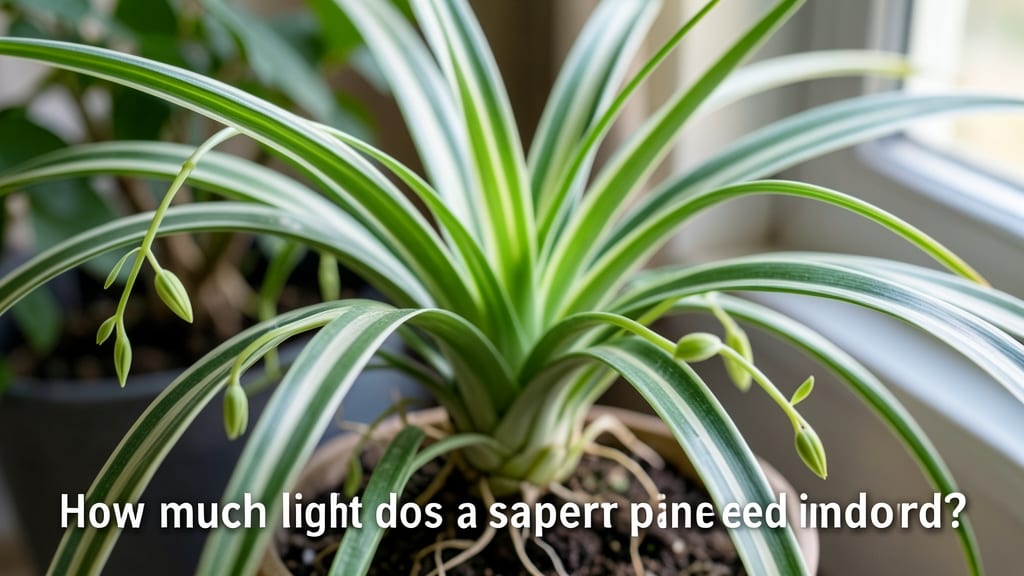
If you’re wondering how much light does a spider plant need indoors, you’re probably missing the light equation. These hardy plants thrive with just the right balance—too little, and they stretch like they’re reaching for a snack; too much, and those pretty variegated leaves lose their punch.
The good news? Getting it right is simpler than you think, and I’ll show you exactly where to place yours for lush, happy growth.
Most people assume Spider Plants need bright light to survive, but the truth is they’re far more flexible than you’d expect. In fact, they’ll tolerate everything from dim corners to sunny spots—though they’ll reward you with bold variegation and rapid growth when given the ideal conditions.
Whether you’re working with a north-facing window or a shadowy office nook, I’ve got the inside scoop on how to keep your plant thriving.
Let’s start with the basics: bright indirect light is the sweet spot for these plants, but what does that really mean in practice?
I’ll break down the signs your Spider Plant is begging for more (or less) light, plus pro tips for positioning it so it gets the perfect amount without turning into a crispy critter. Ready to transform that leggy plant into a showstopper?
Even better, I’ll cover what to do when natural light falls short—because let’s be real, not every home has a sunroom. From grow lights to clever window hacks, you’ll learn how to give your Spider Plant the energy it needs to keep growing strong, no matter where you live.
Let’s get started!


Ideal light requirements for spider plants: bright indirect light explained
Spider plants (Chlorophytum comosum) are one of the easiest houseplants to care for, but their light needs can make or break their health. Unlike sun-loving succulents, these plants thrive in bright indirect light, which mimics their natural understory habitat.
Too little light, and they stretch awkwardly; too much, and their leaves scorch. Let’s break down the perfect lighting conditions for your spider plant’s success.
First, understand that spider plants are versatile light adapters. They can survive in low-light conditions, but they’ll grow slower and produce fewer spiderettes (those adorable baby plants!). For optimal health—think vibrant variegation, sturdy leaves, and frequent offsets—aim for medium to bright indirect light.
This means placing them near a window but not directly in the sun’s path.
| Light Level | Description | Best Window Placement | Growth Impact |
|---|---|---|---|
| Low Light (10-20% sunlight) | North-facing windows or 8+ feet from south/west windows | Survives but grows slowly; leggy stems | Pale leaves, fewer spiderettes |
| Medium Light (20-40% sunlight) | East-facing windows or 3-5 feet from south windows | Healthy growth; balanced leaf color | Ideal for most homes; moderate spiderette production |
| Bright Indirect (40-60% sunlight) | West-facing windows with sheer curtain or 2 feet from east windows | Vibrant variegation; sturdy leaves | Best for variegated varieties; frequent offsets |
| Direct Sun (60%+ sunlight) | South-facing windows without filtration | Leaf burn; crispy edges | Avoid at all costs; use curtains or move plant |
If you’re unsure about your home’s light levels, start by testing different spots. Place your spider plant near an east-facing window first—this offers gentle morning light without harsh afternoon rays. West-facing windows can work too, but use a sheer curtain to diffuse the light and prevent leaf scorch.
Avoid south-facing windows unless you’re committed to monitoring for direct sun exposure.
Pro tip: Rotate your plant quarter-turn weekly to ensure even light exposure. Spider plants grow toward the light, so uneven exposure can cause lopsided growth. This simple habit keeps their foliage full and symmetrical.
I’ve seen spider plants go from sad and stretched to bushy and proud just by adding this rotation step!
For variegated spider plants (like the popular 'Variegatum' variety), bright indirect light is non-negotiable. These plants need extra light to maintain their striking white or yellow stripes. Without enough light, the variegation fades to solid green, and the plant loses its charm.
If your spider plant’s stripes are dulling, it’s a clear sign to move it closer to a brighter spot.
What about artificial light? If your home lacks natural light, don’t despair. Fluorescent or LED grow lights can supplement your spider plant’s needs. Place the light 6-12 inches above the plant and keep it on for 12-14 hours daily.
This mimics natural daylight cycles and keeps your plant thriving. I’ve successfully grown spider plants under office lighting—just ensure the bulbs emit a full spectrum of light.
One common mistake is assuming all indirect light is equal. Bright indirect light (like near a west window with a curtain) is ideal, but dim indirect light (like a corner far from windows) will stunt growth.
Pay attention to your plant’s leaves: if they’re dark green and compact, you’re in the sweet spot. If they’re pale and stretched, it’s time to relocate to a brighter area.
Finally, remember that spider plants are forgiving. Even if you’ve had one struggle in low light, it can bounce back with a little adjustment. Start by moving it to a slightly brighter spot and monitor its response over 2-4 weeks.
With the right light, your spider plant will reward you with long, arching leaves and those adorable hanging spiderettes.
Now that you’ve mastered the light, your spider plant is on its way to becoming the star of your indoor jungle. The key is observation—watch how your plant reacts and adjust as needed. Happy growing! 🌿
Signs your spider plant isn’t getting enough (or too much) light
Your spider plant (Chlorophytum comosum) is a hardy houseplant, but it sends clear signals when its light exposure is off. If you notice leggy stems stretching toward the window or dull, pale leaves, your plant is likely craving more light.
These visual cues are your first warning that adjustments are needed to avoid long-term damage.
On the flip side, too much direct sunlight can cause brown leaf tips or crispy edges, especially in hotter months. The key is finding that sweet spot of bright indirect light—where your spider plant can soak up enough energy without getting sunburned.
Let’s decode these signs and fix them fast before your plant’s health declines.
🌱 Spider Plant Light Warning
Your spider plant thrives in bright indirect light (4-6 hours daily). Too little light causes leggy growth and pale leaves, while direct sun burns leaves. Place it 2-3 feet from an east or west window—never in harsh afternoon sun.
If your spider plant’s leaves are turning yellow along the edges or developing brown tips, it’s often a sign of overwatering combined with low light. The plant struggles to process excess moisture when it lacks sufficient energy from light.
Move it to a brighter spot and reduce watering until the soil dries out slightly between waterings.
For slow growth or stunted foliage, your spider plant is likely not getting enough light. These signs appear when the plant stretches toward the nearest light source, creating long, thin stems with sparse leaves.
Rotate the pot quarter-turns weekly to encourage even growth, then gradually shift it closer to a brighter window over 1-2 weeks.
Watch for faded variegation—when the white or yellow stripes on your spider plant’s leaves lose their vibrancy. This happens when the plant can’t produce enough chlorophyll due to insufficient light.
To fix it, introduce a LED grow light 6-12 inches above the plant for 6-8 hours daily, or relocate it to a sunnier spot near a sheer curtain.
When in doubt, test your plant’s light needs by observing its leaf color and growth rate. Healthy spider plants have deep green leaves with vibrant variegation and produce pups (baby plants) regularly.
If you see any of these stress signals, act quickly—spider plants recover faster when light conditions improve within a week.