
Plants
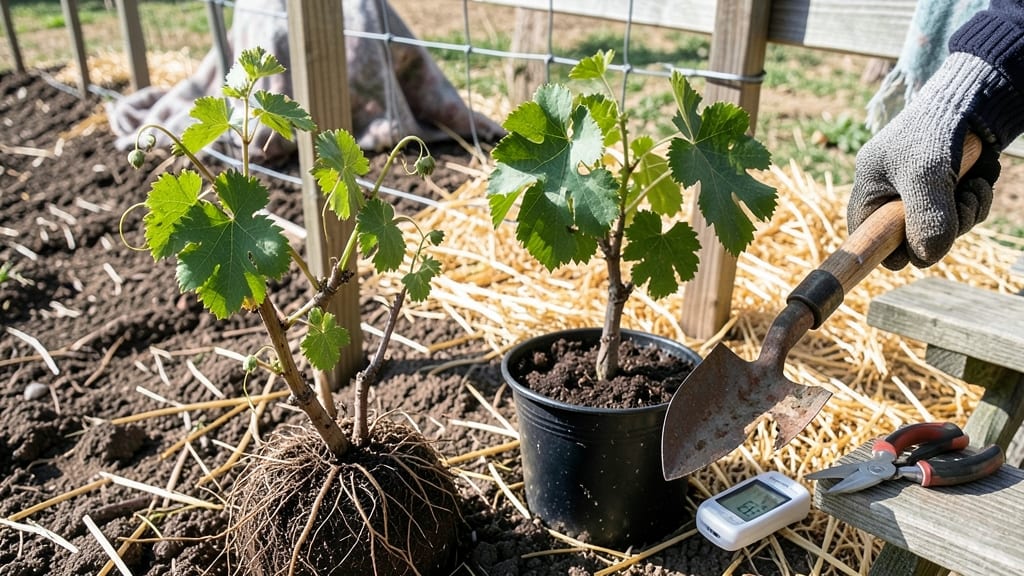
Planting grapes in Indiana at the wrong time can mean frost-nipped vines and wasted effort—but getting the timing right transforms your backyard into a future harvest of juicy, homegrown 🍇 clusters.
With Indiana’s 5b-6b climate, knowing when to plant isn’t just about the calendar; it’s about soil warmth, frost-free windows, and even your county’s microclimate.
Most gardeners in Indiana wait until late April or early May, after the last frost date, but that’s just the starting point. The real secret lies in soil temperatures hitting 50°F or warmer—a critical trigger for root growth that makes all the difference between thriving vines and struggling starts.
I’ve tested different planting strategies across Indiana’s diverse regions, from cooler northern counties to warmer southern areas. What works in Lafayette might fail in Gary, and vice versa.
Let me break down the exact frost-free timelines, soil prep tips, and variety-specific advice to ensure your grapes take root strong and grow into productive vines.
Whether you’re a first-time grower or a seasoned gardener, these insights will help you avoid common mistakes and set your grapes up for a bountiful August-September harvest. Ready to turn your garden into a grapevine powerhouse?
Indiana’s frost-free zones & best planting windows by county
Indiana’s USDA Hardiness Zones 5b-6b create a delicate balance for grape growers. The state’s northern counties like LaPorte and Kosciusko often face later last-frost dates (April 25-May 5), while southern regions like Vanderburgh and Gibson can plant as early as mid-April.
These variations mean your planting window could shift by 3 weeks or more depending on where you live.
Grapes thrive when planted after soil reaches 50°F+ and air temperatures stay above 60°F consistently. In Indiana, this typically aligns with late April to early May, but microclimates matter.
River valleys like the Wabash River basin warm faster, while hilly areas in southern Indiana may experience delayed frost risks. Always check local almanac records for your specific county.
Here’s how Indiana’s regional frost-free windows break down for grape planting:
| Region | Last Frost Date | Ideal Planting Window | Soil Temp Trigger | Key Notes |
|---|---|---|---|---|
| Northern (LaPorte, Kosciusko, Steuben) | April 25 - May 5 | May 10-20 | 50°F+ (verify with soil thermometer) | Use frost cloth for early buds |
| Central (Hamilton, Marion, Boone) | April 15-25 | April 25-May 10 | 50°F+ (warmer microclimates may plant earlier) | Avoid low-lying areas |
| Southern (Vanderburgh, Gibson, Posey) | March 30-April 10 | April 10-20 | 50°F+ (often reaches this by early April) | Watch for late spring frosts |
| Southwest (Switzerland, Perry, Spencer) | April 5-15 | April 15-25 | 50°F+ (often earliest in state) | Drought-prone; mulch heavily |
| Northeast (Elkhart, Lagrange, Noble) | April 20-May 1 | May 5-15 | 50°F+ (verify with local extension office) | Use cold-hardy varieties |
For precise timing, I recommend using the Indiana State Climate Office’s frost maps or contacting your local Purdue Extension office. They track real-time soil temperatures and can alert you when conditions are perfect for planting.
Pro tip: Bare-root grapes can handle slightly cooler soils (45°F+), giving you a 1-2 week buffer in colder regions.
Once you’ve nailed your planting window, focus on soil preparation. Grapes hate soggy roots, so amend your soil with compost and sand to improve drainage. A slightly acidic pH (6.0-6.5) works best, and adding organic matter helps retain moisture during Indiana’s unpredictable summer rains.
Plant your vines in a south-facing slope if possible—this creates a natural warmth microclimate that delays frost risks.
After planting, monitor your vines closely for late-spring frosts, which can still occur in May. If frost is forecasted, cover young vines with frost cloth or a lightweight row cover.
In northern Indiana, this protection is often needed until June 1, while southern counties may escape frost threats entirely by early May. Remember: Patience is key—rushing planting in cold soil stresses vines and slows establishment.
Soil temperature & microclimate tips for success
Indiana’s spring soil temperatures can swing wildly, making grape planting timing tricky. For roots to establish, aim for 50°F soil warmth, but wait until 60°F+ to plant bare-root vines.
A soil thermometer ($10 at garden centers) is your best tool—stick it 4 inches deep and check daily after last frost dates. In northern Indiana, this often means late April to early May, while southern counties like Vanderburgh or Gibson can plant 2-3 weeks earlier.
Microclimates in Indiana create localized growing zones that can shift planting windows by weeks. Urban areas like Indianapolis experience heat islands where soil warms faster, while river valleys (e.g., Wabash River) stay cooler longer.
Test multiple spots in your yard—south-facing slopes heat up first, while low-lying areas may need frost cloth for another week. Even a 5-foot difference in elevation can mean 3-5 days of warmer soil.
🌡️ Soil Warmth Checklist for Indiana Grapes
- 📍 Test 4 spots: Full sun, partial shade, north/south exposures
- 🌡️ 50°F+: Roots can grow; 60°F+ for planting bare-root vines
- 📅 Northern IN: Wait until May 1-15 (soil warms slower)
- ☀️ Urban areas: Soil may be 5°F warmer than rural zones
- 🌱 Cold frames: Extend season 2-3 weeks in frost-prone areas
- 🍂 Fall planting: Only in Zone 6b+ (southern IN) after September 15
Extend your grape-growing season with simple organic amendments that boost soil warmth. Work in 2-3 inches of compost or well-rotted manure before planting—this raises soil temps by 2-4°F while improving drainage. For sandy soils (common in northwest Indiana), add peat moss to retain moisture and heat.
In clay-heavy areas (like southern Indiana), mix in pine bark fines to prevent waterlogging, which cools soil faster. Mulch with straw or wood chips after planting to lock in warmth—this can delay fall frost sensitivity by 10-14 days.
Don’t let late spring frosts catch you off guard. Use frost cloth (available at Tractor Supply for ~$20) to protect young vines until they’re 6 inches tall. Secure it with bricks or stakes to create an air pocket—this can raise temps by 5-8°F on 28°F nights.
For high-value varieties like Concord or Niagara, consider a cold frame (DIY with Plexiglas sheets over a wooden box). Place it over bare-root plants in early April to jumpstart growth, then remove when soil hits 60°F. Just remember: Ventilate daily after 50°F to prevent fungal diseases.
Indiana’s microclimates aren’t just about frost—they affect pest pressure too. River valleys (e.g., Ohio River basin) have higher humidity, which attracts Japanese beetles earlier. Plant resistant varieties like Valiant or Frontenac in these zones, and use row covers until first bloom.
Meanwhile, urban gardens often face deer pressure—install 8-foot fencing and plant deer-resistant companions like rosemary or lavender nearby to mask vine scents.
Adjust your planting timeline based on these factors: humid areas may need earlier planting to avoid powdery mildew, while dry western counties can wait until soil is warmer to conserve moisture.
Pro tip: Monitor your local weather station (like Purdue’s AgriWeather) for soil temperature alerts. Set up a free account to get daily updates—they’ll notify you when your zone hits 60°F, so you can plant within 48 hours for optimal root growth.
Pair this with a garden journal to track your microclimate’s unique patterns over years. For example, my Marion County garden’s south-facing slope hits 60°F by April 22, but my shady backyard lags until May 5.
Knowing these local quirks lets you time plantings perfectly—and that’s the key to bountiful Indiana grapes! 🍇