
Plants
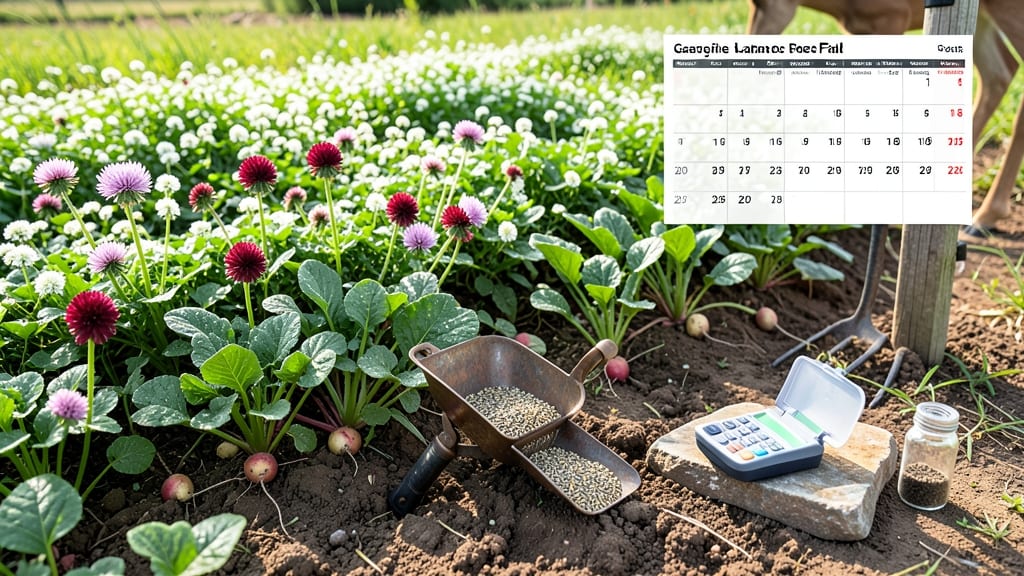
When to plant food plots in Georgia isn’t just about throwing seeds in the ground—it's about syncing with deer behavior, soil temps, and regional microclimates to create a feast that keeps them coming back all season.
In USDA zones 7a-8b, where frost dates can shift dramatically between North Georgia's mountains and the coastal plains, planting too early means frost damage, while waiting too long risks missing peak growth before hunting season.
I've seen firsthand how a 2-week difference can turn a lush green plot into a dusty disappointment by October.
This guide breaks down the exact windows for spring and fall plantings—when to prep soil, which species thrive in Georgia's red clay, and how to adjust for your specific region.
Whether you're planting clover for early summer browse or brassicas for fall rut feeding, we'll cover the critical timing that makes the difference between a hit and a miss.
Ready to transform your field into a deer magnet? Let's get into the precise schedule that works for Georgia's three distinct planting zones, so you're always one step ahead of the herd.
Georgia food plot planting calendar by region (North vs. south vs. coastal)
Georgia’s diverse climate—from the chilly North Georgia mountains to the humid Coastal Plain—means your food plot timing must match your region. Planting at the wrong time risks frost damage, poor germination, or missed deer feeding peaks.
I’ll break down the exact months for each zone, including soil temperature thresholds and frost-free windows to maximize whitetail attraction.
North Georgia (USDA Zones 7a-6b) faces earlier frosts and cooler soils, while the Coastal Plain (Zone 8a-8b) enjoys longer growing seasons. Central Georgia (Zone 7b-8a) falls in between.
For all regions, soil temps above 60°F are critical for seed germination—waiting too long can mean slower growth and less forage for deer during hunting season.
Use this month-by-month guide to align your planting with Georgia’s two prime windows: spring (March-April) for summer forage and fall (August-September) for winter browse. Coastal areas can extend fall planting into early October, but northern zones must wrap up by mid-September to avoid frost.
In North Georgia, aim for late March planting—any earlier risks frost killing tender seedlings. Use winter rye or clover mixes that tolerate cooler temps.
For Central Georgia, you’ve got flexibility: plant brassicas (turnips, radishes) in early March for spring forage, then transition to warm-season grasses like sorghum-sudangrass by late April.
The Coastal Plain lets you start as early as February for warm-season species like cowpeas or millet, which thrive in the region’s longer frost-free season. However, avoid planting cool-season forages like clover after early April—the heat will stress them. Instead, shift to summer annuals by May.
Fall planting is equally critical. In the North, wrap up by mid-September to ensure 60 days of growth before frost. Central Georgia can extend to early October, while the Coastal Plain might squeeze in late October plantings of winter peas or chicory, which handle mild winters better.
Pro tip: Check 7-day soil forecasts via the Georgia Automated Environmental Monitoring Network (AEMN). Their real-time soil temp maps help you time planting when conditions are ideal. For example, if your North Georgia plot’s soil hits 60°F in late March, that’s your cue—don’t wait for April!
Remember, deer activity peaks when food plots are lush and mature. Planting clover in spring ensures summer forage, while fall brassicas provide winter browse. Miss these windows, and you’ll leave your herd hungry during critical hunting months. Adjust for drought years by planting earlier—dry soils warm faster in spring.
Finally, rotate crops annually to prevent soil depletion. In Coastal Georgia, where humidity is high, choose disease-resistant varieties like sericea lespedeza. In the North, focus on hardy perennials like chicory that return year after year.
Your region’s microclimate dictates success—follow this calendar, and you’ll have deer grazing your plots all season long. 🌾
Best food plot species for Georgia’s seasons and soil types
Georgia’s diverse soil types—from red clay in the Piedmont to sandy loam in coastal areas—and humid subtropical climate create perfect conditions for thriving food plots. But selecting the right species mix depends on your planting season and local microclimate.
Fast-growing annuals like clover and brassicas dominate spring plantings, while perennial favorites such as chicory and winter peas shine in fall.
For red clay soils, focus on deep-rooted perennials like chicory and sericea lespedeza, which break through compacted layers. In sandy loam areas, fast-establishing annuals like brassicas and turnips thrive due to their drought tolerance.
Always test your soil pH—aim for 6.0-7.0—and amend with lime or sulfur before planting to ensure optimal nutrient uptake.
🌱 Georgia Food Plot Species by Season & Soil
- Spring Planting (Feb-Apr): Clover mixes (white Dutch, red), Brassicas (turnips, radishes), Wheat/rye (for early green-up). Ideal for red clay and loamy soils.
- Summer Planting (Jun-Jul): Sorghum-sudangrass, pearl millet, cowpeas. Best for sandy loam—drought-tolerant and heat-resistant.
- Fall Planting (Aug-Sep): Chicory, winter peas, sericea lespedeza. Perennials like chicory thrive in cooler temps and clay soils.
- Year-Round Perennials: Alesce clover, crimson clover. Low-maintenance and deer-proof once established.
💡 Pro Tip: Mix 3-4 species for year-round forage—e.g., clover (spring) + chicory (fall) + brassicas (winter).
When preparing red clay soil, till deeply to break compaction and mix in organic matter like compost or aged manure. For sandy loam, focus on retaining moisture with mulch or cover crops. Always disk or broadcast seed lightly—avoid burying seeds too deep, which can hinder germination.
Brassicas like turnips and radishes are my go-to for fast deer attraction in spring, germinating in just 5-7 days and reaching peak biomass in 4-6 weeks. Plant them 1/4 inch deep in moist soil for best results. In contrast, perennial chicory takes 60-90 days to establish but provides year-round grazing and drought resistance.
For coastal Georgia, where humidity is higher, prioritize fungus-resistant varieties like sericea lespedeza or austrian winter peas. These handle wet conditions better than traditional clovers. Always rotate crops annually to prevent soil depletion and pest buildup—this keeps your food plots productive for decades.
My top 3 recommendations for Georgia growers:
- Clover mixes for spring green-up,
- Chicory for fall/winter browse, and
- Brassicas for quick deer impact. Combine these with proper soil prep, and you’ll have a whitetail magnet year-round.