
Plants
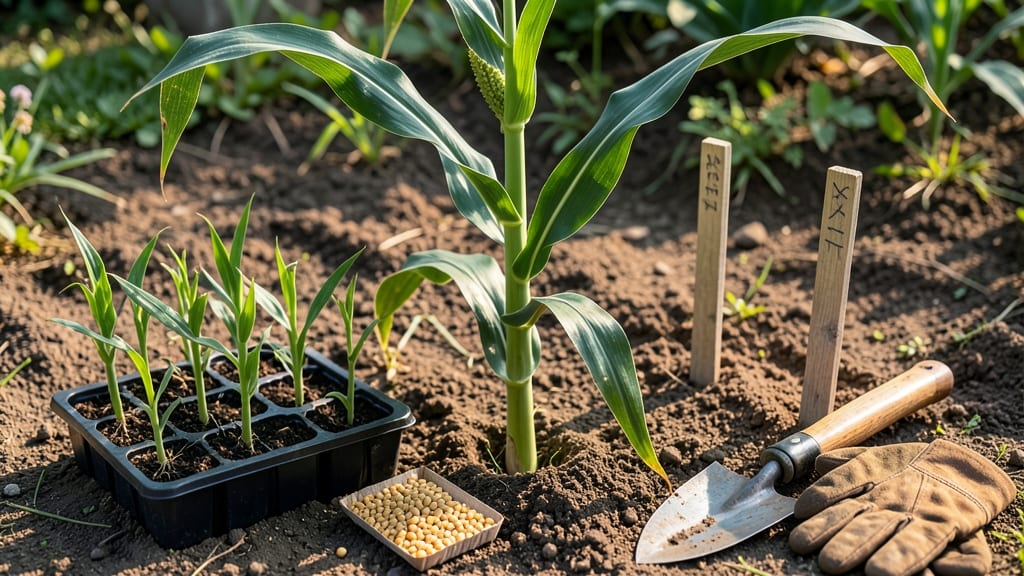
Timing your 🌽 corn planting in Georgia isn’t just about the calendar—it’s about beating the heat and frost to unlock the sweetest, most productive harvest.
Plant too early, and your tender seedlings might get nipped by late frosts; too late, and Georgia’s summer swelter can turn your golden ears into tough, starchy disappointments.
Most Georgia gardeners in zones 7b-8b should aim for mid-April to early May, when soil temperatures hit that sweet spot of 60°F+ and frost risks fade.
But here’s the secret: your exact planting window depends on your corner of the state—whether you’re in the cooler Piedmont or the steamier coastal plains.
I’ve grown 🌽 corn for years in Georgia, and the difference between a bumper crop and a struggle often comes down to these 3 critical factors: soil warmth, succession planting, and variety selection. Skip these, and you might end up with half the yield—or worse, no harvest at all.
Ready to master the perfect timing? I’ll walk you through the exact planting schedule for your heat zone, plus pro tips to outsmart Georgia’s pests and unpredictable weather. Let’s get those kernels popping!
Georgia corn planting calendar by heat Zone: exact months for sweet corn success
Georgia’s diverse climate—spanning USDA zones 7a through 9a—means your corn planting timeline depends heavily on your specific heat zone. In cooler northern areas like Zone 7a, frost can linger into April, while southern Zone 9a gardeners enjoy frost-free soil by early March.
Getting the timing right ensures your ‘Silver Queen’ or ‘Peaches and Cream’ corn thrives without heat stress or frost damage.
For all Georgia gardeners, the golden rule is: plant when soil temperatures reach 50°F+ and stay above 60°F for consistent germination. This typically aligns with your last frost date, but microclimates (like urban heat islands) can shift your window by 1-2 weeks.
Below, we break down exact planting months for each zone, plus strategies for succession planting to stretch your harvest.
Why this matters: Corn planted too early risks frost damage to young shoots, while late plantings often suffer from heat stress during pollination. Georgia’s summer heat can push soil temps above 90°F, stalling germination—so timing is everything for that perfect milky kernel at harvest.
| Heat Zone | Last Frost Date | Ideal Planting Window | Soil Temp Threshold | Best Varieties |
|---|---|---|---|---|
| 7a (North GA) | Mid-April | Late April–Early May | 55°F+ (consistent) | ‘Ambrosia,’ ‘Peaches and Cream’ (100-day) |
| 7b (Northeast GA) | Early April | Early April–Mid-May | 50°F+ (minimum) | ‘Silver Queen,’ ‘Golden Bantam’ (70-day) |
| 8a (Central GA) | Late March | Mid-March–Late April | 50°F+ (soil probe test) | ‘Country Gentleman,’ ‘Temptation’ (90-day) |
| 8b (Atlanta Metro) | Early March | Late February–Early May | 55°F+ (for fast germination) | ‘Peaches and Cream,’ ‘Bodacious’ (110-day) |
| 9a (South GA) | Mid-February | January–March (early) or June (late) | 60°F+ (optimal) | ‘Ambrosia,’ ‘Golden Cross Bantam’ (75-day) |
Note: For succession planting, add new rows every 2 weeks until June to extend harvests. Use shade cloth in Zone 9a for late-season plantings to prevent heat stress.
In Zone 7a, where frost can bite until April, I recommend starting seeds indoors 4-6 weeks before your target outdoor date. Use biodegradable pots to transplant seedlings without disturbing roots.
For Zone 9a, you can even plant a winter crop in January—just cover seeds with row fabric to protect against rare cold snaps.
Pro tip: Test your soil temperature with a soil thermometer before planting. Corn seeds need consistent warmth to germinate—if your soil fluctuates below 60°F, germination slows dramatically.
In Zone 8b, where I garden, I’ve had success planting ‘Peaches and Cream’ as early as late February using black plastic mulch to warm the soil faster.
Heat stress is a bigger threat than frost in Georgia’s summers. If your soil temps climb above 85°F during planting, switch to shorter-season varieties (like ‘Golden Bantam’) or use drip irrigation to keep roots cool.
I’ve seen corn planted in July in Zone 9a thrive with these adjustments—just expect a smaller harvest.
For succession planting, stagger your plantings every 2 weeks until early June. This ensures a continuous supply of fresh ears. In my garden, I plant 3 rounds: early April, mid-May, and late June.
The June planting often yields the sweetest corn because it avoids the drought stress of peak summer heat.
Don’t
5 Critical factors that determine your Georgia corn planting timeline (beyond months)
Georgia’s corn planting success depends on more than just calendar months—microclimates, soil conditions, and pest risks all play pivotal roles. Urban gardeners in Atlanta’s heat islands face different challenges than rural farmers in South Georgia’s sandy soils.
Even a 5-day delay can shift your harvest window by weeks, especially for 70–110-day varieties like ‘Peaches and Cream.’ Let’s break down the factors that let you fine-tune your planting schedule for peak yields.
First, soil temperature is non-negotiable. Corn seeds need 50°F+ soil to germinate, but roots struggle in 85°F+ heat. Test your soil with a soil thermometer—if it’s cooler than 60°F, wait.
In Zone 8a, this often means delaying until mid-April, while Zone 7b gardeners can plant as early as late March. Row covers can help jumpstart early plantings by warming the soil faster.
Next, microclimates create planting windows that vary by just a few miles. A north-facing slope in Dahlonega might stay frost-free a week later than a low-lying Atlanta yard. Urban areas also trap heat, extending the growing season by 10–14 days compared to rural zones.
Use a local frost-free date map (like the Georgia Climate Project) to adjust your timeline.
- 🌡️ Soil Temperature: Plant only when soil reaches 50°F+ (use a thermometer). 85°F+ stalls germination.
- 🌿 Microclimates: Urban areas stay 10–14 days warmer than rural zones. Check local frost-free dates.
- 💧 Soil Moisture: Corn needs 1–2 inches of water weekly. Drought stress in July–August can kill ears.
- 🌽 Variety Maturity: 70-day varieties (e.g., ‘Early Sunglow’) work for late plantings; 110-day (e.g., ‘Ambrosia’) need early starts.
- 🐜 Pest Risks: Corn earworm peaks in July–August. Use row covers or Bt-treated seeds to protect.
Don’t overlook soil moisture, especially in Georgia’s drought-prone summers. Corn needs consistent watering during tasseling (6–8 weeks after planting) and ear formation (8–10 weeks). If your area faces July–August dry spells, consider drip irrigation or mulching with straw to retain moisture.
Even a single week of drought can reduce kernel size by 30%.
Your corn variety’s maturity dictates your planting window. Short-season varieties (70 days), like ‘Golden Bantam,’ can be planted as late as early June for a fall harvest, while 110-day varieties (e.g., ‘Ambrosia’) must go in by mid-April.
Match your variety to your last frost date—aim to harvest before first frost (November 15). For example, a 90-day variety planted in early May will mature by early August, avoiding summer’s peak heat.
Finally, pest pressure shifts with timing. Corn earworm and fall armyworm are worst in July–August, so early plantings escape some damage. Use row covers for the first 6 weeks or choose Bt-resistant varieties.
Rural areas often see higher pest loads than urban gardens, so monitor silks and husks closely. A neem oil spray can help if you spot early signs of infestation.
Pro tip: Urban gardeners can extend their planting window by using black plastic mulch to warm soil faster or shade cloth to protect seedlings from late-spring heat. Rural growers should prioritize succession planting—sow every 2 weeks from April to June for a staggered harvest.
With these adjustments, you’ll avoid the most common Georgia corn failures and enjoy sweet, tender ears all season. 🌽