
Plants
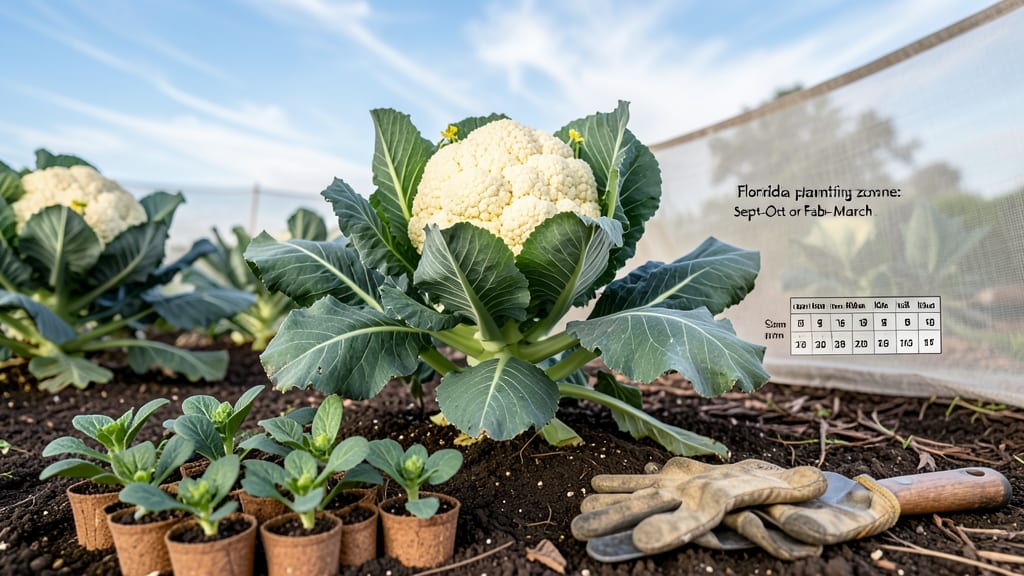
Planting cauliflower in Florida isn’t just about picking a month—it’s about dodging the heat and frost to grow heads that stay firm, not flowers. The key? Timing your seeds for cool soil and mild days, whether you’re in North Florida’s 9a or the balmier 11 zones.
Most gardeners in Florida swear by fall planting—think September to October—for a harvest just before the holidays. But winter plantings in January-February can also work if you’re in South Florida, where frost is rare. The trick? Avoid summer heat, which sends cauliflower into a bolting frenzy.
I’ve tested the best strategies to keep your 🥬 happy, from soil temperature checks to shade tricks. Whether you’re a first-timer or a seasoned grower, these tips will help you beat Florida’s climate and grow cauliflower that’s perfectly shaped and ready to harvest.
Ready to skip the guesswork? Let’s dive into the exact planting windows, soil prep hacks, and heat zone secrets that’ll make your cauliflower thrive—no matter where you are in the Sunshine State.
Florida heat zone breakdown: best cauliflower planting months by region
Florida’s two distinct heat zones create wildly different planting windows for cauliflower. In North Florida (Zones 7b-8a), cooler winters allow for fall and winter harvests, while Central/South Florida (Zones 9a-11) gardeners must focus on late fall to early winter to avoid summer bolting.
The key? Soil temperatures below 75°F and consistent moisture—without these, your plants will bolt before forming heads.
Cauliflower thrives in Florida’s fall and winter seasons because summer’s 90°F+ temperatures trigger bolting—the plant’s way of saying, “I’d rather make seeds than heads!” By aligning your planting schedule with your heat zone, you can extend the growing window and enjoy fresh, firm curds.
Let’s break down the exact months and strategies for each region.
🌱
| Region & Zone | Best Planting Window | Harvest Window | Key Tips |
|---|---|---|---|
| North Florida (Zones 7b-8a) | Late August–September (fall) & January–February (winter) | December–January (fall) & March–April (winter) | Use row covers for frost protection; soil temps drop to 50–75°F by October. |
| Central Florida (Zone 9a) | September–October (fall only) | December–January | Avoid winter planting—soil stays too warm (75°F+) for head formation. |
| South Florida (Zones 9b–11) | October–November (late fall only) | January–February | Use 50% shade cloth to lower leaf temps; no winter planting—soil never cools enough. |
In North Florida, you can squeeze in two harvests per year—one from fall planting and another from winter. The trick is to time your fall planting 8–10 weeks before the first frost (usually mid-December in Zone 8a).
For example, if your frost date is December 15, plant by October 15 to ensure heads form before cold sets in.
Central and South Florida gardeners have only one shot at cauliflower each year. Planting in late September or October gives you a December–January harvest before summer heat returns. The critical factor here is soil temperature: if it stays above 75°F for more than a week, your plants will bolt.
Use a soil thermometer to monitor—ideal temps are 50–75°F.
For North Florida, winter planting (January–February) works if you’re in Zone 7b–8a, where frosts are common. Aim for a March–April harvest by choosing fast-maturing varieties like ‘Snowball Y Improved’ (70 days) or ‘Purple of Sicily’ (80 days).
In Central/South Florida, winter planting is a gamble—soil rarely cools enough, so stick to fall only.
One game-changer for Florida gardeners is succession planting. Instead of planting all your seeds at once, stagger them every 2–3 weeks during your region’s planting window. This ensures a continuous harvest and reduces the risk of bolting from heat stress.
For example, in North Florida, plant half your seeds in late August and the rest in early September.
If you’re in South Florida (Zones 10–11), consider container gardening with 5-gallon pots. Pots heat up faster than soil, so add ice packs or frozen water bottles to the soil mix to keep temps down.
Place containers in partial shade during peak afternoon heat (12–4 PM) to prevent bolting.
Finally, choose heat-tolerant varieties like ‘Graffiti’ (purple, 75 days) or ‘Cheddar’ (orange, 80 days) for Florida’s climate. These hold up better to short heat spikes than traditional white varieties. Pair them with daily mulching (straw or grass clippings) to keep roots cool and moist.
🌿
Soil temperature rules for cauliflower success: how to test & adjust
Cauliflower thrives in cool soil temperatures between 50–75°F, but Florida’s heat makes this tricky. Too warm, and your plants bolt (flower) before forming heads. Too cold, and growth stalls. The key is testing soil temps before planting and adjusting with organic matter to extend your growing window.
Use a soil thermometer to check temps 2–3 inches deep—this is where roots actually grow. In Florida, morning is the best time to test, as afternoon heat can skew readings. Aim for 60–65°F for ideal germination and head formation.
To cool your soil naturally, add 2–3 inches of compost or straw mulch before planting. Organic matter retains moisture and insulates roots, keeping temps stable. For extra protection, try black plastic mulch—it warms soil in winter but blocks heat in summer.
If your soil runs below 50°F, cauliflower growth slows dramatically. In North Florida’s cooler zones, use row covers or plant in raised beds filled with compost to buffer temperature swings. Avoid fresh manure—it heats up soil and triggers bolting.
Pro tip: Test soil temps daily for a week before planting. If temps fluctuate more than 10°F between day and night, your cauliflower may struggle. Adjust by watering deeply in the morning to stabilize ground temps and reduce stress.
Remember, consistency is critical. Cauliflower hates temperature shocks—whether from sudden heat waves or frost. In Florida, this means planting in late summer or winter and monitoring soil temps religiously. With the right adjustments, you’ll grow heads instead of flowers!