
Companion Plants
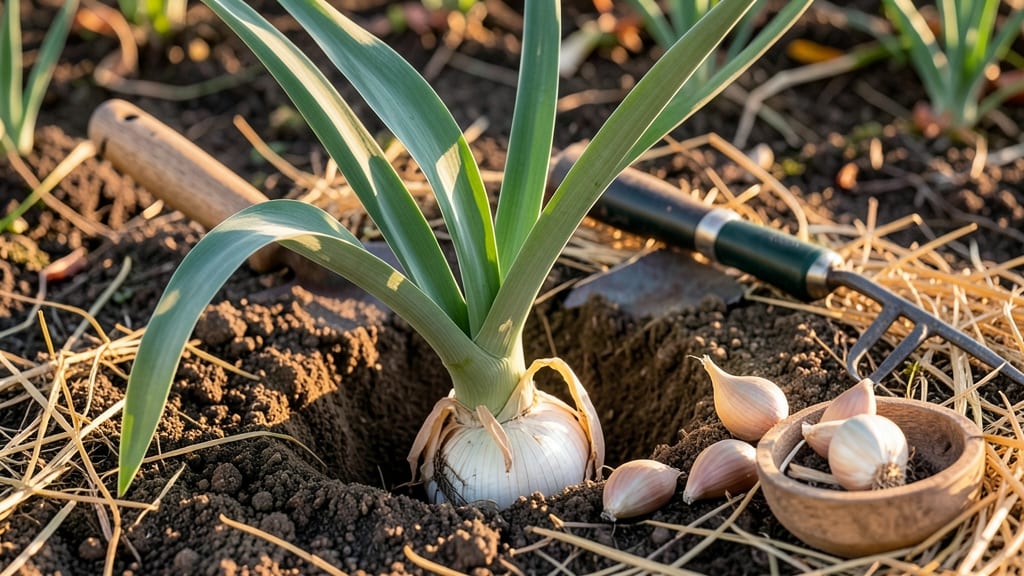
Planting garlic in Michigan at the wrong time could mean the difference between plump, flavorful bulbs and disappointing harvests. The key to success lies in timing—specifically, getting those cloves in the ground 4-6 weeks before winter dormancy when the soil cools but hasn’t frozen yet.
For most of Michigan’s USDA Zones 5b-6b, that window opens in October and closes by early November. This timing lets garlic establish roots before winter, giving it a head start for next summer’s harvest.
But if you miss it, don’t panic—spring planting is still an option, though it yields smaller bulbs.
Why does timing matter so much? Garlic needs cold exposure to develop properly, and Michigan’s climate delivers that—if you plant at the right moment. Too early, and the cloves may rot; too late, and they won’t get enough chill time.
I’ll walk you through the exact dates for your zone and how to adjust for early or late frosts.
Ready to grow garlic that rivals what you’d buy at the store? Let’s dive into the perfect planting schedule, soil prep tips, and how to protect your crop through Michigan’s unpredictable winters. Your future harvest starts now.
Michigan garlic planting calendar by hardiness Zone (fall dates you can’t miss)
If you’ve ever grown garlic in Michigan, you know timing is everything—plant too early, and your cloves rot; too late, and you’ll get weak, puny bulbs.
The key lies in Michigan’s USDA Zones 4-6, where fall planting (not spring!) triggers the natural dormancy cycle that produces those plump, flavorful bulbs we all crave.
For hardneck varieties (like Music or German Red), this is non-negotiable, while softneck types (like Silverskin) have a slightly wider window.
Your planting window hinges on two critical factors: soil temperature (aim for 40-50°F) and the first hard frost. In Michigan, this typically lands between mid-October and early November, but your exact zone dictates the perfect moment.
Miss it, and you risk bolting (flowering prematurely) or frozen soil that stunts growth. Let’s break it down by zone so you can mark your calendar now.
Pro Tip: Use a soil thermometer to confirm readiness—planting when temps hover around 45°F ensures roots establish before winter sets in. For northern Michigan (Zone 4), this means late September to mid-October; southern areas (Zone 6) can wait until early November. Hardnecks need this cold period to form bulbs, while softnecks are more flexible but still benefit from an early start.
| USDA Zone | Ideal Planting Window | Soil Temp Threshold | Hardneck Notes | Softneck Notes |
|---|---|---|---|---|
| Zone 4 (Northern MI) | Late September–Mid-October | 40–45°F | Plant 6–8 weeks before frost; prioritize early varieties like Chef’s Choice. | Can extend to early November if soil is workable. |
| Zone 5 (Central MI) | Mid-October–Early November | 45–50°F | Avoid planting after October 20; use German White for cold tolerance. | Best planted by November 1 for overwintering success. |
| Zone 6 (Southern MI) | Early–Mid-November | 50–55°F | Late plantings may bolt prematurely; mulch heavily. | Ideal for Artichoke varieties; can plant until November 15. |
📅 Adjust 1–2 weeks earlier for early frosts; delay by 1 week if mild fall weather persists.
Zone 4 gardeners in Traverse City or the UP should plant by October 15 at the latest. The first hard frost (typically October 10–20) signals your deadline—garlic needs 4–6 weeks to root before winter.
For hardnecks, this cold period is mandatory; skip it, and you’ll get small, weak bulbs. Softnecks, like California Early, are more forgiving but still thrive with an early start.
What if Michigan’s weather throws you a curveball? Early frosts in Zone 5 (Lansing, Grand Rapids) can push planting to mid-September, while Zone 6 (Detroit, Ann Arbor) might see November 15 as a cutoff.
Use mulch (straw or leaves) to insulate soil and extend the window by 1–2 weeks. Pro growers swear by black plastic mulch to warm soil faster in chilly zones, giving you an extra week to plant.
Here’s my non-negotiable rule: Never plant garlic in spring in Michigan. While it can grow, you’ll miss the cold-vernalization step that hardnecks need to form bulbs. Spring-planted garlic often bolts (sends up flowers) instead of storing energy in the bulb.
If you’re set on spring planting, stick to softneck varieties and accept smaller yields.
For hardneck varieties, aim to plant 4–6 weeks before the ground freezes. In Zone 4, this means early October; in Zone 6, you might squeeze in a November planting. Softnecks are more adaptable but still prefer fall planting.
If you’re unsure about your first frost date, check the Michigan State University Extension frost maps or use a frost calendar app for real-time alerts.
One mistake I see often? Planting too shallowly (less than 2 inches deep). Garlic cloves need to be buried 2–3 inches deep with the pointy end up—this ensures roots anchor properly before winter.
After planting, mulch with 4–6 inches of straw or leaves to protect cloves from freeze-thaw cycles and keep soil temps stable. This simple step can double your bulb size by spring.
5 Critical factors that determine the perfect planting time for Michigan garlic
Timing your garlic planting in Michigan isn’t just about picking a month—it’s about understanding how soil temperature, frost patterns, and garlic varieties interact. Since Michigan spans USDA Zones 4-6, the "perfect" window shifts slightly from northern to southern regions.
Even a week too early or late can reduce bulb size or trigger premature bolting. Let’s break down the five critical factors that separate thriving harvests from disappointing results.
First, soil temperature is your most reliable guide. Garlic cloves need 40-50°F soil to root before winter dormancy sets in. In Michigan, this typically means planting between mid-October and early November, but northern zones (like Zone 4) may need to start as early as late September.
Use a soil thermometer to verify—if temps dip below 32°F, roots won’t establish properly. This is especially critical for hardneck varieties, which need a cold period to form bulbs.
Next, consider your garlic variety. Michigan’s climate is perfect for hardneck garlic, which requires vernalization (a cold period) to form bulbs.
Varieties like Chesnok Red or German Red are top choices, while softneck garlic (like Artichoke) struggles in harsh winters and may need mulching or row covers. If you’re growing softneck, plant it earlier in the season (late September) to give roots extra time to establish.
Don’t overlook moon phases, even if it’s a debated practice. Some gardeners swear by planting garlic during the waning moon (the 7 days after the full moon) to boost root development.
While science doesn’t back this, it’s a low-risk tradition worth trying if you’re planting in late October or November. Pair this with a moon phase calendar for added confidence in your timing.
Finally, always test your soil before planting. Michigan’s clay-heavy soils can become waterlogged in winter, leading to rot. Dig a 6-inch hole and check for drainage—if water pools after 24 hours, amend with sand or compost.
Aim for a pH of 6.0-7.0; garlic tolerates slightly acidic soil but thrives in neutral conditions. A simple soil test kit (available at garden centers) makes this easy.
By mastering these five factors, you’ll align your planting with Michigan’s climate, variety needs, and soil conditions—guaranteeing plump, flavorful bulbs next summer. Mark your calendar now, and don’t wait until the last minute! 🧄