
Plants
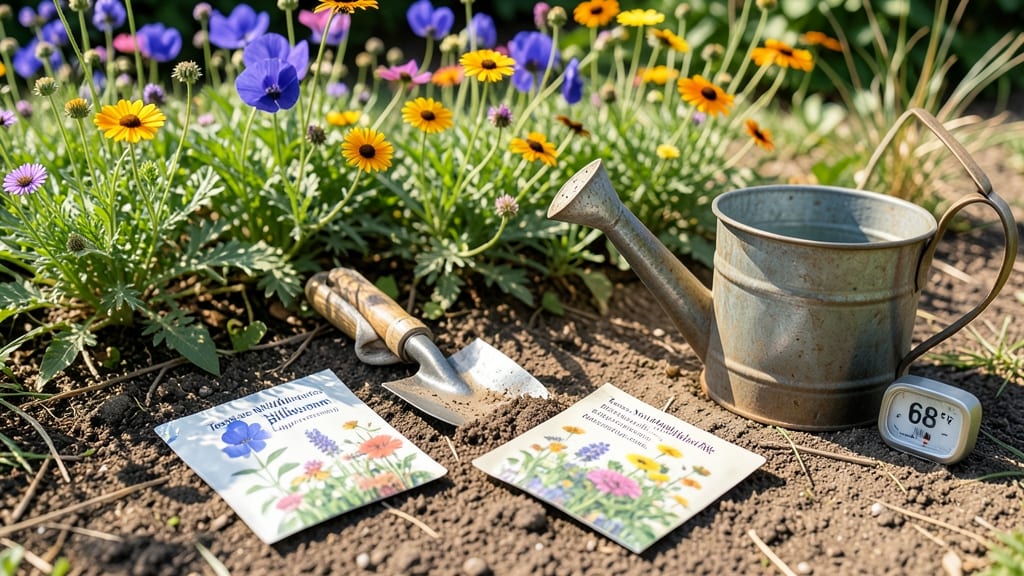
Planting wildflower seeds in Texas isn’t just about timing—it’s about surviving the state’s brutal heat, unpredictable rains, and fierce sun. Get the schedule wrong, and your seeds could bake in the soil or drown before sprouting.
But master the right window, and you’ll transform your yard into a vibrant pollinator paradise—year after year.
Texas’s diverse climate zones—from 8a in the Panhandle to 10b in South Texas—mean what works in one region fails in another. Whether you’re in North Texas or the Rio Grande Valley, knowing the perfect months for planting can mean the difference between a thriving meadow and a failed experiment.
Let’s break down the best times to sow your 🌼 seeds for success.
Fall planting, between September and November, is the golden window for most Texans. The cooler weather helps seeds establish roots before summer’s scorching heat arrives, while spring planting in February through April ensures blooms just in time for pollinators.
But timing isn’t the only factor—soil prep, watering, and even microclimates play a role in whether your wildflowers take hold.
In this guide, I’ll walk you through the ideal planting calendar for your specific heat zone, soil prep tips, and how to avoid common mistakes that derail even the best-laid plans. Ready to turn your Texas landscape into a buzzing, blooming haven? Let’s get started.
Texas wildflower planting calendar by heat zone (best months for each region)
Texas’s diverse climate—from freezing North Texas winters to scorching West Texas summers—means your wildflower planting timeline depends entirely on your heat zone. Plant at the wrong time, and your seeds may fry in summer heat or rot during sudden spring rains.
But nail the schedule, and you’ll unlock year-round blooms with minimal effort. Let’s break down the best months for each region, including native species that thrive in your backyard’s conditions.
Texas is divided into four key heat zones: North, Central, South, and West. Each zone has distinct frost dates, rainfall patterns, and ideal planting windows.
For example, North Texas (USDA Zones 7b-8a) can see late freezes in March, while South Texas (Zones 9a-10b) rarely drops below freezing. The difference? A 3-month shift in your planting calendar.
Here’s the critical rule: Fall planting (September–November) is ideal for most of Texas because cooler temps and winter rains help seeds germinate without competition from weeds. Spring planting (February–April) works in warmer zones, but timing is tighter—miss the window, and summer heat will stress young seedlings.
Always check your last frost date (e.g., February 15 in Dallas vs. January 1 in Brownsville) to avoid surprises.
🌼 Pro Tip: Use a color-coded heat-zone map (like the one from Texas A&M AgriLife) to pinpoint your exact region.
For example, West Texas (Zones 8a-9a) needs seeds sown in late October to avoid early spring droughts, while East Texas (Zones 7b-8b) can plant as late as December thanks to milder winters.
In North Texas, where winters can linger into March, aim for September–October planting to beat the first frost. My go-to mix includes bluebonnets (Texas’s state flower) and Indian paintbrush, which handle the region’s clay-heavy soils like champs.
Skip spring planting here—you’ll risk seedlings frying in May’s 95°F+ heat before they’re established.
For Central Texas, think of October as your golden window. This zone’s caliche soil drains poorly, so amend with compost before sowing. Mexican feather grass and winecups are drought-tolerant stars here.
If you plant in spring, do it by mid-February to avoid the April–May deluge that drowns tender sprouts. I’ve seen entire seed trays wash away after 3 inches of rain!
South Texas’s 9a–10b zones are the most forgiving—plant in September or January to dodge summer’s 100°F+ soil temps. Prickly poppies and evening primroses thrive here, but watch for fungus in the humid summer.
My trick? Space seeds 12 inches apart to improve airflow and reduce disease. Also, never plant in June—hurricane season turns seeds into mud soup.
West Texas is the wildcard: October–November is your only safe bet. The region’s alkaline soils and dry winds demand deep watering (1–2 inches per week) until seeds sprout. Desert marigolds and purple coneflowers are your best bets—they’ll survive on half the water of other wildflowers.
Pro tip: Use a drip irrigation system to avoid evaporation.
🌿
How to prepare your Texas soil for wildflower success (before and after planting)
Texas soil can be a double-edged sword for wildflowers—too alkaline, too dense, or too sandy, and your seeds struggle to sprout. But with the right prep, you’ll create the perfect foundation for native wildflowers to thrive.
Start by testing your soil pH, which in Texas often skews alkaline (7.5-8.5). Most wildflowers prefer a slightly acidic to neutral range of 6.0-7.0, so you may need to amend it.
Use a soil test kit (available at garden centers) to check pH and organic matter. If your soil tests high in alkalinity, mix in sulfur or peat moss (1-2 pounds per 100 sq ft) to lower pH gradually.
For clay-heavy soil, add compost or sand to improve drainage, while sandy soil benefits from organic compost to retain moisture.
Now, let’s talk about the none element—because Texas soil isn’t just about pH. It’s also about texture and water retention. Here’s what to watch for:
🌱 Texas Soil Pitfalls & Fixes
- Clay Soil: Compacts easily → Add compost + sand (50/50 mix)
- Sandy Soil: Drains too fast → Mix in peat moss + compost (30/70 mix)
- Alkaline pH: Inhibits nutrient uptake → Apply sulfur or pine bark
- Low Organic Matter: Poor seed contact → Top with 1 inch of compost
Before planting, till the soil to a depth of 4-6 inches to loosen compaction. Avoid deep tilling, which can bury seeds too deeply. Scatter seeds evenly and lightly rake them into the top ¼ inch of soil—this ensures good seed-to-soil contact without suffocating them.
For drought-prone areas, mulch with straw or wood chips to lock in moisture and suppress weeds.
After planting, focus on watering consistency. Wildflower seeds need steady moisture to germinate, but avoid overwatering, which can cause rot. Water deeply 2-3 times per week in the first month, then taper to once weekly once sprouts appear.
In North Texas, watch for late frosts, while South Texas may face sudden summer heat—both can stress young seedlings.
Post-germination, reduce watering to bi-weekly deep soaks to encourage deep root growth. Avoid fertilizers, as wildflowers thrive in low-nutrient conditions. Instead, top-dress with compost annually to maintain soil health. With proper prep, your wildflowers will establish strong roots and bloom vibrantly for years.
🌼