
Plants
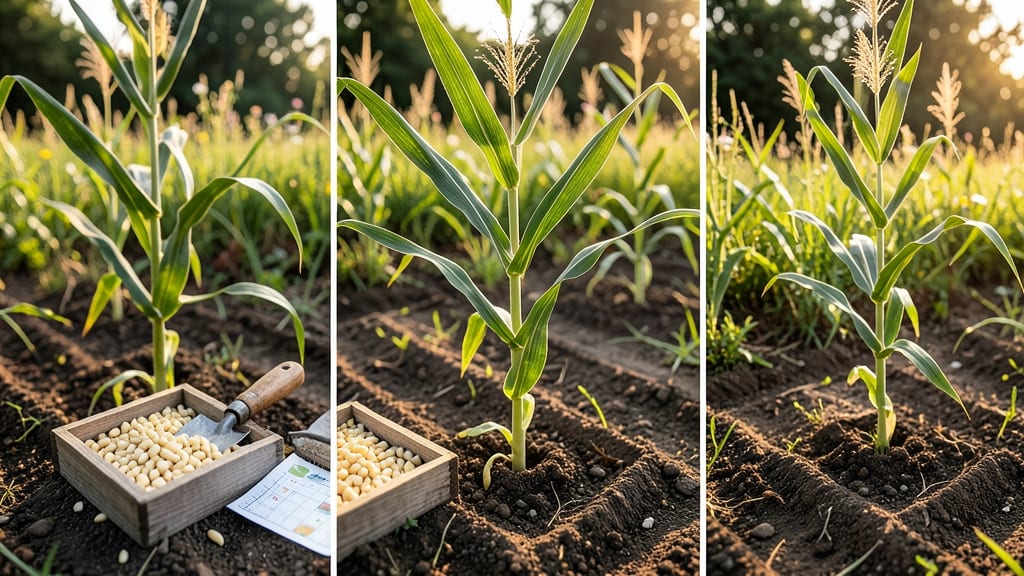
Timing your corn planting in Kansas can make or break your harvest—especially when soil temperatures are still too cool. 🌽 Most gardeners in zones 5b-7a wait until after the last frost, but that’s only half the battle.
The real game-changer is waiting for the ground to warm to at least 60°F, which typically falls between mid-April and early June.
Why does this matter? Corn seeds need warmth to germinate quickly, and planting too early risks rotting in cold soil. I’ve seen firsthand how a few extra weeks of patience can transform a patchy crop into a towering stand of 8-foot stalks ready for harvest by July.
In this guide, I’ll break down the exact soil temperature triggers, regional variations across Kansas, and how to test your garden’s readiness. You’ll also discover how to adjust for early vs. late varieties and avoid common mistakes that waste seeds and effort.
Ready to plant with confidence? Let’s dive into the fastest way to get your corn off to a strong start—and why waiting for the right moment pays off in bushels.
Kansas corn planting timeline: exact soil temperature guidelines for germination
Getting your corn seeds in the ground at the right time in Kansas isn't just about checking a calendar—it's all about soil temperature. Corn seeds need the soil to be at least 50°F to germinate, but they thrive best when temperatures reach 60°F or warmer.
In Kansas, where USDA Zones 5b-7a create regional differences, timing can vary by 2-3 weeks between eastern and western areas. Planting too early risks frost damage or slow germination, while waiting too long may shorten your growing season.
Most Kansas gardeners aim to plant corn between mid-April and early June, but the exact window depends on your last frost date and soil warmth. Eastern Kansas (like Kansas City) tends to warm up faster than western regions (like Garden City), so adjust your schedule accordingly.
For example, eastern Kansas may be ready by late April, while western Kansas might wait until early May. Always plant at least 2 weeks after the last frost to avoid cold snaps.
To test soil readiness without a fancy thermometer, try the DIY finger test. Stick your finger about 2 inches deep into the soil. If it feels warm to the touch (like room temperature), your soil is likely ready.
For a more precise check, use a soil thermometer—insert it 1-2 inches deep and wait 5 minutes for an accurate reading. Corn seeds planted in cold soil often rot before sprouting, so don't rush the process.
A soil temperature of 60°F is ideal for corn germination, but seeds can tolerate 50-55°F for short periods. However, growth slows dramatically below 55°F, leading to weak seedlings. In Kansas, soil temperatures typically hit this threshold by mid-April in the east and early May in the west.
Use a soil warming trick if needed: Cover the soil with black plastic mulch a few days before planting to absorb sunlight and raise temperatures faster.
If you're unsure about your local frost dates, check the Kansas State University Extension or use the National Weather Service for your county. These resources provide historical frost data and help you plan accordingly.
For example, eastern Kansas averages a last frost around April 15, while western Kansas may see frost until May 1. Planting 2 weeks after these dates gives your seedlings time to establish roots before cooler nights arrive.
Corn is a warm-season crop, meaning it won’t tolerate cold soil or air temperatures. If you plant too early and face a late frost, your seedlings could suffer leaf damage or even die. To protect young plants, use row covers or plant near windbreaks like fences or hedges.
For western Kansas, where nights stay cooler longer, consider black plastic mulch to warm the soil faster and extend the growing season.
For gardeners in USDA Zone 5b (northern Kansas), focus on early-maturing varieties like 'Early Sunglow' (70 days to harvest) to ensure a full season. In Zone 7a (southern Kansas), you can afford slightly later varieties like 'Pioneer 33T38' (90 days to harvest).
Always read the seed packet for days-to-maturity and adjust your planting date accordingly. A general rule: subtract
5 Critical factors that determine your Kansas corn planting window
Timing your corn planting in Kansas isn't just about checking a calendar—it's a balancing act between frost dates, soil moisture, and variety maturity. Even if your soil hits the perfect 60°F temperature, skipping these factors can leave your plants vulnerable to late frosts or drought stress.
Let me break down the five non-negotiables that separate successful harvests from wasted seeds.
First, Kansas' frost-free dates vary dramatically from the eastern USDA Zone 6b (average last frost: April 15) to the western Zone 7a (average last frost: May 1).
Planting your 'Golden Bantam' variety too early in western Kansas risks frost damage to tender seedlings, while delaying 'Pioneer 33T38' in eastern Kansas might cut your harvest short before the first frost in October.
- 1 Frost Dates: Eastern KS (Zone 6b) plants after April 15; Western KS (Zone 7a) waits until May 1. Use Almanac frost maps for your county.
- 2 Rainfall Patterns: Southern KS needs 1-2" weekly in May-July; Northern KS may need irrigation during dry spells. Check NOAA drought monitors before planting.
- 3 Soil Moisture: Test with a soil moisture meter—ideal is 40-60% moisture at planting depth. Sandy soils dry faster; clay holds moisture longer.
- 4 Variety Maturity: 'Golden Bantam' (60 days) plants April 20-May 10; 'Pioneer 33T38' (110 days) plants May 1-15. Shorter season? Choose early varieties.
- 5 Adjust for Altitude: Every 1,000 ft elevation gain delays planting by 3-5 days. Western KS (higher elevation) plants 1 week later than eastern plains.
Don't overlook soil moisture levels—corn roots need consistent hydration, especially during tasseling (when pollen forms). In dry years, like 2022, I planted my 'Silver Queen' variety with drip irrigation to maintain 1-2 inches of water weekly.
Even with perfect timing, drought-stressed plants produce smaller ears or poor kernel fill.
For early varieties like 'Bodacious' (70 days), you can push planting to late March in southern Kansas if you use row covers to protect against unexpected frosts. But in northern Kansas, wait until mid-April—even 'Bodacious' struggles with below-50°F soil.
I learned this the hard way when my 2019 batch emerged unevenly after a late-March freeze.
Pro tip: Use the "50°F soil rule" as your minimum, but aim for 60°F+ for fast germination. In Kansas, this typically aligns with mid-April to early May, but verify with a soil thermometer—don't guess!
I once planted 'Pioneer 3901' in 52°F soil and waited 14 days for germination, while my neighbor's 65°F soil sprouted in 5 days.
Finally, adjust your planting schedule based on your harvest goals. If you want early summer corn, prioritize short-season varieties and plant in late April. For fall storage, plant mid-May with longer-maturing varieties like 'Country Gentleman' (120 days).
My 2023 harvest included both 'Golden Bantam' (ready by July 15) and 'Pioneer 33T38' (harvested through September).