
How To
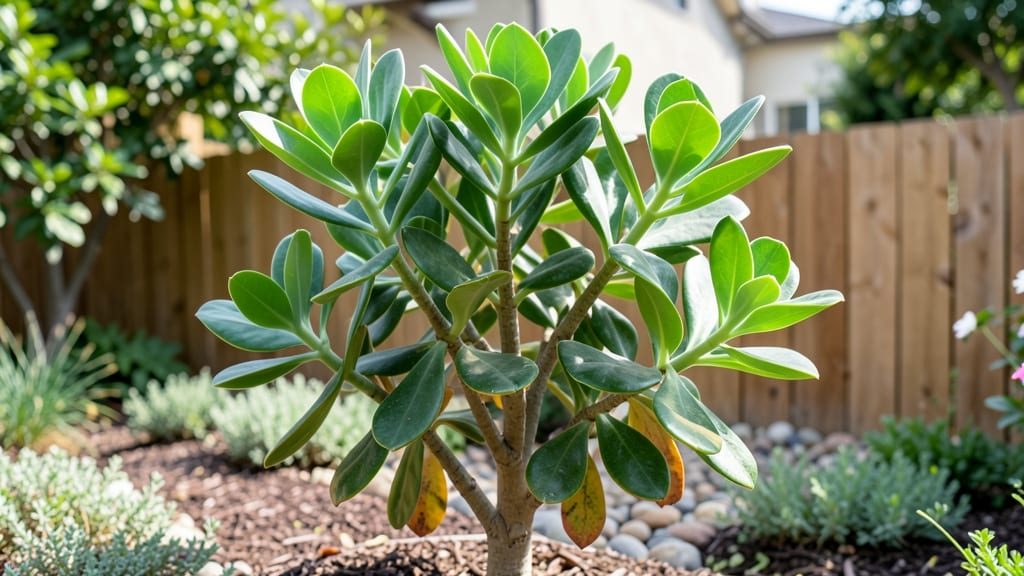
If you’ve ever wondered just how tall your Jade Plant 🌿 could grow, the answer might surprise you—this succulent can stretch from a compact tabletop plant to a towering indoor tree, depending entirely on your care routine.
Most Jade Plants stay between 1 and 3 feet tall, making them perfect for shelves or desks, but with the right conditions (and a little patience), some varieties can reach an impressive 10 feet or more—yes, really!
The key lies in light exposure, pruning habits, and even the size of your pot.
Let’s break down the factors that influence your Jade Plant’s height, from dwarf varieties that stay small to giant specimens that need space. You’ll also discover how simple adjustments—like trimming or repotting—can steer your plant toward your ideal size.
Whether you love a compact, bushy look or dream of a lush, tree-like Jade Plant, this guide will help you control its growth with confidence. Ready to unlock the secrets?

Jade plant growth height: dwarf vs standard vs giant varieties explained
If you’ve ever wondered, "how tall does jade plant grow?" the answer depends entirely on the variety you’ve chosen. These succulents, native to South Africa, can stay as small as 6 inches tall or stretch toward 10 feet with the right conditions.
The key lies in their genetics, care routine, and your pruning habits. I’ve grown jade plants for over a decade—from tiny tabletop varieties to floor-filling giants—and the difference comes down to just a few simple factors.
Most jade plants fall into three main height categories: dwarf varieties (1–3 feet), standard varieties (3–6 feet), and giant or tree-form varieties (6–10+ feet). Even within these categories, growth habits vary. For example, the popular Crassula ovata 'Hummel's Sunset' stays compact, while the 'Giant Jade' variety can rival small trees.
Let’s break down what influences these heights—and how you can steer your plant toward your preferred size.
Genetics play the biggest role in height potential. Dwarf varieties like 'Lilliput' or 'Baby Pink' are bred to stay small, while tree-form jades like 'Cristata' or 'Variegata' grow taller naturally. Even with perfect care, a dwarf jade won’t reach 6 feet—it’s like trying to grow a Chihuahua into a Great Dane. That said, light exposure and pruning frequency can push a plant 20–30% beyond its genetic limits in either direction.
Here’s where most gardeners get confused: pot size directly impacts height. A jade plant in a 5-gallon container will grow wider but stay shorter, while the same variety in a whiskey barrel planter can shoot up like a sapling.
I once had a 'Giant Jade' that hit 8 feet in a 15-gallon pot—until I repotted it into a shallow, wide tray, where it bush out instead. The rule of thumb? Root-bound plants grow taller because they’re desperate for space, while those with room to spread stay compact.
Now, let’s talk about the most overlooked factor: pruning. Regular trimming doesn’t just shape your jade plant—it controls height. When you prune the top growth, the plant focuses energy on lateral branches, creating a bushier form.
I prune my 'Hummel’s Sunset' every 6 months to keep it under 2 feet, while my 'Giant Jade' gets minimal pruning to encourage vertical growth. Even a single cut can redirect a plant’s energy, so timing matters. Always prune in spring or early summer when growth is most active.
Light is another game-changer. Jade plants thrive in bright, direct sunlight, which encourages dense, compact growth. Without enough light, they stretch toward windows like teenagers reaching for the fridge—only to produce leggy, weak stems.
I’ve seen 'Variegata' jades that stayed under 2 feet in a south-facing window but shot up to 5 feet in a dim corner. If your plant is growing too tall too fast, move it closer to a sunny window or add a grow light for 6–8 hours daily.
One of the most common questions I get is, "Can I make my jade plant grow taller?" The answer is yes—but it requires patience and the right approach. Start by using a tall, narrow pot (like a cylinder or vase) to encourage vertical growth.
Avoid pruning the top for at least a year, and place your plant in the brightest spot in your home. Feed it lightly with a balanced fertilizer (5-10-10) in spring to boost growth, but don’t overdo it—jade plants are drought-tolerant, not fertilizer hogs.
On the flip side, if your jade is growing too tall and top-heavy, it’s time to prune for bushiness. Cut back the top 2–3 inches of the main stem just above a leaf node. This forces the plant to
How to control jade plant height: pruning, repotting, and care tips
Your jade plant’s height isn’t set in stone—it’s shaped by your care routine. With strategic pruning, thoughtful repotting, and seasonal adjustments, you can guide it from a compact bush to a tall specimen or anything in between.
The key lies in understanding when to intervene and how each action influences growth patterns.
Jade plants grow vertically when they stretch toward light, but they’ll branch out when you encourage bushiness. Whether you want a tabletop plant or a floor-filling tree, the same principles apply: timing, technique, and consistency. Let’s break down how to harness these factors for your desired height.
Without intervention, jade plants can reach 3–10 feet indoors, but most stay 1–3 feet with regular pruning. Dwarf varieties max out at 6–12 inches, while standard types grow 6+ feet if left unpruned. The secret? Prune in spring to control height and repot every 2–3 years to prevent root-bound stunting.
Start with pruning to shape your jade plant’s height. The best time to prune is in early spring, just as new growth begins. Use sterilized scissors or pruning shears to cut just above a leaf node—this encourages lateral branching and prevents leggy stems.
For a bushier plant, trim the top 1/3 of the stem, and for a taller plant, leave longer stems and prune only to remove dead leaves.
Repotting plays a crucial role in height control. Jade plants become root-bound when their roots fill the pot, which stunts growth. Repot every 2–3 years or when roots circle the pot. Choose a container only 1–2 inches larger in diameter to avoid encouraging rapid vertical growth.
Well-draining cactus soil with perlite is ideal—this combo prevents overwatering, which can lead to weak, elongated stems.
Seasonal care adjustments fine-tune your jade plant’s growth trajectory. In summer, provide bright indirect light to prevent stretching, and reduce watering to every 2–3 weeks. In winter, mimic dormancy by placing the plant in a cool (50–60°F) spot and watering monthly.
Avoid fertilizing during dormancy—this ensures a strong spring growth spurt when you’re ready to shape the plant.
Monitor your jade plant’s response to your care routine. If it grows too tall, increase light exposure and prune more aggressively. If it stays too short, ensure it’s not root-bound and provide a balanced fertilizer in spring.
With patience, your jade plant will thrive at your desired height, becoming a stunning centerpiece in your home.