
Plants
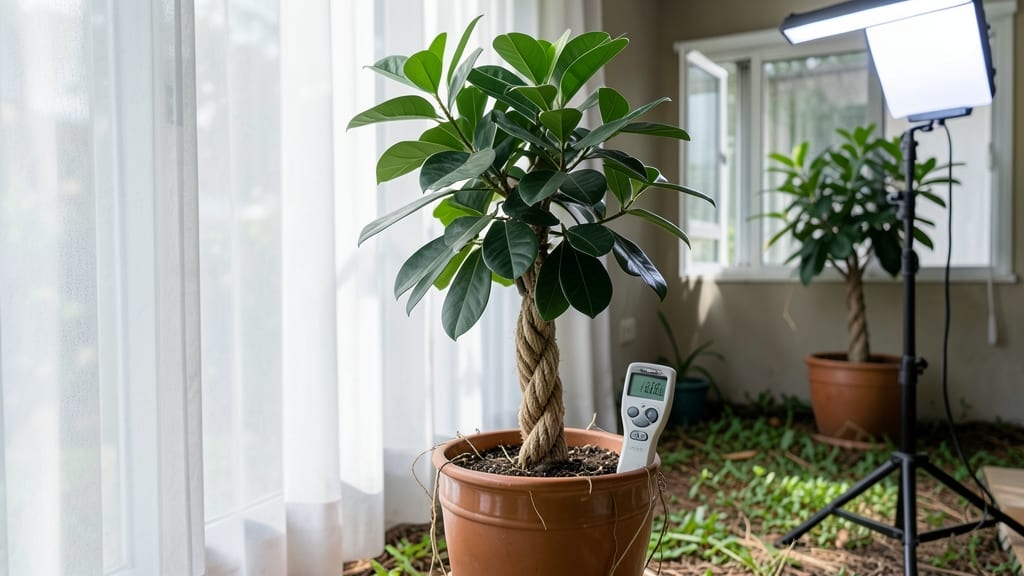
Wondering how much light your 💰 Money Tree plant needs to thrive? The answer might surprise you—this tropical beauty actually prefers bright indirect sunlight, not the harsh glare you’d think.
Too little light, and it stretches out like a sleepy cat; too much, and those glossy leaves start to crisp at the edges.
Most people assume their Money Tree will handle low light, but that’s where growth gets sluggish and leaves lose their signature vibrancy. The key? Mimicking its natural habitat under dappled forest light.
I’ll show you exactly where to place it—whether you’re dealing with a dim corner or a sunroom—so you can keep those leaves lush and your plant happy.
You’ll also learn to spot the tell-tale signs of light stress, from yellowing fronds to leggy stems, and how to fix them fast. No guesswork—just clear, actionable tips to give your Money Tree the perfect glow.
Ready to transform your plant’s growth? Let’s dive into the light secrets that’ll have your 💰 Money Tree reaching for the sky—without any sunburn!


Ideal light requirements for a healthy money tree plant
Your money tree (Pachira aquatica) thrives on bright indirect sunlight, but many gardeners accidentally expose it to harsh conditions that stunt its growth. Unlike sun-loving plants, this tropical beauty needs filtered light—think dappled shade under a canopy or morning sun without afternoon intensity.
Without the right balance, you’ll see leggy stems or yellowing leaves, signaling stress. Let’s break down the exact light conditions your plant craves to keep it lush and vibrant year-round.
Money trees prefer 6-8 hours of bright indirect light daily, which translates to about 1,000-2,000 foot-candles of light intensity. This is roughly the brightness you’d find 2-3 feet away from an east or north-facing window during peak sunlight hours.
Direct sun—especially the harsh afternoon rays—can scorch its glossy leaves, while low light causes slow growth and weak stems. The key is mimicking its natural tropical habitat where sunlight is diffused through tree canopies.
In summer months, when sunlight is most intense, your money tree benefits from a sheer curtain to diffuse the light. Place it 2-3 feet back from an east-facing window to capture morning sun without the harsh afternoon heat.
If you notice brown leaf tips or crispy edges, it’s a clear sign the light is too strong—move it further away or add a light filter. Conversely, in winter, when natural light dims, supplement with a grow light for 12-14 hours daily to maintain its energy levels.
Identifying the perfect spot in your home starts with observing your window light intensity. Hold a white piece of paper near your potential placement—if the shadow is faint but visible, it’s likely the right brightness. Avoid south-facing windows unless you use a double-layered curtain to prevent leaf burn.
For indoor gardeners without ideal windows, LED grow lights (12-16 inches above the plant) can replicate the bright indirect light your money tree loves, especially in low-light apartments.
Seasonal adjustments are critical for maintaining your money tree’s health. During winter, when daylight hours shrink, you may need to rotate the plant every few weeks to ensure even light exposure. This prevents one-sided growth and keeps the foliage symmetrical.
In summer, if your plant starts looking leggy or stretched, it’s craving more light—gradually introduce it to a brighter spot over 1-2 weeks to avoid shocking the plant. Sudden changes in light can cause leaf drop, so always acclimate slowly.
Outdoor gardeners can also grow money trees, but they require partial shade—think morning sun and afternoon shade. A spot under a large tree or pergola works perfectly, as long as it receives filtered sunlight for at least 4-6 hours daily.
If you’re transitioning your money tree from indoor to outdoor, do it gradually over 2 weeks to avoid sunburn from sudden exposure. Watch for yellowing leaves or wilting, which are red flags that the light conditions aren’t quite right.
Pro tip: Use a light meter app on your phone to measure foot-candles in potential spots. Aim for 1,000-2,000 fc—any lower, and growth slows; any higher, and leaves may scorch.
For office or bedroom setups, a north-facing window is your best bet, as it provides consistent, gentle light without the intensity of southern exposure. If your space lacks natural light, invest in a full-spectrum LED grow light to bridge the gap and keep your money tree thriving year-round.
Remember, your money tree’s leaf color is a direct indicator of its light happiness. Deep green, glossy leaves mean it’s getting the perfect amount of light, while p
Signs your money tree isn’t getting the right light (and how to fix it)
Your money tree (Pachira aquatica) thrives on bright indirect sunlight, but too little or too much light triggers distress signals. Watch for yellowing leaves on lower branches—this often means insufficient light.
Meanwhile, brown leaf tips or crispy edges suggest direct sunburn from harsh afternoon rays. These visual cues are your plant’s way of communicating its light needs.
Another red flag? Leggy growth with sparse leaves stretching toward light sources. This happens when your money tree reaches for more sunlight than it’s receiving. Even slow growth or dropping leaves can signal light deprivation.
Ignoring these signs leads to weak stems and a less vibrant appearance—far from the lush, coin-like foliage you want.
⚠️ callout warning
⚠️ Critical Light Requirements for Money Trees
Money trees need 6-8 hours of bright indirect light daily. Low light (<300 foot-candles) causes yellow leaves and stunted growth. Too much direct sun (>1,000 foot-candles) burns leaves, turning them brown and crispy. Test light levels with a light meter or DIY shadow test: hold a white sheet 12 inches from the plant—if shadows are sharp, light is too harsh.
To diagnose light issues, start with a DIY light test. Place your money tree in different spots for 1-2 weeks and observe changes. If leaves darken and grow denser near a window, that’s a good sign—your plant is getting enough indirect light.
Conversely, if leaves lighten or stretch, move it closer to a bright, filtered light source, like an east-facing window.
For precise adjustments, use a light meter (available for ~$20) to measure foot-candles. Aim for 500-1,000 foot-candles of bright indirect light. If your space falls short, supplement with a grow light (LED or fluorescent) 12-18 inches above the plant for 6-8 hours daily.
Rotate the pot weekly to ensure even growth and prevent light stress on one side.
Seasonal changes also affect light exposure. In winter, shorter days mean lower light intensity, so supplement with artificial light if natural sources dim. Conversely, in summer, use sheer curtains to filter harsh afternoon sun and protect delicate leaves.
Regularly dust leaves to maximize light absorption—dust blocks up to 50% of sunlight, starving your plant.
Remember, fixing light issues isn’t just about moving your plant—it’s about creating a consistent environment. Combine proper light with well-draining soil and moderate watering (every 7-10 days) to see dramatic improvements in just 4-6 weeks.
Your money tree will reward you with glossy, vibrant leaves and robust growth—proof you’ve cracked the light code! 🌿