
Planting
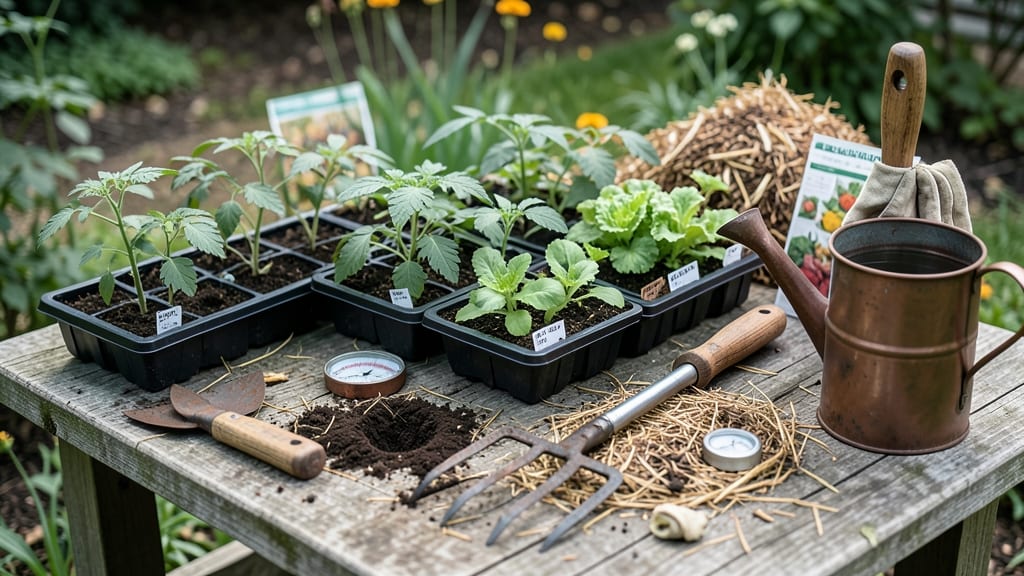
Timing your garden planting in Michigan isn’t just about the calendar—it’s about beating the last frost while avoiding late-season surprises that can leave your plants vulnerable.
With frost dates varying by 50 days between the Upper Peninsula and southern Michigan, knowing the right window for your region is the difference between a bumper crop and a disappointing start.
I’ve spent years watching Michigan’s unpredictable weather patterns, and what I’ve learned is that cold-hardy crops like peas and spinach can go in the ground weeks before most vegetables, while tomatoes and peppers need to wait until after May 15th in most areas.
The key? Adjusting your planting schedule based on your specific USDA zone and historical frost data.
In this guide, I’ll break down the exact frost dates for Michigan’s three main regions—plus actionable tips for extending your growing season with frost cloths and cold frames.
Whether you’re a first-time gardener or a seasoned pro, you’ll learn how to time your plantings like a local, even when Mother Nature throws a curveball.
Let’s dive into the critical planting windows that will help you start strong and keep your garden thriving all season long.
Michigan last frost dates by region: critical planting windows
Michigan's diverse geography creates three distinct planting zones, each with unique last frost dates. The Upper Peninsula typically experiences frost until May 20th, while Southern Michigan often sees its last freeze around May 10th.
These variations mean your tomato seedlings might be safe in one region but still at risk in another.
Understanding these historical frost trends helps you align your planting schedule with nature. For example, cool-season crops like peas and spinach can go in 2-4 weeks before your region's average last frost, while warm-season vegetables need to wait until after.
Here's how Michigan's regions break down by USDA hardiness zones and average last frost dates, with practical planting windows for your garden:
| Region | USDA Zone | Avg Last Frost | Planting Window | Key Crops |
|---|---|---|---|---|
| Upper Peninsula | 4a-5b | May 20 | After May 20 for warm crops | Kale, potatoes, peas |
| Northern Lower Peninsula | 5b-6a | May 10-15 | After May 15 for tomatoes | Lettuce, carrots, beans |
| Southern Michigan | 6a-6b | May 5-10 | After May 10 for peppers | Cucumbers, squash, basil |
For Southern Michigan (zones 6a-6b), where the last frost typically occurs around May 5-10, you can start warm-season plants like tomatoes and peppers after Memorial Day. The Northern Lower Peninsula (zones 5b-6a) follows about 10 days later, so hold off until mid-May for heat-loving crops.
The Upper Peninsula (zones 4a-5b) has the latest frost dates, often after May 20th. This means cool-season crops like kale and potatoes have a longer growing window, while tomatoes may need row covers until early June.
Always check local frost forecasts—they can vary by 5-10 days from these averages.
Use these dates to plan your succession planting. For example, in Southern Michigan, plant radishes every 2 weeks from April to July for continuous harvests. In colder zones, focus on hardy varieties like 'Early Girl' tomatoes or 'Sugar Snap' peas, which tolerate cooler soils better.
Pro tip: Hardened-off seedlings can handle light frosts (28°F or higher). If nighttime temps drop below freezing, cover plants with frost cloth or a lightweight blanket. This buys you 1-2 extra weeks for planting in marginal zones.
Don't forget perennials and flowers! In Southern Michigan, plant daylilies and coneflowers after the last frost, while Northern zones may need to wait until early June. Always check the specific variety's hardiness—some Russian sage can handle zone 4, while lavender prefers zone 5 or warmer.
For extra accuracy, consult Michigan State University Extension or your local Cooperative Extension office. They track real-time frost data and can help adjust for microclimates—like urban heat islands or frost pockets in valleys.
Timing your garden right means bigger yields and happier plants. Start with these regional guidelines, then fine-tune based on your specific location and microclimate. Happy planting! 🌱
How to adjust planting for Michigan’s unpredictable weather patterns
Michigan’s weather can shift faster than a summer storm, leaving gardeners scrambling to protect tender plants from unexpected frosts or heatwaves. The key to success lies in flexible planting strategies that account for these fluctuations.
Instead of rigidly following frost dates, I use a multi-layered approach combining seasonal adjustments, protective gear, and crop selection tailored to Michigan’s USDA zones 4-6. This method has saved my tomato plants twice from late May frosts!
Start by categorizing your plants into cool-season crops (like lettuce and peas) and heat-loving varieties (such as basil and cucumbers). Cool-season crops can handle light frosts, while heat lovers need consistent warmth.
I always plant cool-season crops 4-6 weeks before the average last frost date, giving them time to establish before summer arrives. For heat lovers, I wait until two weeks after the last frost date to ensure soil temperatures stay above 55°F.
Michigan’s extended forecasts from the National Weather Service are your best friend. I check them weekly starting in April, looking for 10-day temperature trends rather than single-day predictions. If a cold snap is forecasted, I’m ready to cover vulnerable plants with frost cloths or move potted plants indoors.
This proactive approach has let me extend my growing season by 3-4 weeks in both directions—earlier starts and later harvests.
Protective gear like row covers and cold frames can transform your planting timeline. A simple floating row cover adds 2-4°F protection and can delay planting by 2-3 weeks for heat-loving crops. I use them heavily in Northern Michigan where springs are especially unpredictable.
For delicate seedlings, a mini cold frame creates a microclimate that can keep soil temperatures 10-15°F warmer than ambient air.
⚠️ WARNING: Michigan’s Frost Risks by Crop ⚠️
- Tomatoes (50% failure risk if planted before May 20)
- Peppers (70% failure in UP regions)
- Cucumbers (60% stunted growth)
🌱 Pro Tip: Southern Michigan’s Zone 6 areas see last frosts 2-3 weeks earlier than the UP—adjust your schedule accordingly!
For risk assessment, I track which crops consistently struggle in my zone. In my Zone 5 garden, squash and beans often suffer from late frosts, so I now plant them in containers on wheels that I can move to sheltered spots.
Conversely, kale and carrots thrive when planted early, sometimes surviving 28°F temperatures with minimal protection.
Adjusting your planting schedule isn’t just about dates—it’s about observation and adaptability. I keep a garden journal noting which strategies worked best each year. For example, my 2023 experiment with straw bale gardens heated up 10°F faster than in-ground beds, letting me plant melons a full week earlier.
Small adjustments like these can mean the difference between a bountiful harvest and a disappointing season.
Remember, Michigan’s microclimates vary dramatically even within short distances. A hilltop might frost 3 days earlier than a valley just a mile away. By combining regional frost data, protective gear, and crop-specific timing, you’ll turn Michigan’s weather chaos into a garden advantage.
The goal isn’t perfection—it’s resilience. 🌿