
Plants
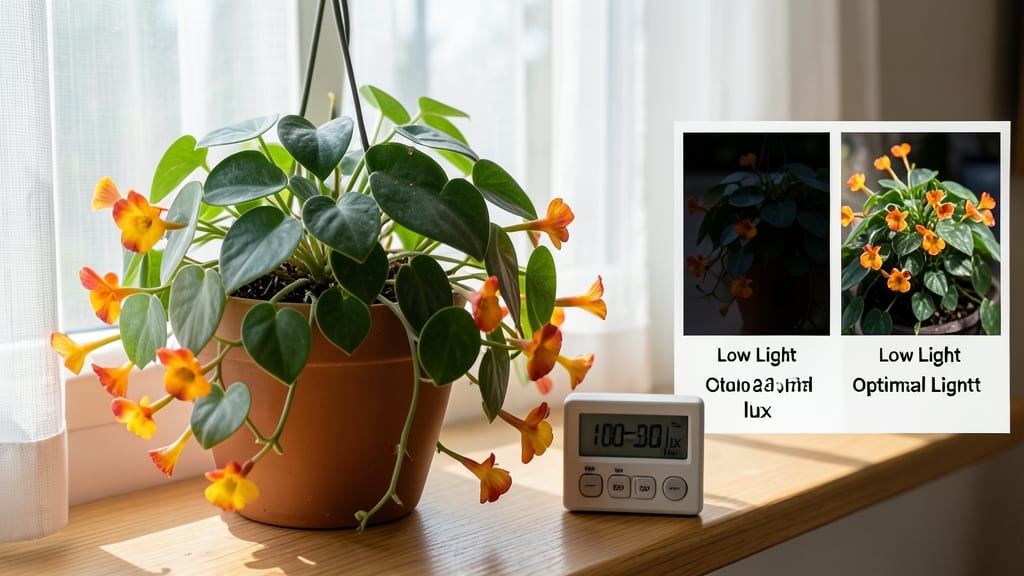
To keep your Goldfish Plant thriving, you need to get the light just right—too little and it wilts, too much and those stunning leaves burn. This tropical beauty isn’t picky, but it does crave that sweet spot of bright, indirect sunlight that mimics its natural jungle habitat.
Most gardeners overthink lighting, but the truth is simpler than you’d expect. Your Goldfish Plant 🐟 only needs about 4 to 6 hours of filtered light daily, whether from a sunny east-facing window or a grow light. The key is avoiding harsh midday rays that can scorch its delicate foliage.
If your plant starts stretching toward the light or losing its vibrant colors, it’s begging for more brightness. But don’t panic—adjusting its spot or adding a sheer curtain can make all the difference. I’ll show you exactly how to spot these signs and fix them fast.
Ready to transform your Goldfish Plant from lackluster to lush? Let’s dive into the easiest ways to give it the perfect light setup, whether you’re working with natural windows or artificial grow lights. Your plant’s future depends on it!


Goldfish plant light requirements: the ideal bright indirect sunlight balance
If you've ever watched your Goldfish Plant (Columnea gloriosa) stretch toward the window with leggy stems or develop pale, weak leaves, you're not alone. This stunning tropical plant thrives under bright indirect sunlight, but getting the balance right is key.
Unlike sun-worshiping succulents, Goldfish Plants need filtered light—too much direct sun scorches their delicate foliage, while too little causes poor growth. Let's break down the perfect lighting conditions to keep your plant lush and vibrant.
The secret to happy Goldfish Plants lies in mimicking their natural understory habitat. In the wild, these plants grow beneath taller trees, receiving dappled sunlight for just 4-6 hours daily. Recreating this environment indoors ensures your plant photosynthesizes efficiently without stress.
Without proper light, chlorophyll production drops, leading to those dreaded yellowing leaves or stunted growth. Let’s explore how to nail the ideal setup for your Goldfish Plant.
For natural light, position your Goldfish Plant 2-3 feet away from an east or west-facing window. East-facing windows provide gentle morning sun, while west-facing windows offer brighter afternoon light—both ideal for this plant.
Avoid south-facing windows, as they deliver intense midday sun that can burn leaves. If your home lacks ideal windows, consider rotating your plant quarter-turns weekly to ensure even growth and prevent lopsided development.
Understanding photosynthesis efficiency helps explain why Goldfish Plants struggle with poor lighting. These plants evolved to capture low to moderate light intensities, typically 1,000-3,000 foot-candles. Insufficient light forces them to stretch toward any available source, creating weak, elongated stems that can't support their own weight.
This "etiolation" isn’t just unsightly—it weakens the plant’s structure. By providing the right light, you’re directly supporting chlorophyll production and energy storage in those stunning, fish-shaped leaves.
If you're using artificial grow lights, opt for full-spectrum LEDs or fluorescent bulbs that mimic natural sunlight. Place the light 6-12 inches above the plant and keep it on for 12-14 hours daily to simulate a full day cycle.
LED grow lights are energy-efficient and can be adjusted to provide the bright indirect light Goldfish Plants crave. For best results, use lights rated at 5,000-6,500K color temperature, which closely matches natural daylight.
Seasonal adjustments are crucial, especially if you're growing your Goldfish Plant outdoors. During summer months, provide afternoon shade to protect leaves from intense sunlight.
In winter, when natural light diminishes, supplement with grow lights or move the plant closer to a south-facing window (with sheer curtains to diffuse light). These adjustments prevent light stress and keep your plant thriving year-round.
Watch for visual cues that indicate your Goldfish Plant’s light needs. Dark green leaves with bright orange markings signal happy, well-lit growth. In contrast, pale yellow leaves or stretched stems mean it’s time to increase light exposure.
Conversely, brown leaf tips or crispy edges suggest too much direct sun. By paying attention to these signals, you can fine-tune your plant’s environment for optimal health.
Pro tip: Group your Goldfish Plant with other low to medium light plants like Pothos or Philodendrons. These companions thrive under similar conditions, creating a cohesive indoor jungle that’s easier to maintain.
Plus, the shared environment helps regulate humidity, which Goldfish Plants appreciate. Just ensure none of these plants are competing for the same light source—space them evenly for balanced growth.
Remember, the goal is to create a consistent, stress-free environment for your Goldfish Plant. Whether you're using natural light, artificial sources, or a mix of both, the key is bright indirect sunlight for 4-6 hours daily.
With the right lighting, your plant will reward you with vibrant foliage and compact, bushy growth that’s the hallmark of a thriving Goldfish Plant. 🌿
Signs your goldfish plant isn’t getting enough light (and how to fix it)
Your Goldfish Plant (Nematanthus gregarius) sends clear signals when it’s starving for light—think pale leaves, stretched stems, or leggy growth. These aren’t just cosmetic issues; they’re survival strategies to reach for sunlight.
The good news? Recognizing these signs early lets you adjust care before your plant becomes permanently stressed. Let’s decode the visual cues and fix them fast.
First, check for yellowing leaves starting from the bottom. This is a classic light deficiency symptom, often paired with small, sparse foliage. Your plant might also develop red or purple tinges on newer growth—a sign it’s stretching toward any available light source.
If you notice buds failing to bloom (or not forming at all), that’s another red flag. Without enough light, your Goldfish Plant can’t produce the energy needed for flowering.
🌱
How Much Light Does a Goldfish Plant Need?
✅ Ideal Conditions
- Bright indirect light (4–6 hours daily)
- East or west-facing windows (avoid harsh midday sun)
- 2–3 feet from a window (filtered sunlight)
- Artificial grow lights (12–14 hours if indoors)
❌ Over/Under Light Risks
- Too little light → Leggy growth, pale leaves
- Too much light → Brown leaf tips, crispy edges
- Direct sunburn → White/yellow patches on foliage
- Fluorescent lighting only → Stunted growth, weak stems
💡 Fix It: Rotate plant weekly for even growth; use sheer curtains to diffuse light.
If your Goldfish Plant is showing leggy stems or wide spacing between leaves, it’s desperately reaching for light. This is called etiolation, and it weakens the plant’s structure. To fix it, move your plant to a brighter spot immediately.
If you’re limited to indoor spaces, consider a LED grow light (6,500K color temperature) placed 12–18 inches above the plant for 12–14 hours daily. Avoid cheap fluorescent bulbs—they lack the full spectrum your Goldfish Plant needs for vibrant foliage.
For brown patches or crispy edges, the issue might be too much light (or dry air from heat). Move your plant away from south-facing windows or direct sunlight, and increase humidity with a pebble tray or humidifier.
If the damage is severe, trim the affected leaves with sterilized scissors to encourage new growth. Prune back leggy stems by 1/3 to promote bushier, healthier foliage.
🪴
Create a quick light audit for your Goldfish Plant: Hold a piece of paper near your plant during the day. If the shadow is sharp and dark, it’s getting too much direct light. If the shadow is fuzzy or nonexistent, it needs more brightness.
Adjust placement gradually—sudden changes can shock your plant. Pair this with regular watering (allow top inch of soil to dry between waterings) and monthly fertilizer (diluted 10-10-10) to support recovery.
With the right light, your Goldfish Plant will reward you with glossy, fish-scale-like leaves and occasional red tubular flowers. Keep an eye on those visual cues, and your plant will thrive in no time! 🌿